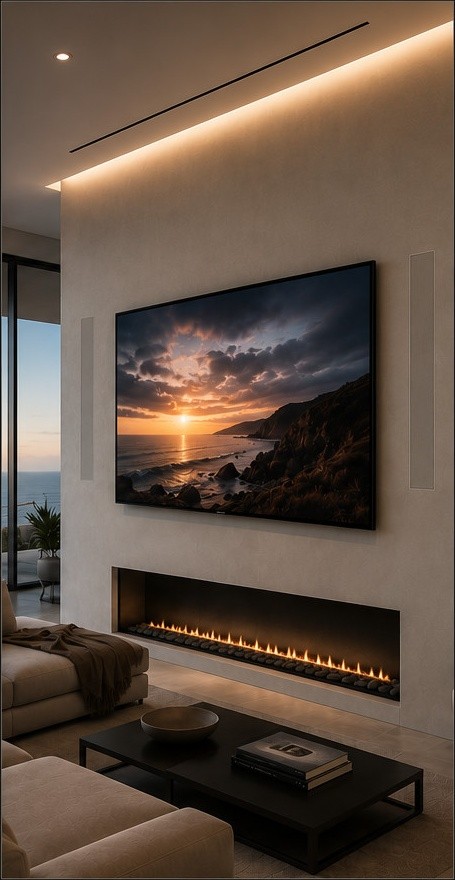
Whole-home audio, also called multi-room or distributed audio, lets every room in a house play its own source at its own volume — independently or in sync — without a single visible speaker or receiver in sight. It is not a soundbar in the living room and a Bluetooth speaker in the kitchen. It is one engineered system.
Done well, a distributed audio system is felt more than seen. That is the standard we design to at ACT Installs.
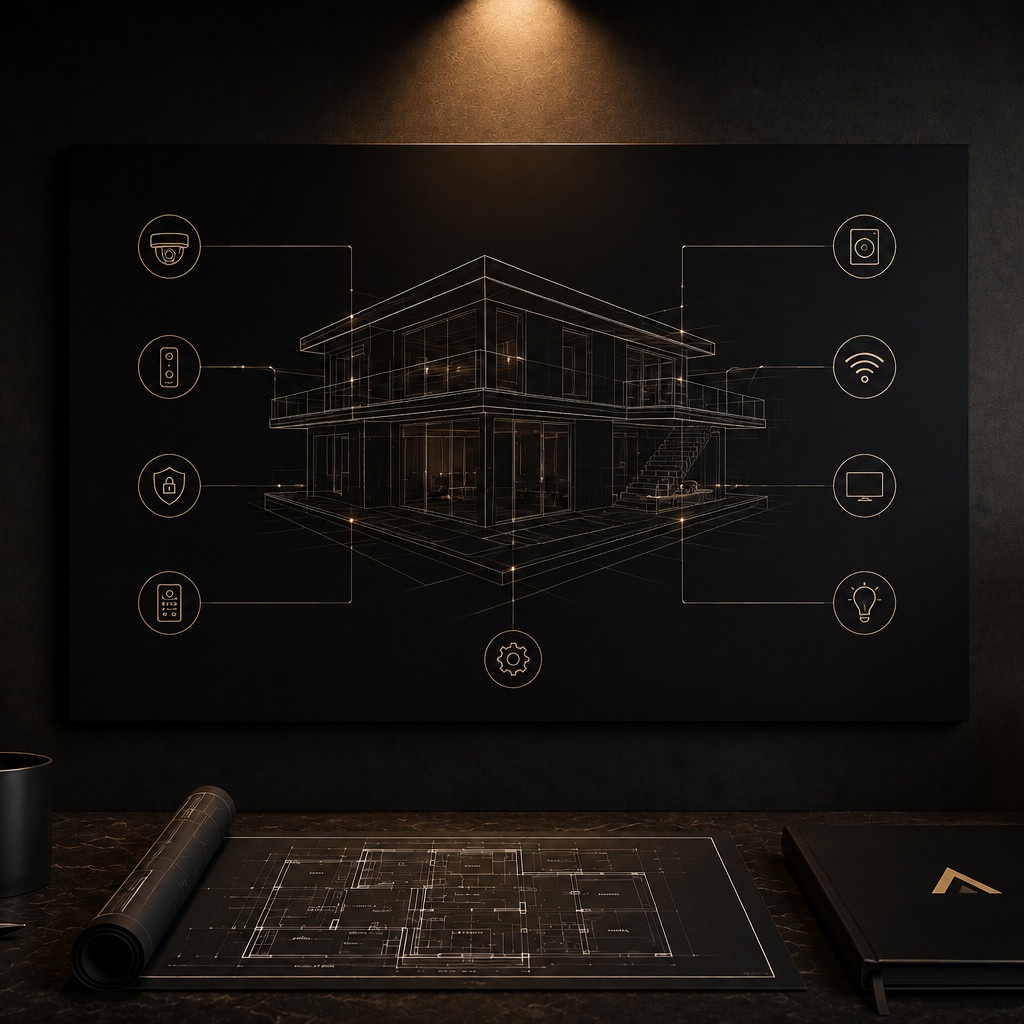
The single biggest factor in whether a whole-home audio system feels effortless or frustrating is how the zones were planned — long before any speaker goes in a wall.
This is also where the timing of a project matters. Homes enrolled in The Builder Ready Program™ have audio zoning planned alongside the architectural and electrical drawings, which is the difference between speakers that disappear and speakers that get bolted on afterward.
A well-designed smart audio system does not lock a household into one streaming service. It should handle whatever the household already uses, and keep working as those services change.
Source flexibility matters more over a ten-year ownership horizon than which specific app is popular today. A Luxury Technology Advisor can walk through which platforms integrate cleanly with a given control system before anything is installed.
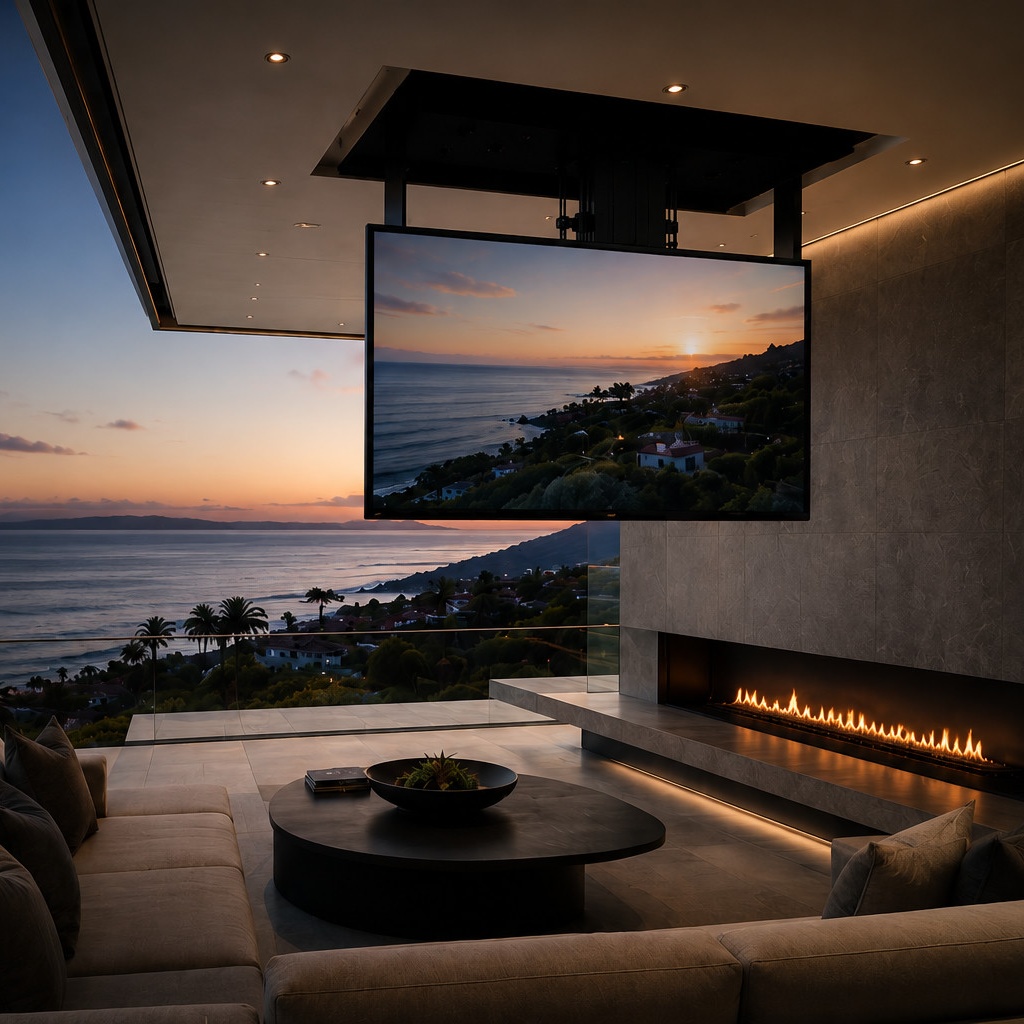
Indoor zones are rarely one-size-fits-all. A great room built around a fireplace and television calls for architectural in-wall or in-ceiling speakers, positioned and calibrated to match the screen. A kitchen calls for even ceiling coverage that sounds good over the noise of cooking and conversation. A primary suite calls for something more intimate.
The goal in every case is the same: sound that feels like it belongs to the room, not equipment placed in it. That is the thinking behind every indoor zone we design, and it is one reason architectural speakers are paired with the same rooms that get television and fireplace focal points.
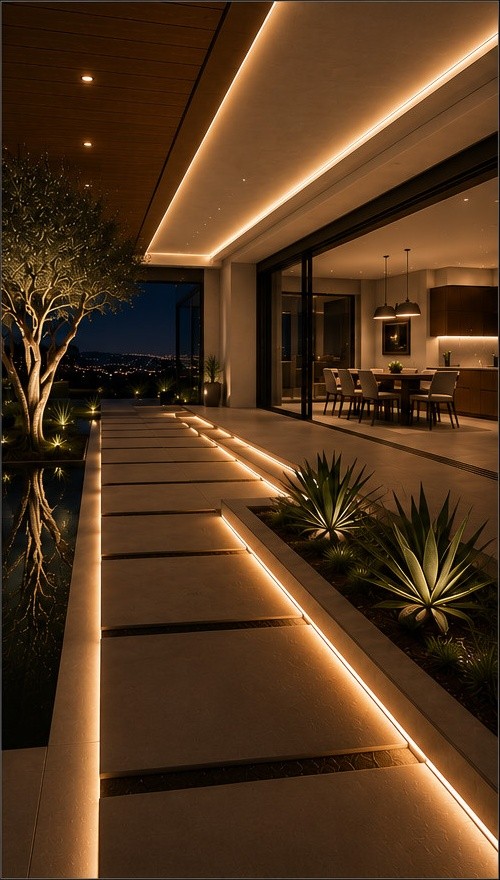
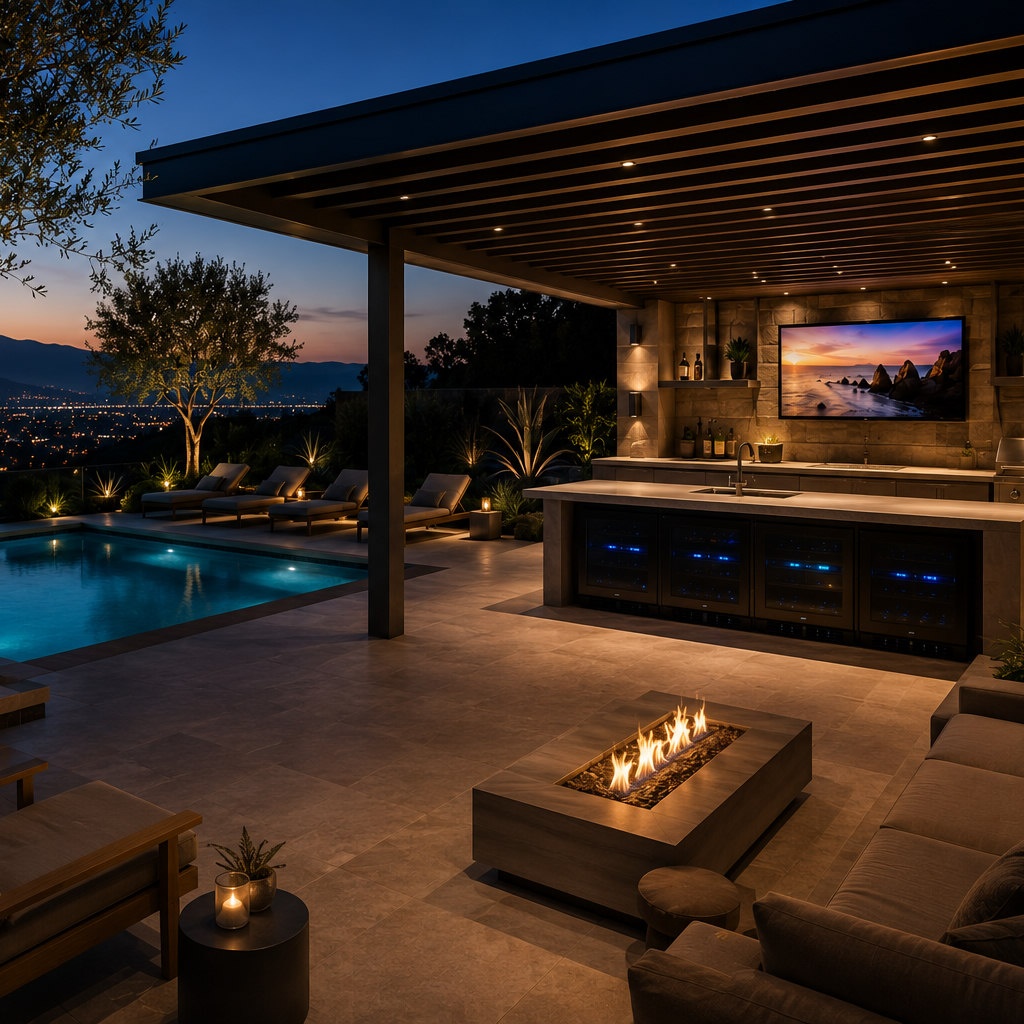
Outdoor entertaining is a defining feature of homes along the Central Coast and Southern California, and outdoor audio deserves the same design discipline as any interior zone — plus a few considerations unique to the elements.
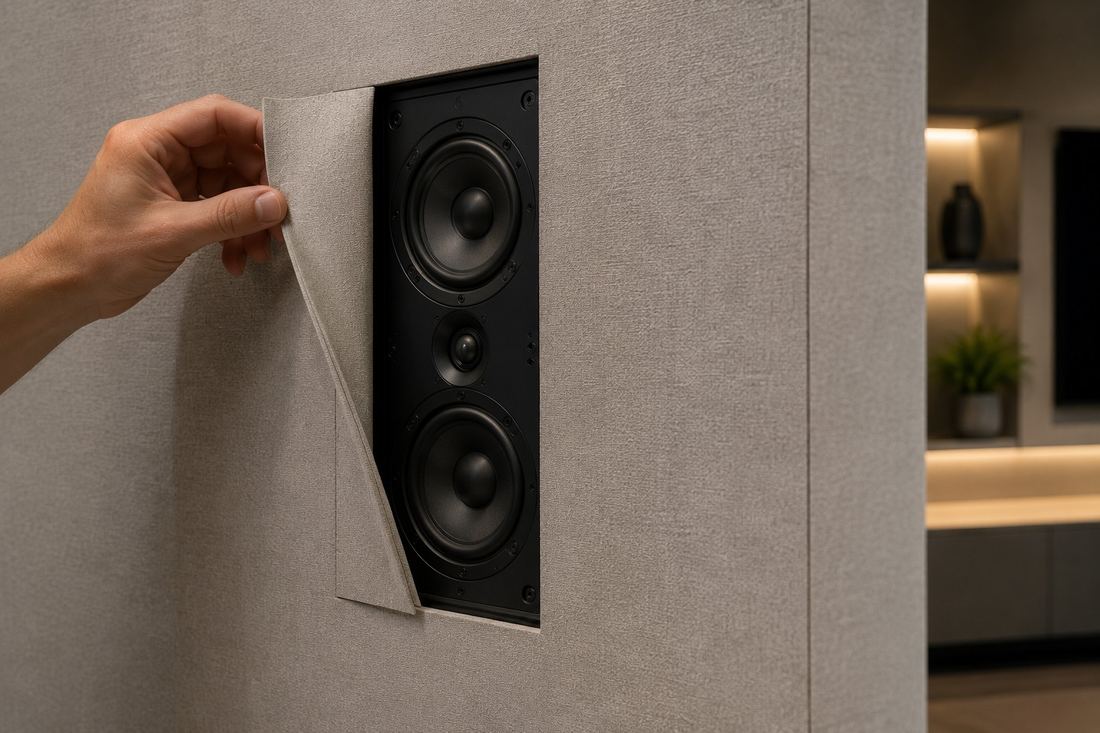
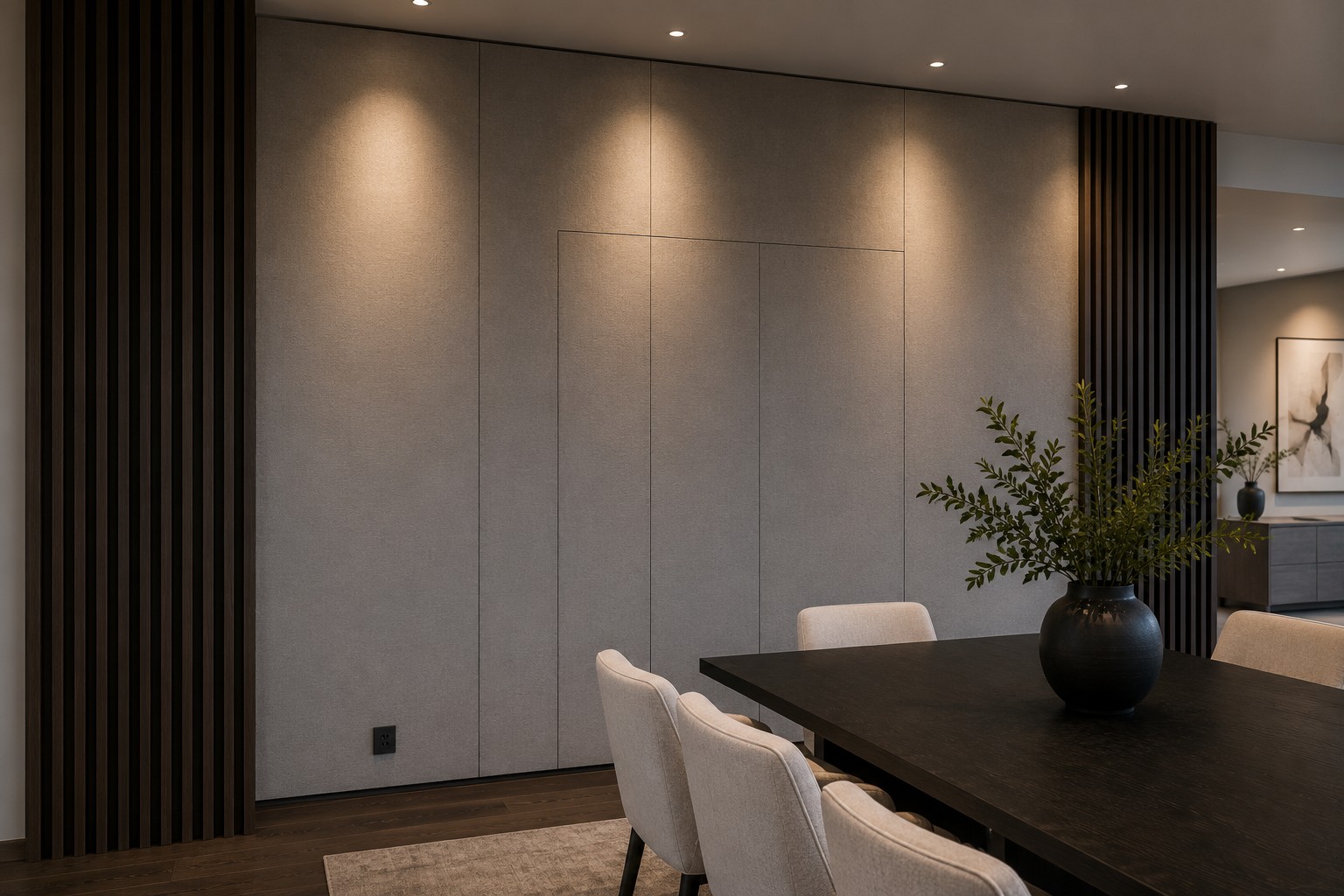
Invisible Technology™ is our approach to hiding the hardware without hiding the performance. In-ceiling speakers finished flush and painted to match. In-wall speakers built behind acoustically transparent fabric panels that read as art or architecture. Flush subwoofers set into floors or millwork.
None of this is a compromise on sound. Acoustically transparent materials are engineered to pass sound with negligible loss, and speaker placement is calculated the same way whether the driver is visible or concealed. The result is a room that looks finished, not wired.
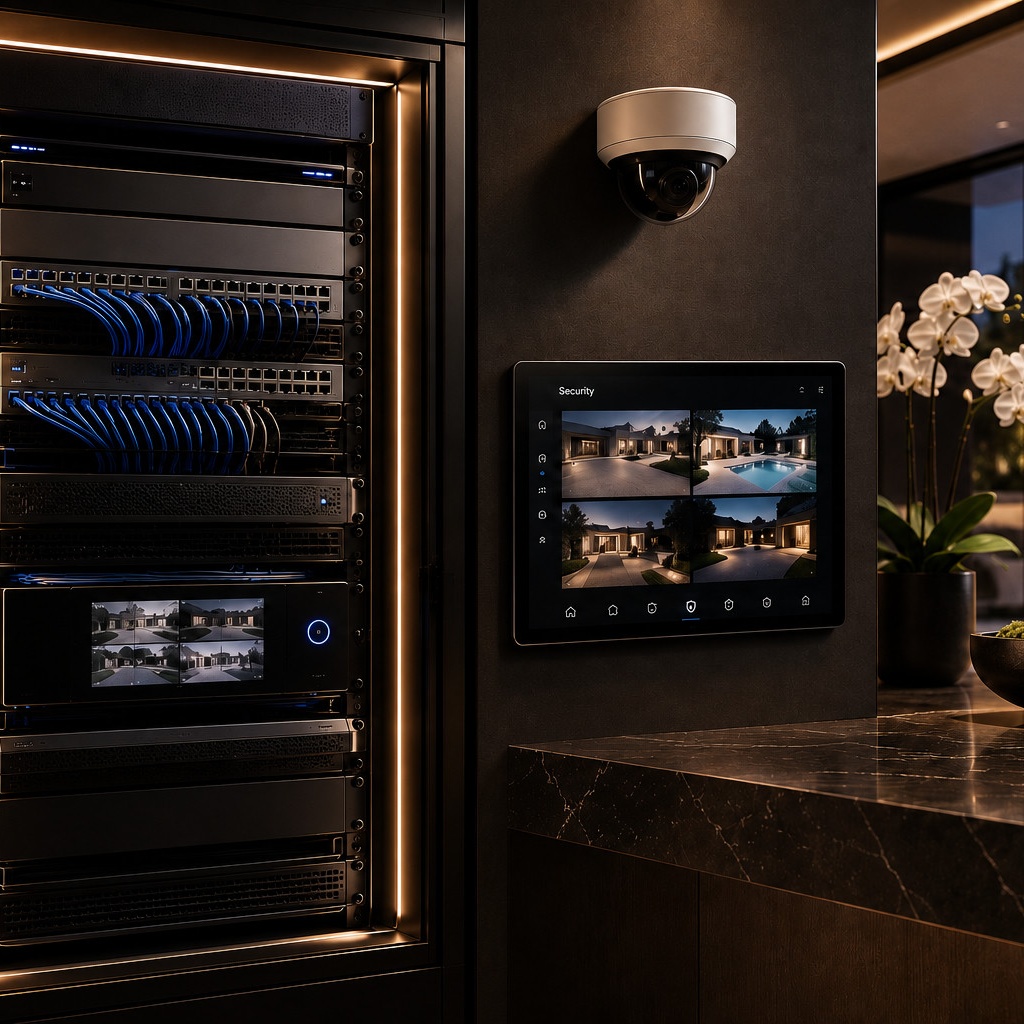
Every zone in a whole-home audio system ultimately traces back to one place: the equipment rack. This is where amplification, processing, and network gear live, and it is the part of the system a homeowner should never have to think about.
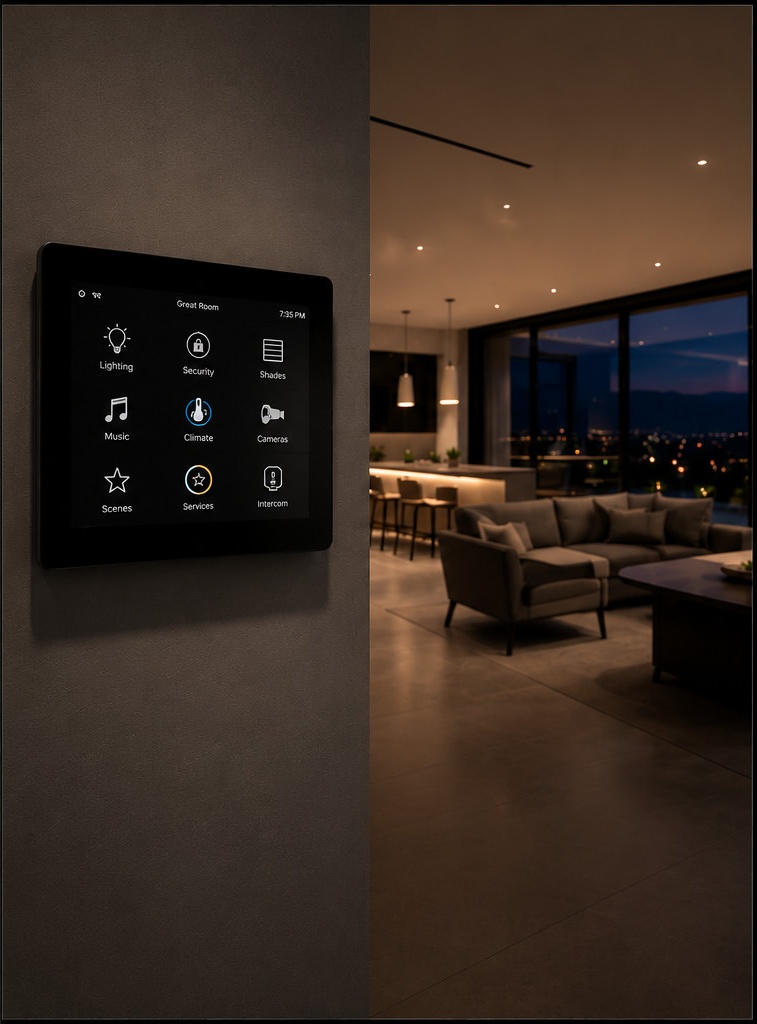
The best audio system is worthless if it is hard to use. Control is where whole-home audio either earns its keep every day or gets abandoned in favor of a phone plugged into a countertop speaker.
Speaker brand gets most of the attention, but it is rarely the deciding factor in how a room actually sounds. These fundamentals matter more.
Homes change. A whole-home audio system built with expansion in mind saves a family from tearing into finished walls a few years down the road.
Whether you are planning audio for a new build or expanding an existing home, a consultation with a Luxury Technology Advisor is the most efficient way to get a system sized correctly the first time.
Yes. It is easier to plan speaker wiring during a build or remodel, but existing homes can be retrofitted using wireless zones, accessible attic and crawl space runs, or a combination of wired and wireless zones depending on the layout.
No. Different rooms often call for different speaker types — architectural in-wall speakers in a living area, landscape speakers outdoors, compact speakers in a bathroom — all managed by the same distributed system.
It varies widely by floor plan and lifestyle. A zone plan is really a room-by-room conversation about where music actually gets used, which is why this is one of the first things a Luxury Technology Advisor walks through in a consultation.
A well-designed system is built around open, updatable control platforms rather than a single app, so it continues to support current streaming services as they evolve.
Cost depends heavily on the number of zones, whether speakers are architectural or standard, indoor versus outdoor requirements, and existing wiring access. A Luxury Technology Advisor can provide an accurate scope and quote after understanding the home and goals.
Yes. Indoor and outdoor zones live on the same platform, so a single scene or command can bring music to the whole property, or keep each area entirely independent.
Schedule a consultation with a Luxury Technology Advisor.
Schedule Your Consultation