These two televisions solve almost opposite problems. The Samsung Frame is built to disappear as a television and read as art on the wall when it's off. The LG G5 is a flagship OLED built to disappear as everything else — the most accurate color, the deepest black level, and the sharpest motion available — the moment it's on. Neither is objectively "better." Each is the right answer for a different room.
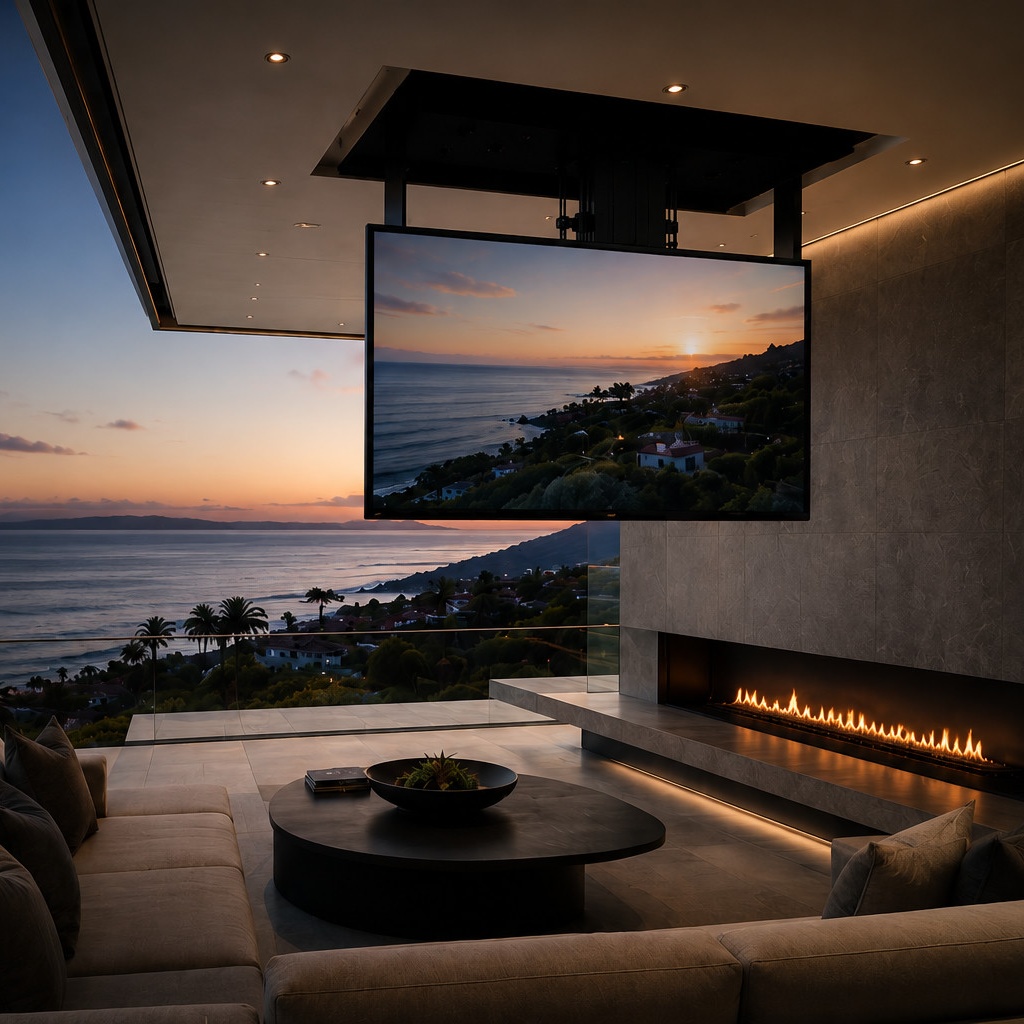
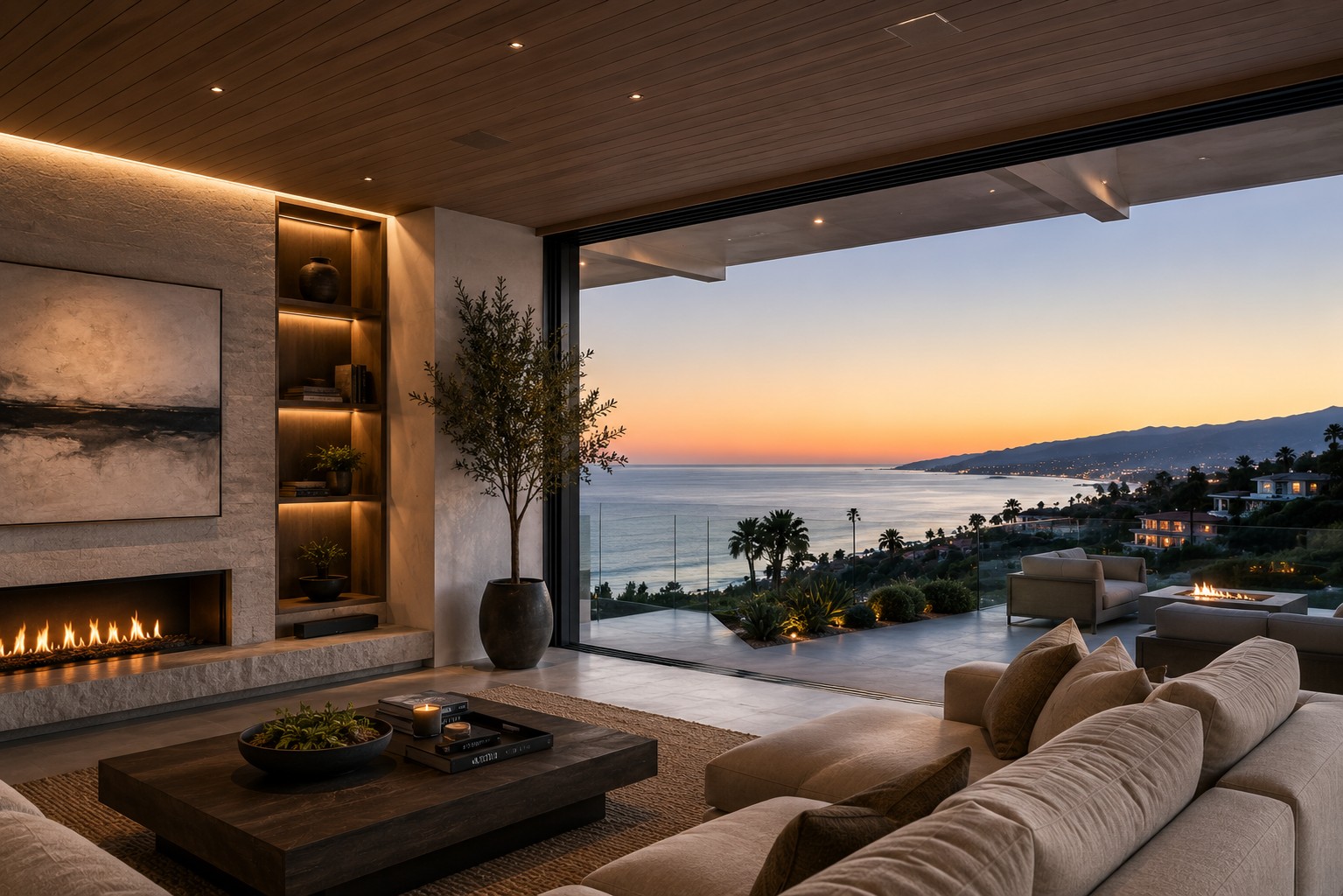
A living room is a design-first space more often than a critical-viewing space, and that's where the Frame earns its keep: Art Mode displays a rotating gallery of art, family photos, or a curated collection when the TV isn't in use, and the matte display finish plus customizable bezel are built specifically to read as a framed piece rather than a black rectangle. For a formal living room where the television needs to disappear into the design, the Frame is purpose-built for exactly that job.
The G5 can absolutely live in a living room, and its picture quality will outperform the Frame in every measurable way — but it looks like a television when it's off, because it is one. For living rooms where design leads, we usually spec the Frame; for living rooms built around serious daily viewing, the G5.
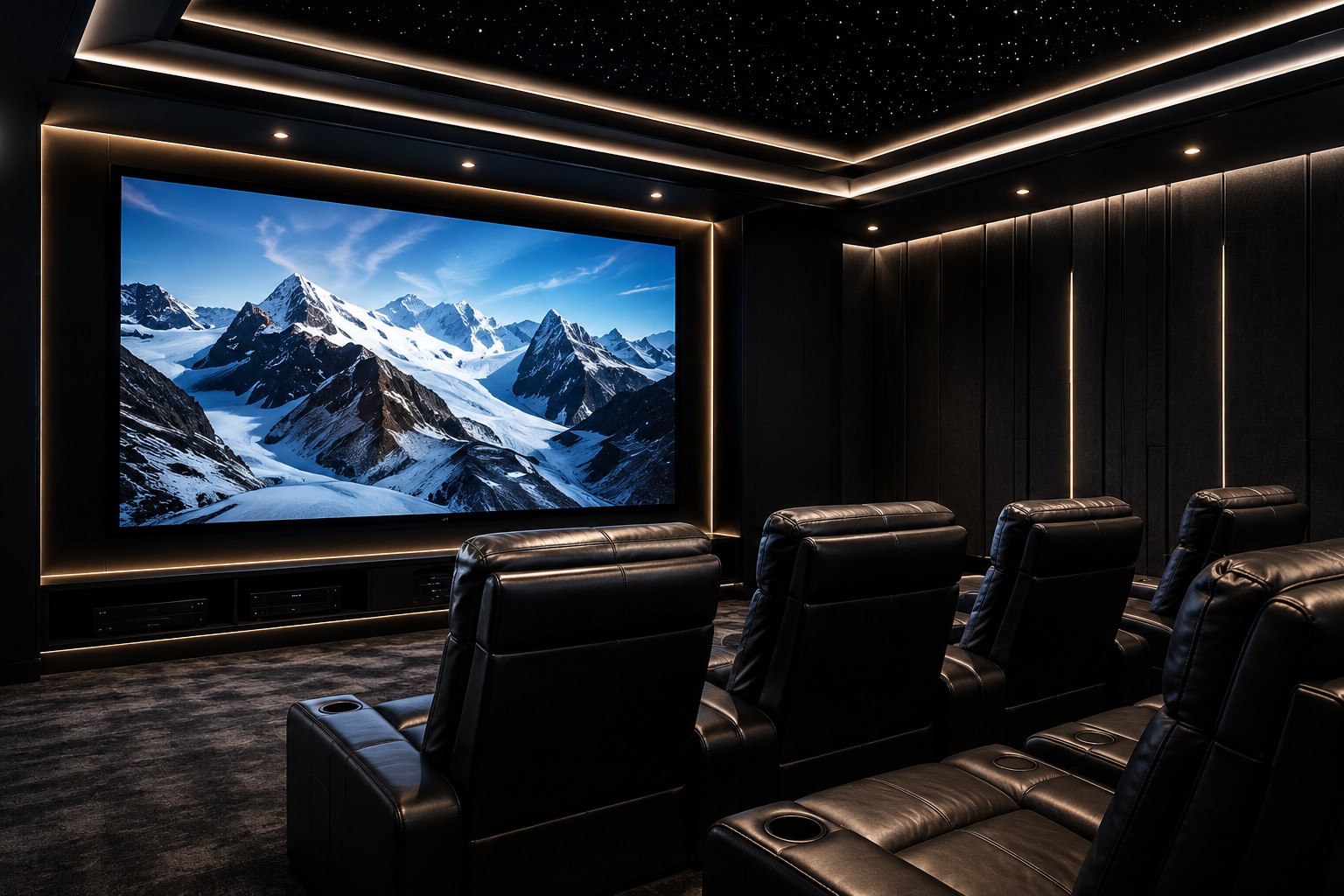
In a dedicated theater or media room, this isn't a close call. The G5 uses LG's newest "Primary RGB Tandem" panel — four stacked OLED layers instead of three, with true individual red, green, and blue layers rather than a white layer plus color filter. It pushes measured peak brightness well past prior LG generations (reviewers clock it in the 2,200–2,700 nit range depending on mode, versus roughly 1,500 nits on the previous G4) while keeping OLED's per-pixel black levels intact. The Frame's picture quality, by comparison, is built around QLED technology tuned for art reproduction and everyday viewing, not reference-grade home theater performance.
For any room where the screen is the main event — a theater, a serious media room, a dedicated screening space — we spec the G5 or an equivalent flagship OLED, paired with proper acoustic treatment and calibration as part of The ACT Standard™.
This one belongs entirely to Samsung. Art Mode is a purpose-built feature — a subscription art store, motion and light sensors that adjust brightness to match the room, and a matte anti-reflective finish specifically engineered so displayed art doesn't read like a glowing screen from across the room. The G5's OLED panel, for all its picture-quality advantages, is glossy and built to output video, not to convincingly mimic a printed piece hanging on a wall.
If Art Mode — or anywhere the TV needs to look intentionally like art, not just an off screen — is a real requirement for the room, the Frame is the only one of the two actually designed for it.
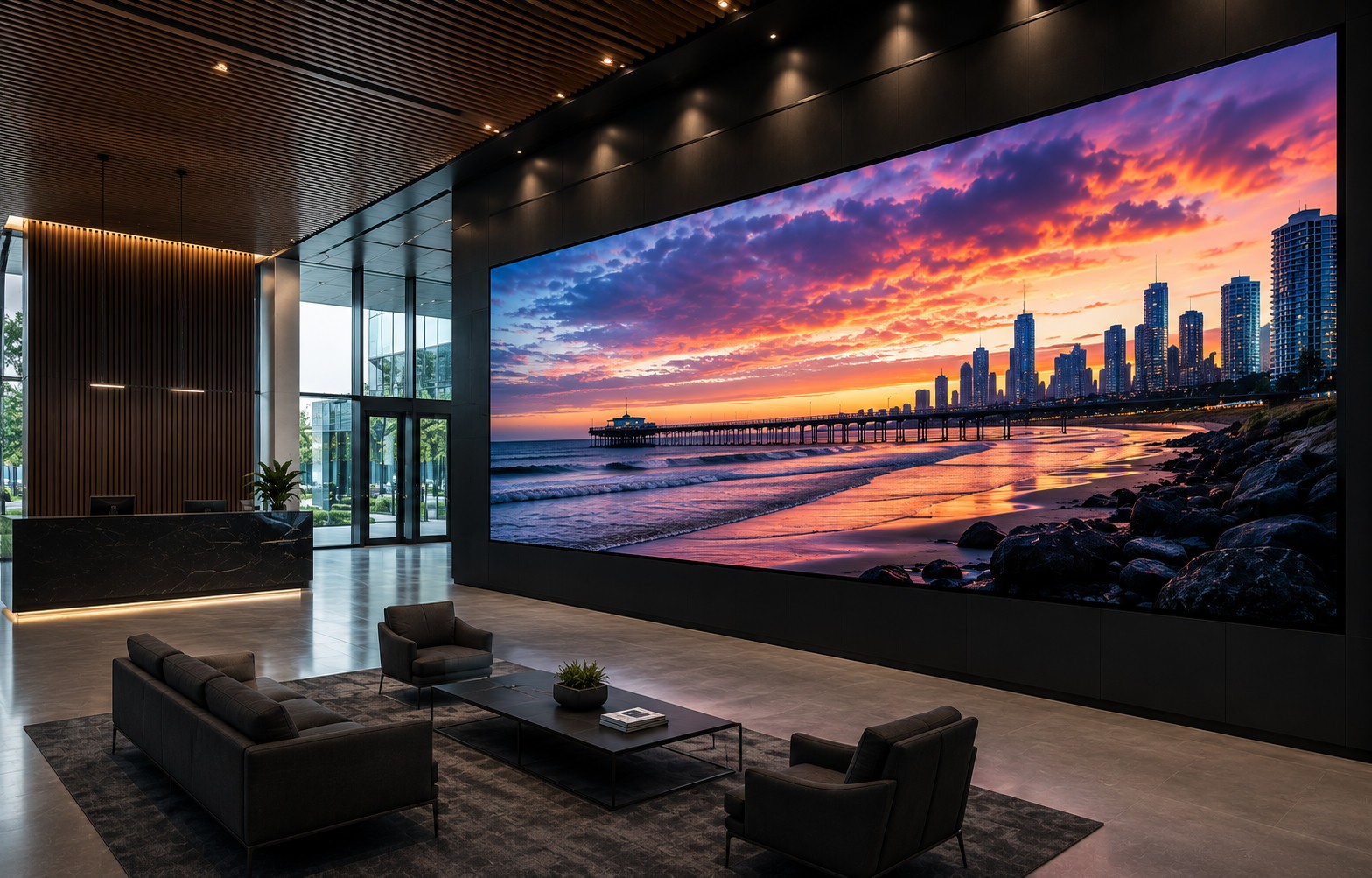
We don't treat this as one household picking a single winner — most of the estates we build have both. Frame TVs in formal living rooms, foyers, and primary suites where the screen needs to disappear into the design; flagship OLEDs like the G5 in theaters and media rooms where picture quality is the whole point.
| Criteria | Samsung Frame | LG G5 OLED |
|---|---|---|
| Panel type | QLED, matte anti-glare finish | OLED, glossy, per-pixel black |
| When off | Displays art, reads like a frame | Reads as a television |
| Peak picture quality | Strong, tuned for everyday viewing | Reference-grade, flagship tier |
| Best room | Living rooms, foyers, primary suites | Theaters, dedicated media rooms |
| Ambient light handling | Excellent, matte finish | Very good on latest panel generation |
| Customization | Interchangeable bezels, Art Store | Standard bezel, no art features |
Yes for everyday and family viewing, though a flagship OLED like the G5 will outperform it on black level, contrast, and motion handling for critical, lights-off viewing.
Not in the same purpose-built way. LG panels can display a screensaver-style image, but they lack the matte anti-reflective finish, light sensors, and curated art subscription that make Art Mode convincing from across a room.
You can, but we typically don't recommend it for a dedicated theater — the picture quality gap versus a flagship OLED is significant enough to affect the experience in a room built specifically for critical viewing.
Regularly. It's common for us to spec Frame TVs for design-forward living spaces and a flagship OLED for the theater or media room in the same project.
See the full Home Theaters service, or talk to a Luxury Technology Advisor about the right display for every room in your home.
Explore Home Theaters