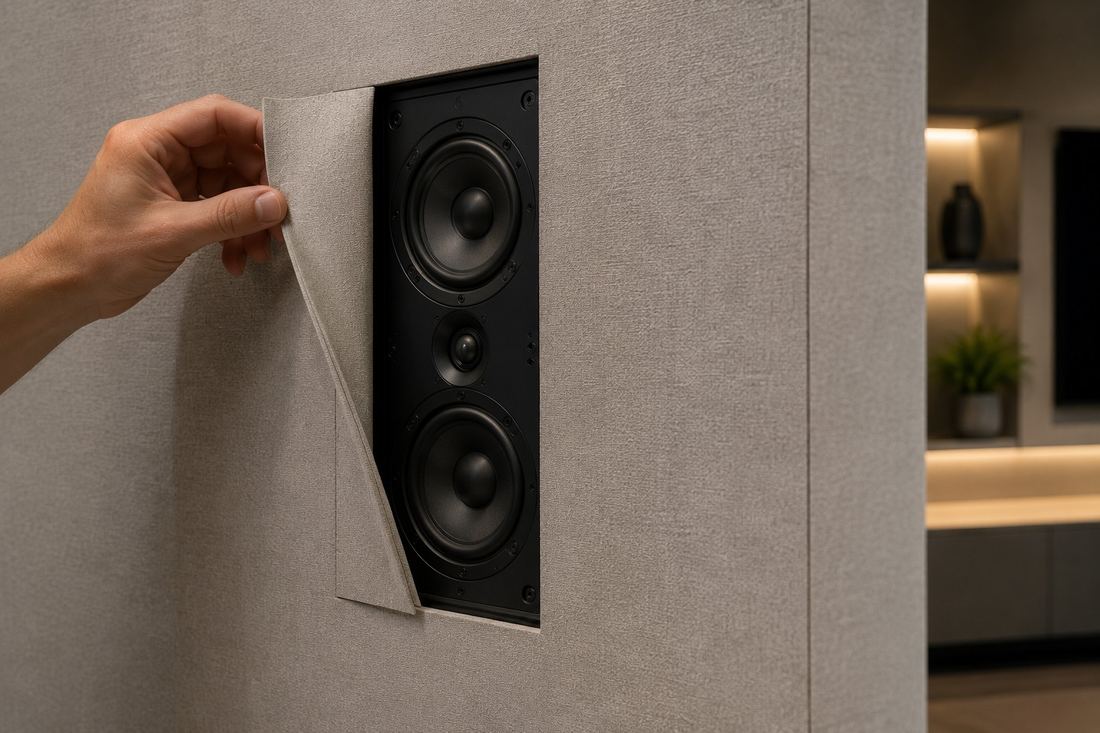
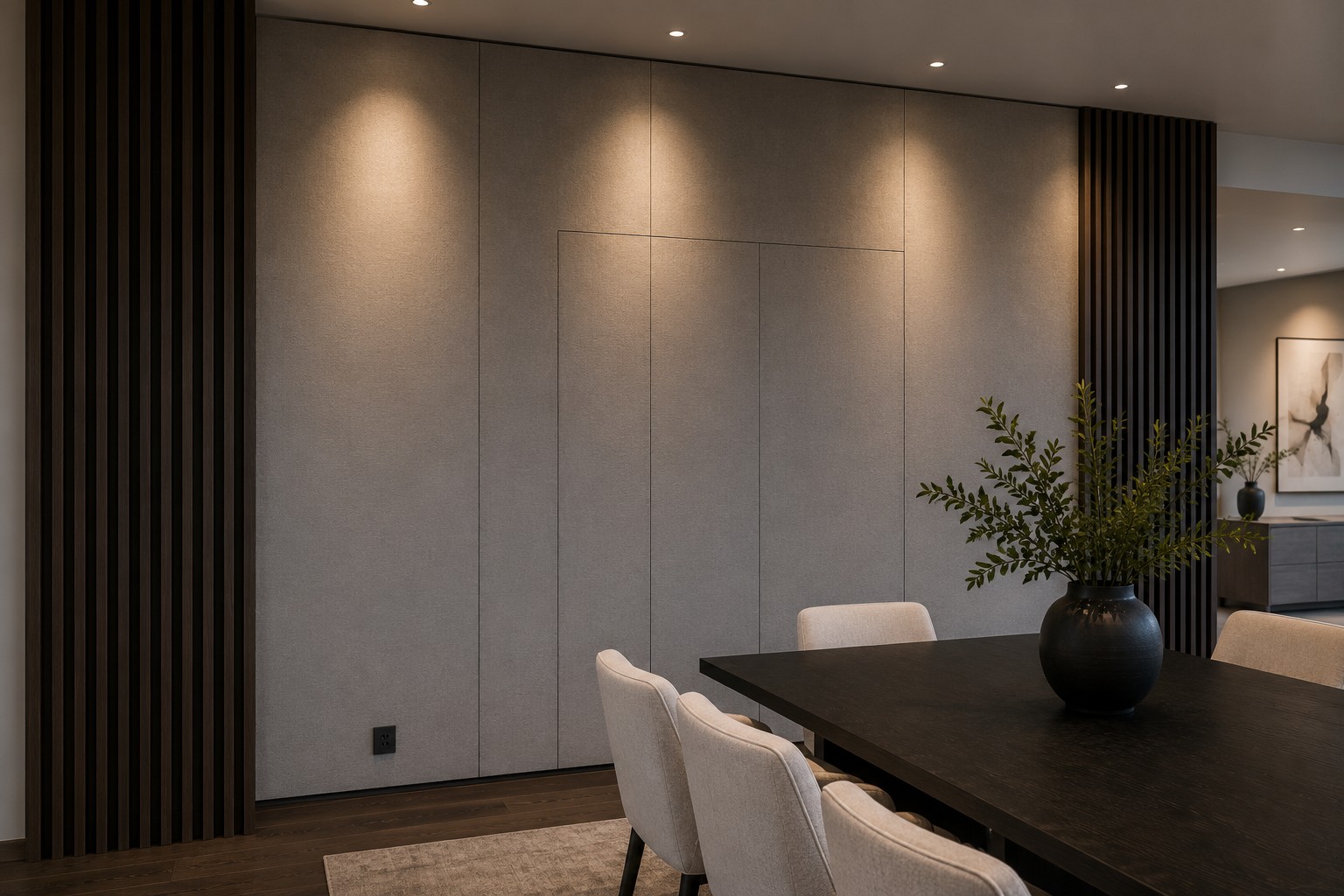
Invisible speakers are full-range drivers mounted inside a wall or ceiling cavity, then finished flush with a paintable or acoustically transparent surface. Once the wall is painted, there is no grille, no frame, no visible sign that a speaker exists at all.
This is the core of what we call Invisible Technology™ — audio, video, and lighting hardware built into the architecture rather than mounted onto it. As Sonance invisible speaker dealers, we treat the speaker as a construction detail, not an accessory added after the fact.
The appeal of invisible speakers goes beyond aesthetics, though that is usually the first reason a homeowner asks about them.
Two approaches dominate the invisible speaker category, and the right one depends on the wall or ceiling assembly.
Invisible speakers sound excellent for their purpose. They are not built to be a substitute for a reference stereo pair.
The plaster or fabric layer adds a small amount of dampening compared to an open grille, which is why quality invisible speaker lines compensate with stiffer cones and tuned crossovers engineered specifically for that covered condition. For ambient listening, background music, and even a well-balanced two-channel setup in a living space, the difference is not something most listeners notice. For a dedicated listening room or a serious ACT Cinema™ build where accuracy is the priority, we typically recommend visible or in-wall speakers with grilles instead — and reserve invisible placement for the rooms where disappearing matters more than absolute fidelity.
Invisible speakers earn their place in rooms where any visible hardware would compromise the design.
Because invisible speakers become part of the wall itself, sequencing matters more than with almost any other audio product.
Invisible speakers are far simpler to add during a build than after. If you are working with a builder, our Luxury Technology Advisors can join the framing walkthrough so nothing gets missed.
Both are excellent options. The right choice depends on the room, not a universal rule.
Bass is directional less than mid and high frequencies, which makes it the easiest range to hide.
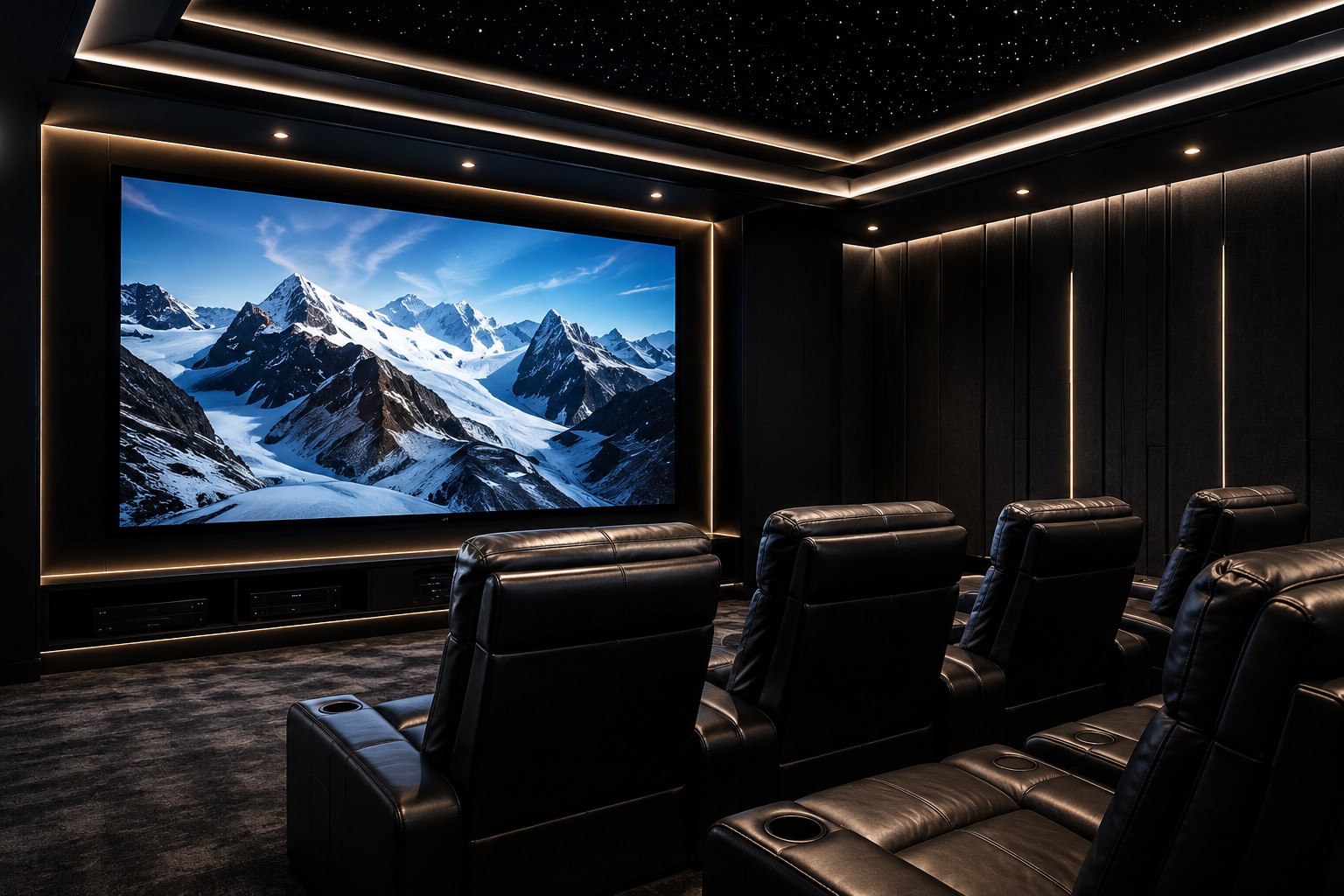
In-wall and in-ceiling subwoofers push low frequency energy through the same plaster or fabric approach as invisible speakers, and because bass is felt as much as heard, listeners rarely notice the source is concealed. For rooms that need genuine low-end weight — a media room or an ACT Cinema™ build in particular — we often pair an invisible or in-wall subwoofer with careful placement testing during pre-wire, since bass response is far more sensitive to room dimensions and cavity volume than the mid-range drivers around it.
A few scenarios come up repeatedly when architects and interior designers request invisible audio.
Invisible speaker pricing depends on the number of zones, room size, wall and ceiling construction, and whether the work happens during new construction or as a retrofit. Rather than a single number, it helps to think in three general tiers.
A focused installation in one space, such as a living room or primary suite, with a small number of invisible speakers on a dedicated zone.
Invisible audio extended across several key rooms — kitchen, great room, primary suite — coordinated as part of a whole-home audio plan.
Invisible speakers integrated throughout the home and outdoor living areas as one system under ACT Estate™, including subwoofers and dedicated listening spaces.
Because every home and finish package is different, the only way to get an accurate number is a conversation with a Luxury Technology Advisor. Schedule a consultation to talk through your rooms and finishes.
Yes. Once the plaster-over surface is sanded and painted, or the fabric panel is finished to match the wall, there is no visible grille or frame. From a normal viewing distance the wall reads as flat, uninterrupted drywall.
They can, though it requires opening the wall or ceiling, running wire, and patching the finish afterward. It is more involved than a retrofit in-ceiling speaker, which is why invisible audio is easiest and most cost-effective during new construction or a full renovation.
We are Sonance invisible speaker dealers and use their architectural audio line for most invisible installations, since it is purpose-built and well-proven for both plaster-over and fabric-over applications.
An open in-ceiling grille generally delivers slightly more precise high-frequency detail, since nothing sits between the driver and the room. Invisible speakers close that gap with a stiffer driver design, and for background and ambient listening the difference is minor for most homeowners.
Invisible speakers cover mid and high frequencies well, but for real low-end impact — especially in a media or cinema room — we typically add a dedicated in-wall or in-ceiling subwoofer alongside them.
Before drywall goes up. Once framing is set and wiring is coordinated with the electrician during rough-in, invisible speakers are straightforward. After drywall, it becomes a patch-and-paint job for each speaker location.
Schedule a consultation with a Luxury Technology Advisor.
Schedule Your Consultation