A golf simulator is not a home theater with a different screen. It is a performance space, a practice tool, and — done well — one of the most-used rooms in the house. Done poorly, it is an expensive closet.
Before choosing any equipment, walk the candidate room with a tape measure and a driver in hand. Most simulator disappointments trace back to a room that was chosen before the swing was ever considered.
Simulator rooms are judged on three dimensions — length, width, and height — and all three interact. Getting one wrong undermines the other two.
More simulator plans get scrapped over ceiling height than any other single factor. It is worth understanding why before falling in love with a room.
If ceiling height is uncertain, bring a driver into the room and take a full, honest backswing before committing to anything. A tape measure on the wall does not capture how a real swing moves through a real space.
The launch monitor is the heart of any simulator — the sensor that reads clubhead and ball data and turns a real swing into shot data on screen. Not all approaches work the same way.
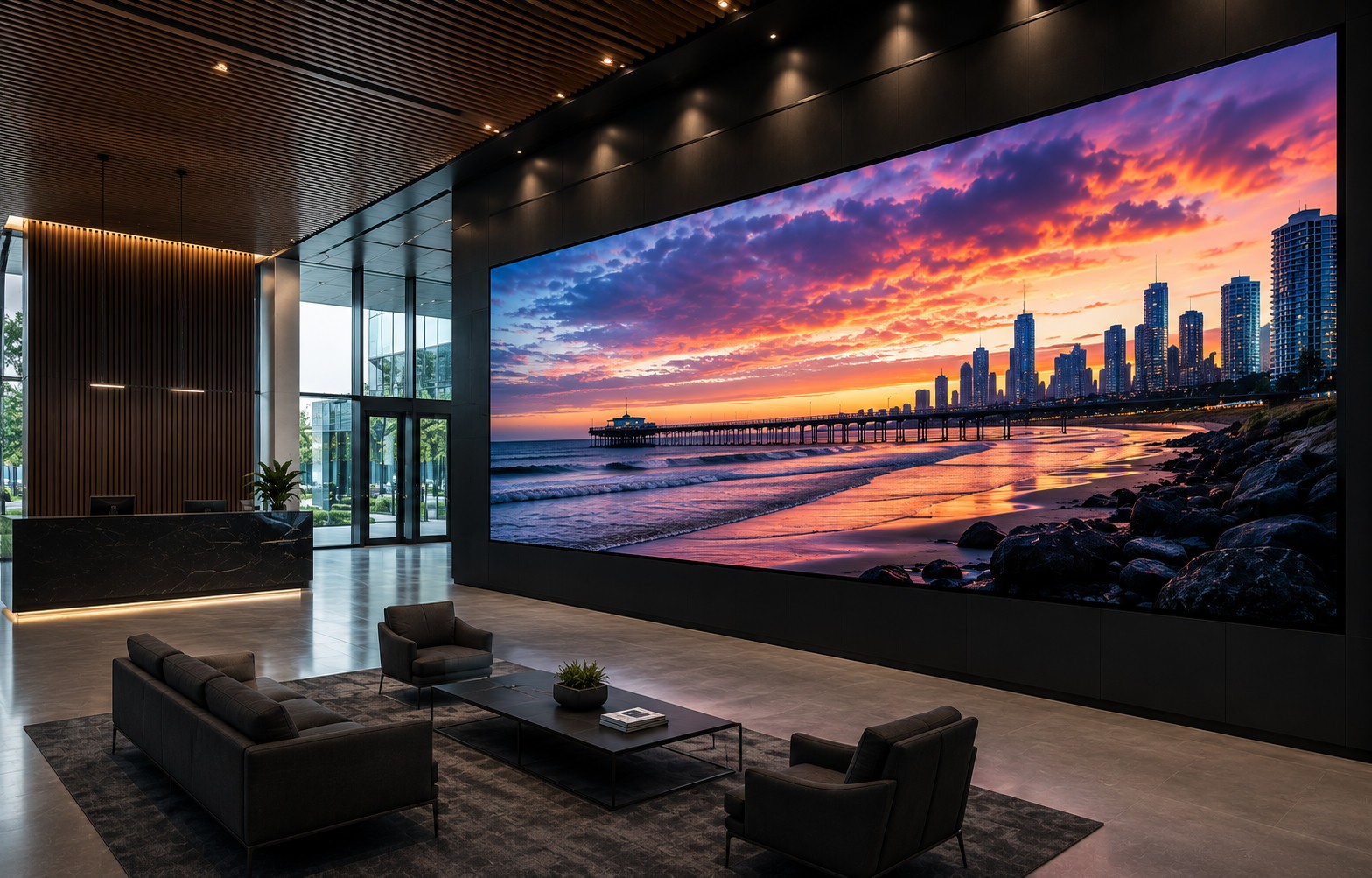
A simulator projector has a harder job than a home theater projector. It needs to throw a bright, sharp image from a short distance, often in a room that is not fully dark.
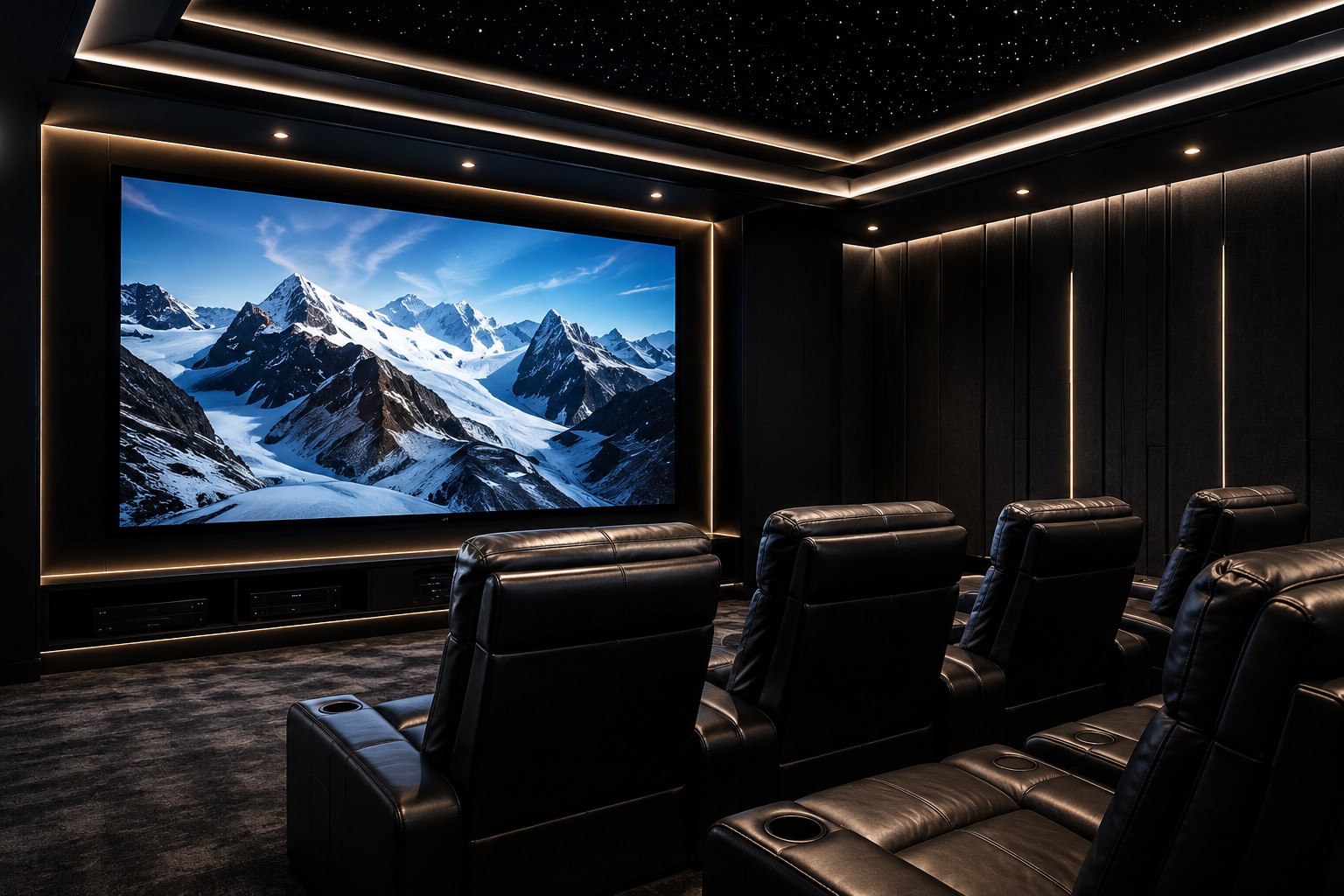
The screen in a golf simulator does double duty — it is a projection surface and a durable, sound-dampening backstop absorbing full-speed golf shots, day after day.
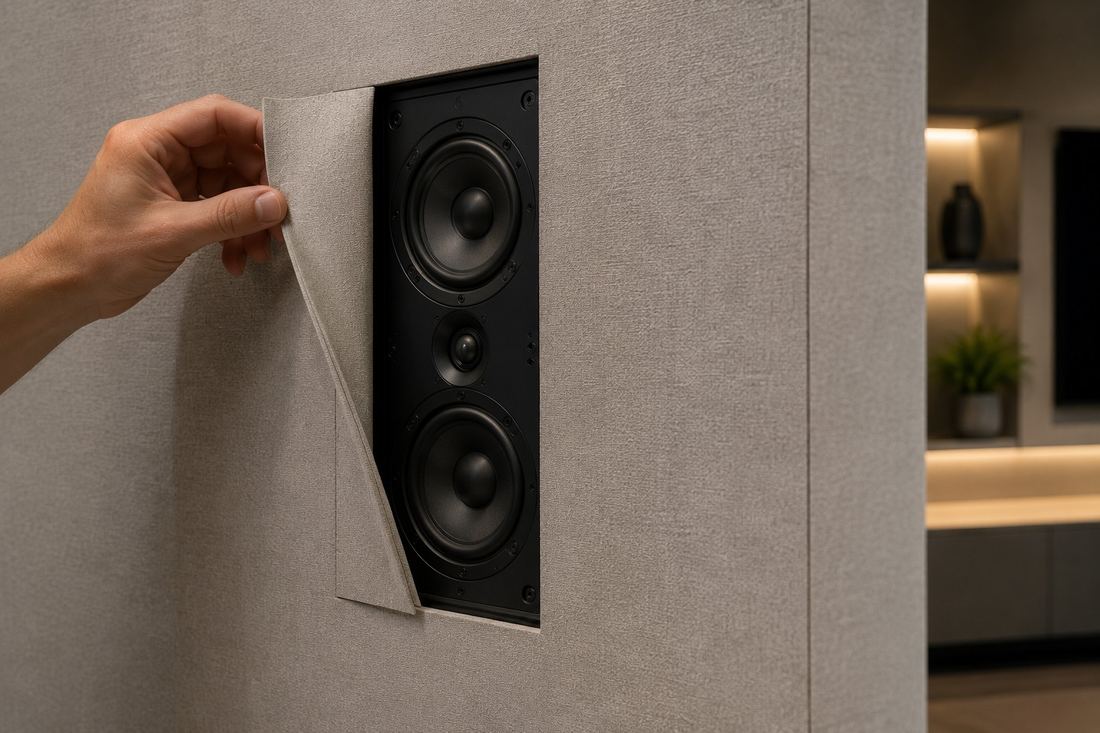
Audio in a simulator room serves two purposes — course ambience and commentary that make the experience feel real, and everyday listening for the times the room is used for music, sports, or casual entertaining.
Lighting in a simulator room has to solve two competing problems — enough light to see the club and ball clearly, and low enough ambient light for the projected image to look sharp.
Flooring is easy to treat as an afterthought and is one of the most consequential decisions in the room. It affects swing feel, joint comfort, noise, and how the hitting mat performs.
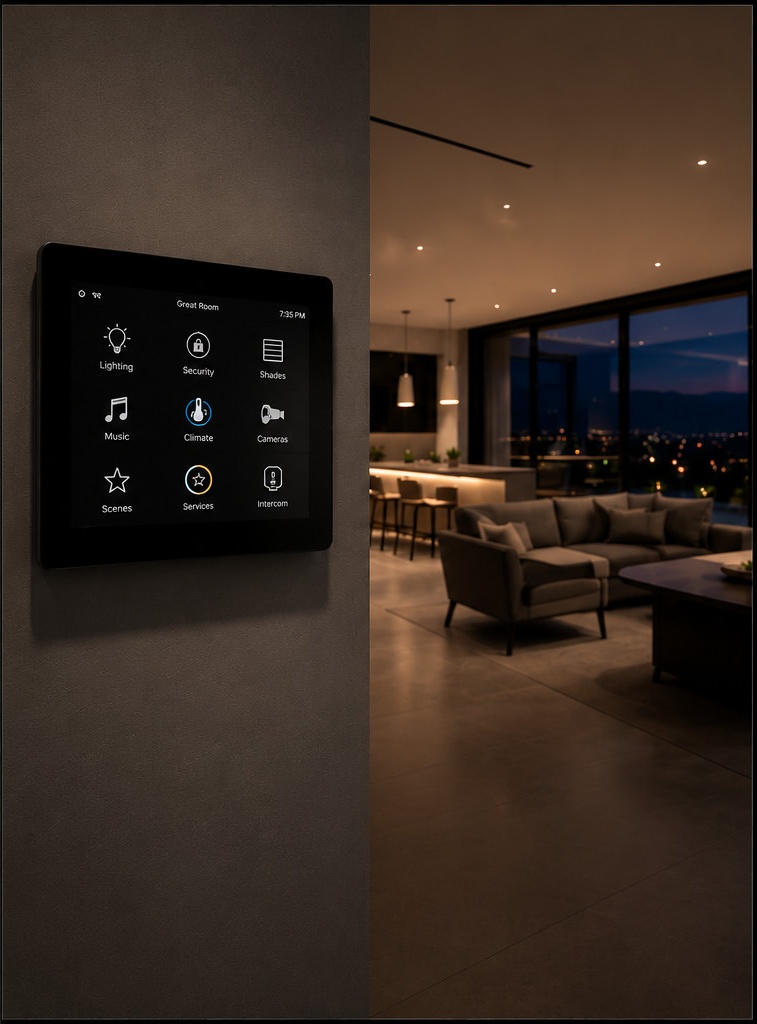
A golf simulator room does not need to operate as an island. Folded into the rest of a home's automation, it becomes far easier to use — and far more likely to get used.
Simulator costs vary widely based on room construction, launch monitor tier, screen and enclosure quality, and how deeply the room integrates with the rest of the home's technology. Rather than a single number, it helps to think in tiers.
A dedicated hitting bay with a capable entry-tier launch monitor, impact screen and enclosure, projector, and basic lighting and audio. Built for consistent practice and casual rounds.
A higher-fidelity launch monitor with deeper swing data, upgraded turf and hitting mat, refined screen and projection package, layered lighting scenes, and integrated audio built into the room.
A fully custom room built around premium finishes, top-tier launch monitor and simulation software, cinema-grade projection for dual-purpose use, and full integration with One Touch Living™ and ACT Estate™.
Because room dimensions and ceiling height drive so much of the equipment selection, the most useful next step is a conversation with a Luxury Technology Advisor. Schedule a consultation to get a real recommendation and quote for your space.
It depends on the golfer's height and swing plane, not just the room's standing height. A tall golfer with an upright backswing needs meaningfully more clearance than a shorter golfer with a flatter swing, which is why a real practice swing in the room is the best test.
Yes. Many clients design the room to do both, using a short-throw projector, impact-quality screen, and layered lighting scenes that shift between play mode and movie mode with one touch.
A full enclosure with side and rear netting protects the room and everyone in it from mis-hits, and is strongly recommended for most golfers, especially faster or less consistent swingers.
Basements are popular because they are often unused space, but they frequently have the lowest ceilings in the house. Measuring actual swing clearance before committing to a basement location is essential.
Impact noise from the club and ball can be noticeable, but proper screen material, acoustic flooring, and room construction significantly reduce sound transfer to adjacent rooms and floors below.
Yes. When built as part of an ACT Estate™ system, the simulator room's lighting, audio, and climate share the same control platform as the rest of the home, rather than operating as a separate system.
Schedule a consultation with a Luxury Technology Advisor.
Schedule Your Consultation