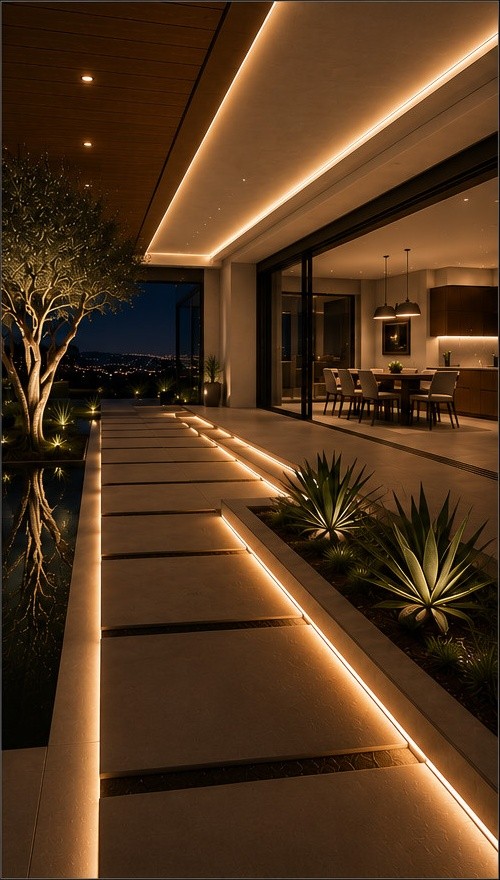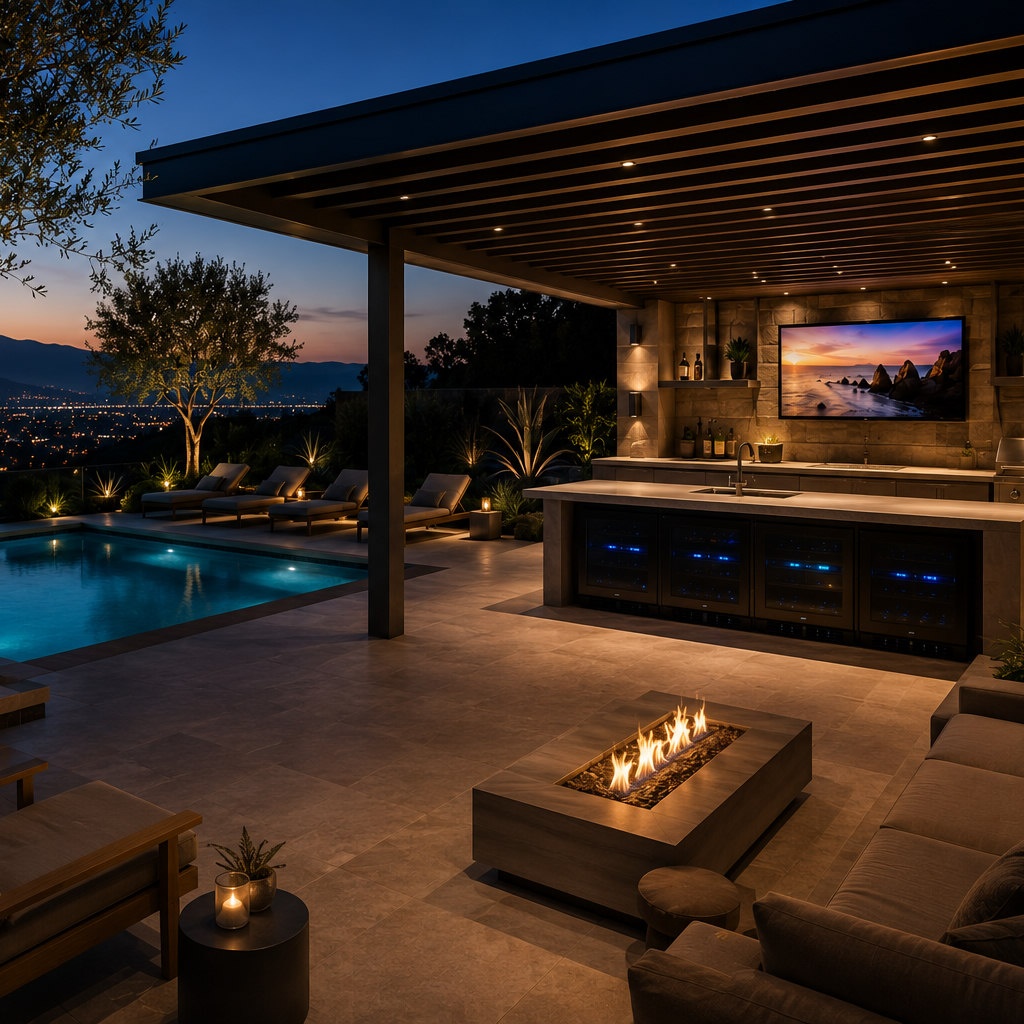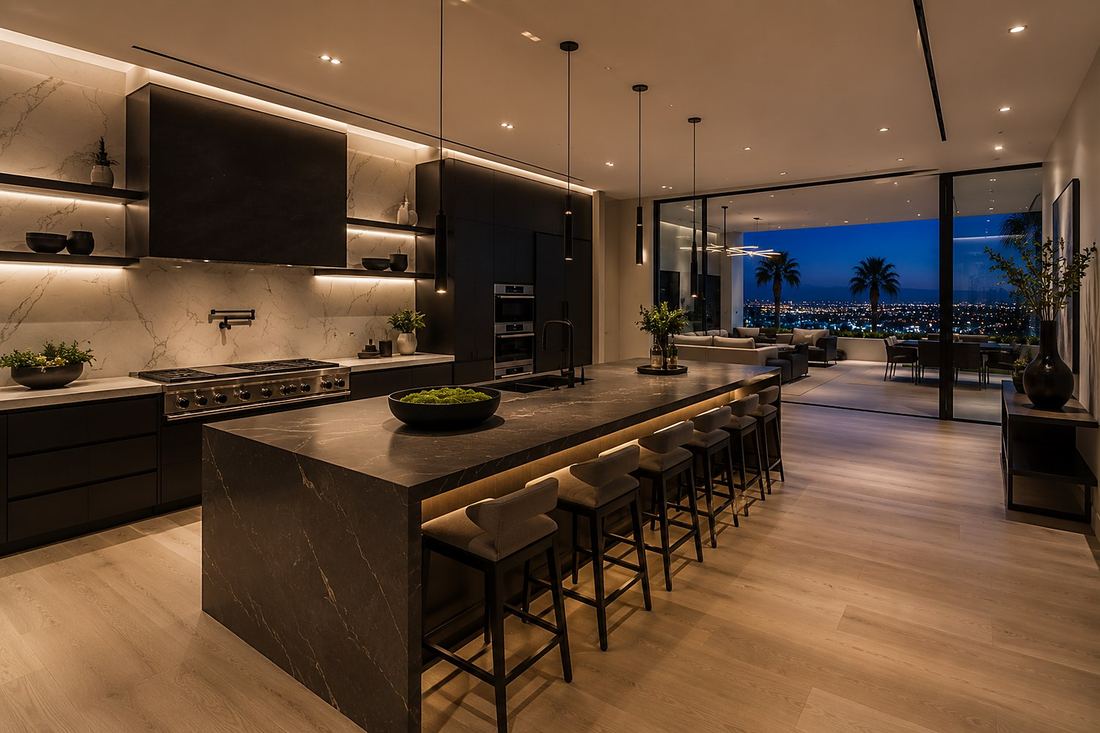
Color temperature is measured in Kelvin, and for landscape lighting the choice almost always comes down to two options: 2700K and 3000K. The difference is subtle in a spec sheet and obvious the moment the lights turn on.
2700K reads as warm, candlelight-like white — soft, traditional, and closest to old incandescent bulbs. 3000K is still warm but noticeably crisper, giving stone, metal, and modern architecture slightly more definition. Neither is "correct" — the right choice depends on the materials and style being lit.
Consistency matters more than which temperature you pick — mixing 2700K and 3000K fixtures across the same visible area reads as a mistake rather than a design choice. We keep temperature consistent per zone.
It can work across genuinely separate zones — front facade versus a modern pool area, for example — but should stay consistent within any single visible area.
3000K generally reads better against pool decking, tile, and water, though this varies by material and personal preference.
Not directly — brightness is measured in lumens, a separate spec from color temperature. A fixture can be dim or bright at either 2700K or 3000K.
Rarely — 4000K and above reads as cool, commercial-style white light that generally looks out of place in a residential landscape setting.
See the full Lighting service, or read the Luxury Lighting Guide for how a layered plan comes together.
Explore Lighting