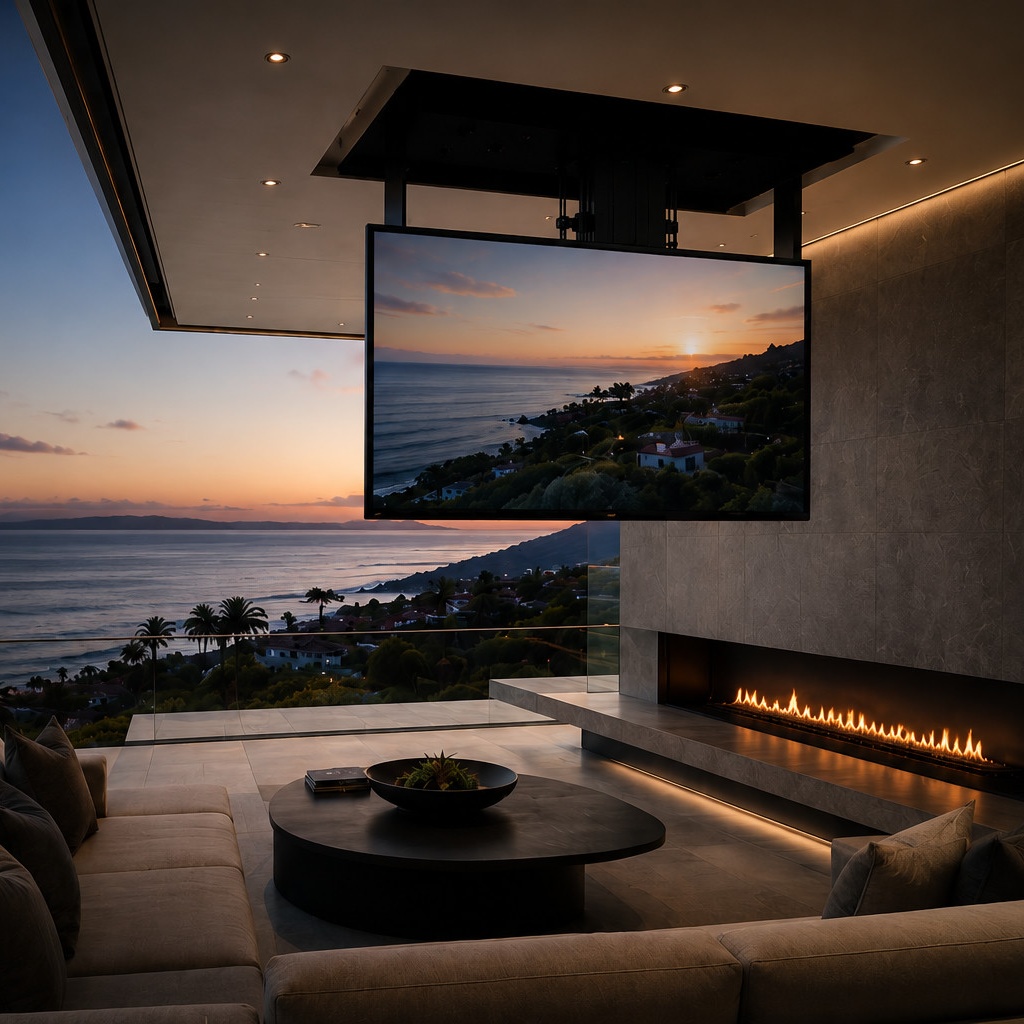
A blank black rectangle rarely fits the design of a formal living room, primary suite, or outdoor kitchen. Hiding the television lets a room be designed around art, architecture, and views — with the screen appearing only when it's wanted, in a luxury living room or anywhere else in the home.
"TV lift" covers a whole family of mechanisms, not one product. The right one depends on the room and the furniture already in it.
A mirror TV sits behind a two-way mirrored panel: with the screen off, it reads as a genuine mirror; power it on, and the image reads through the glass. There's no lift, slide, or moving part — the concealment is entirely in the glass itself, which makes it one of the lowest-maintenance ways to hide a screen.
Mirror TVs work especially well in primary bathrooms, dressing rooms, and entryways — anywhere a mirror already belongs, and a screen is a bonus rather than the main event. The tradeoff is brightness and contrast: image quality reads slightly softer through the mirrored layer than an uncovered screen, so they suit ambient viewing more than critical movie-watching.
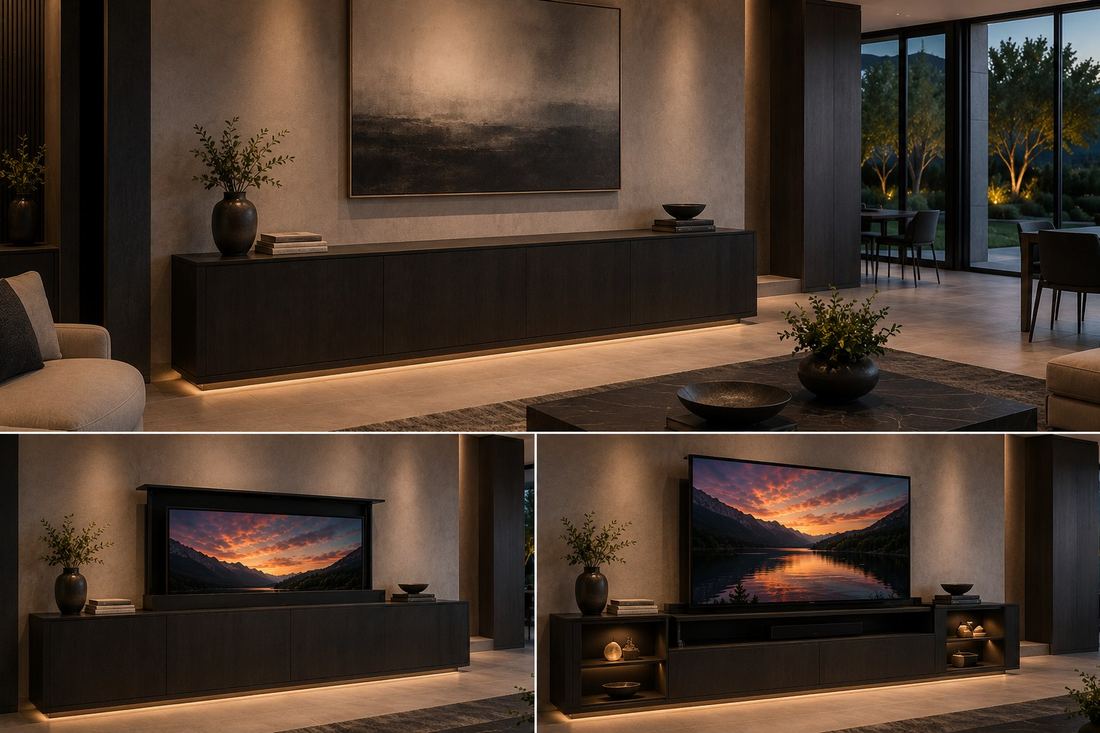
A motorized lift built into a credenza, console, or custom millwork — the television rises on cue and lowers flush when the system powers down. Ideal for kitchens, bars, and family rooms where the cabinetry needs to look complete either way.
Because the mechanism lives inside the cabinet itself, cabinet lifts are usually the easiest option to retrofit into an existing room — no structural ceiling or wall work required, just the right piece of furniture.
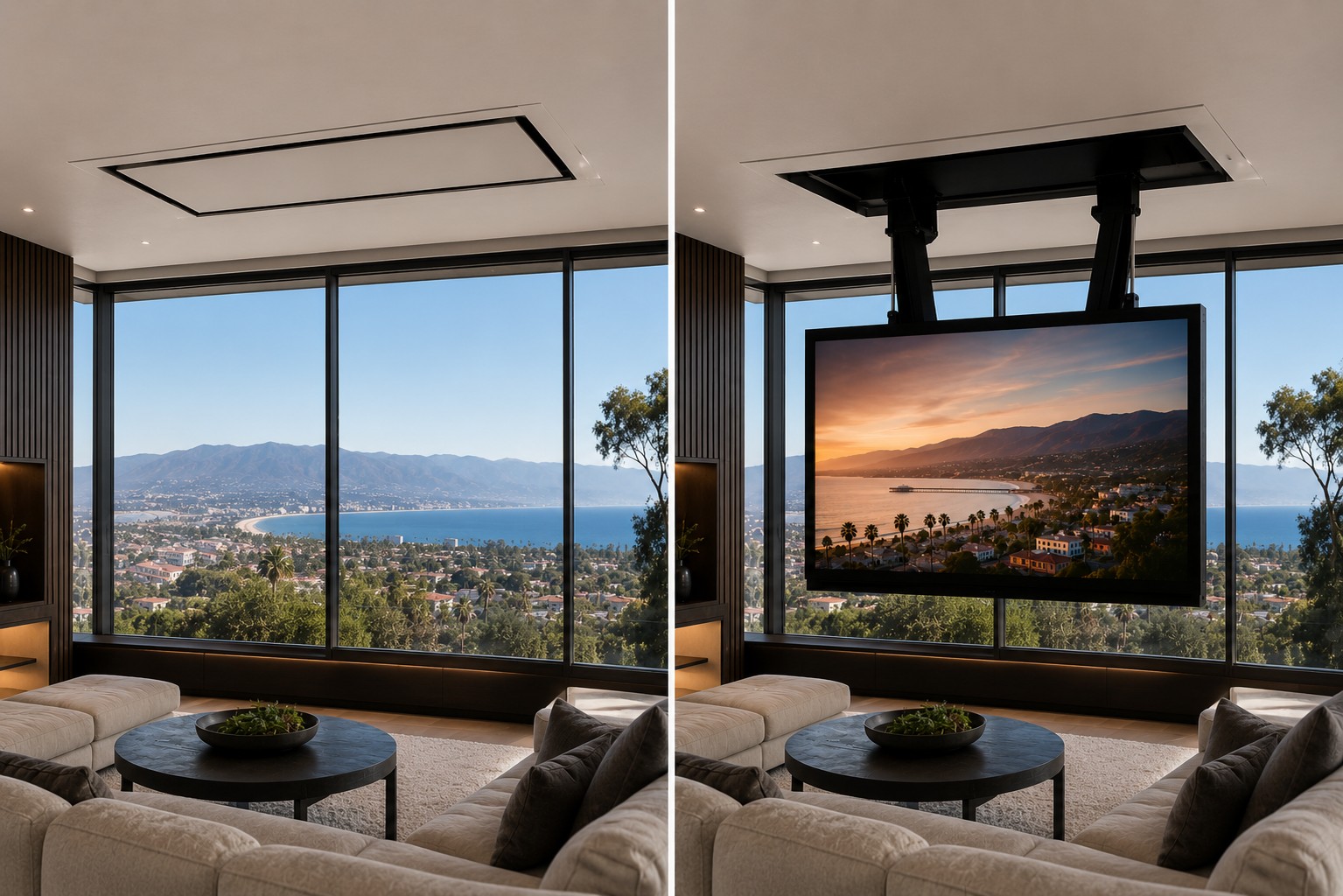
A drop-down mount that lowers the television from a ceiling pocket, then retracts completely out of sight when not in use — no furniture footprint at all. This is a favorite for rooms built around a view, where the last thing you want is a screen competing with floor-to-ceiling glass.
Ceiling lifts need real planning: structural blocking, a ceiling cavity deep enough for the mechanism, and power and low-voltage run to the exact final location before drywall closes in.
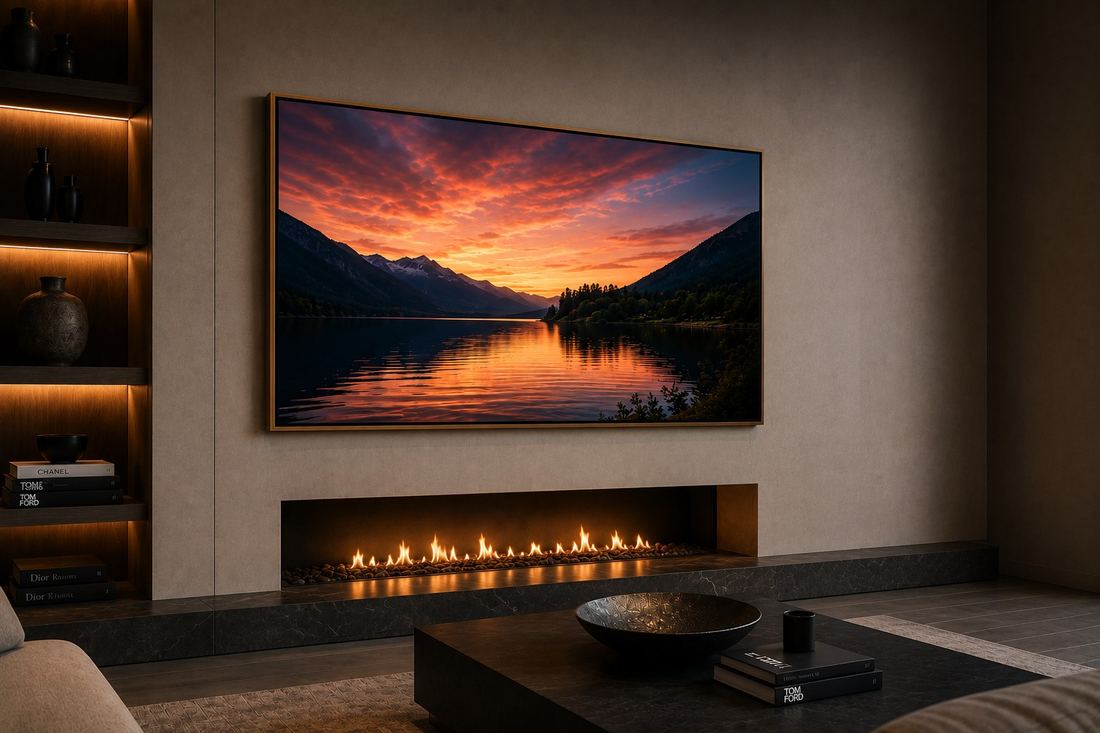
An art-frame television displays a piece of art, a photograph, or a curated rotation of images when off, and becomes a full television at the touch of a button. Unlike a lift or panel, there's no moving mechanism — the frame simply stays on the wall, styled like any other piece.
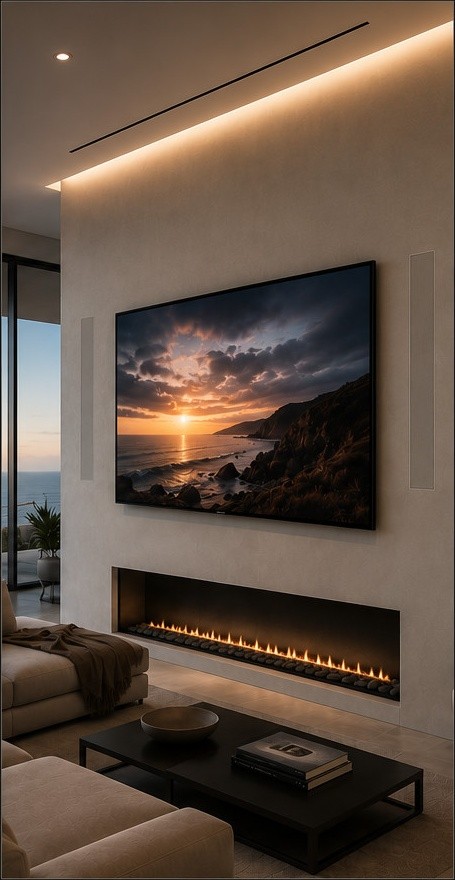
It's the most design-forward option on this list, and the easiest to place somewhere a lift or cabinet simply won't fit — over a fireplace, in a foyer, or anywhere a piece of art would normally hang.
Hidden TV cost depends heavily on the mechanism, the millwork involved, and how much structural planning is needed — so instead of a single number, we plan every project against three general tiers.
A single cabinet lift or art-frame TV in an existing piece of furniture or a straightforward wall placement — the most accessible way to try a hidden screen.
A ceiling lift or custom millwork cabinet lift, planned into the room's structure, with a fully finished surround. Our most common hidden-TV build.
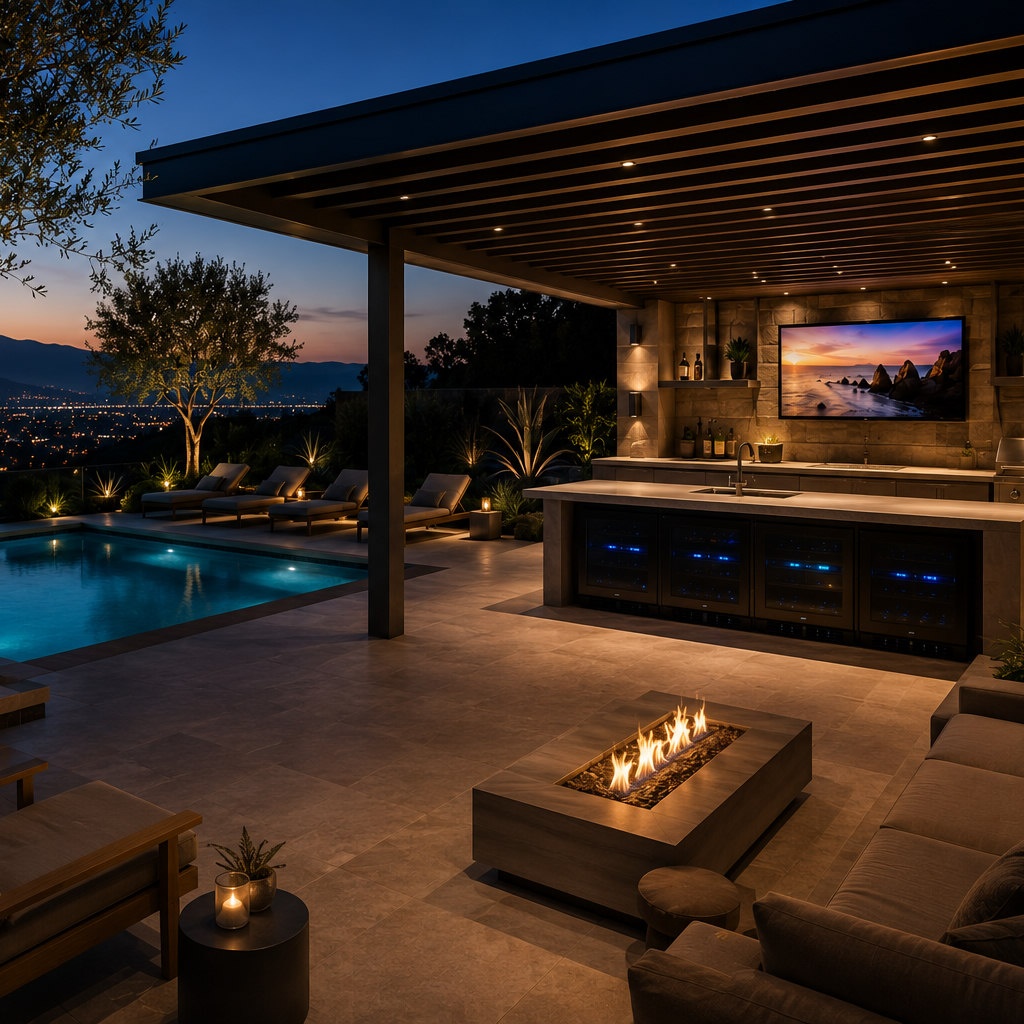
Multiple concealed screens, outdoor weatherproof installations, or a fully custom in-wall pocket lift integrated with millwork on all sides.
Because so much depends on your specific room and furniture, the most accurate way to budget is a real quote — schedule a consultation with a Luxury Technology Advisor.
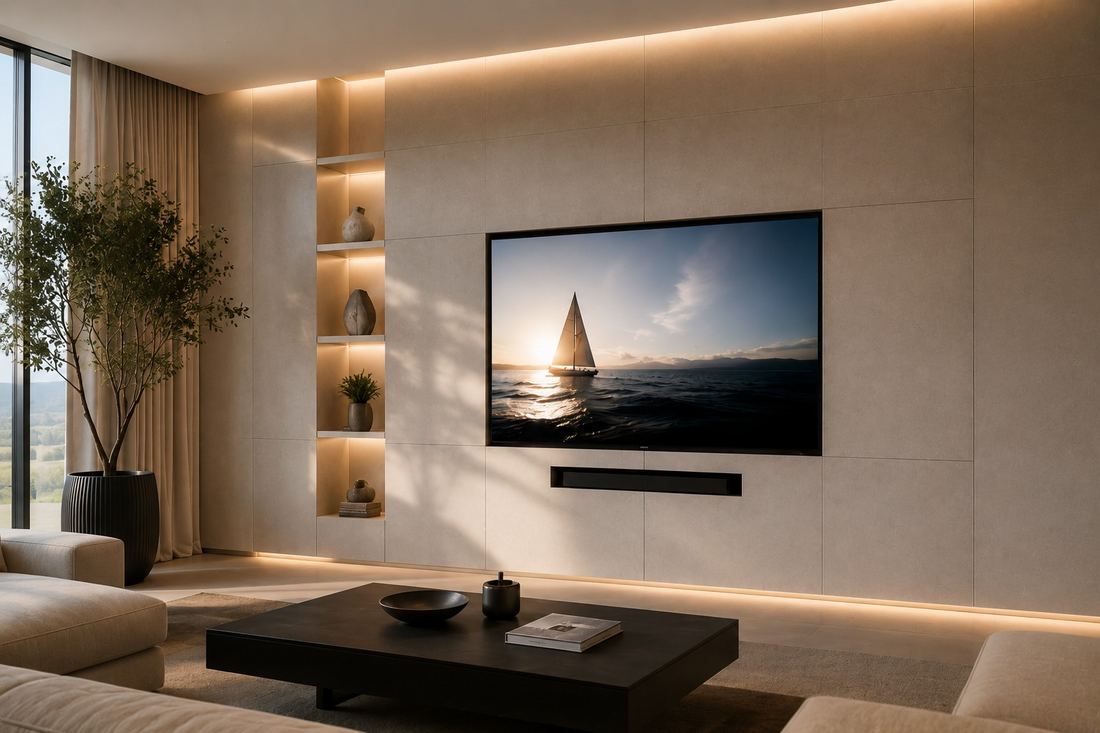
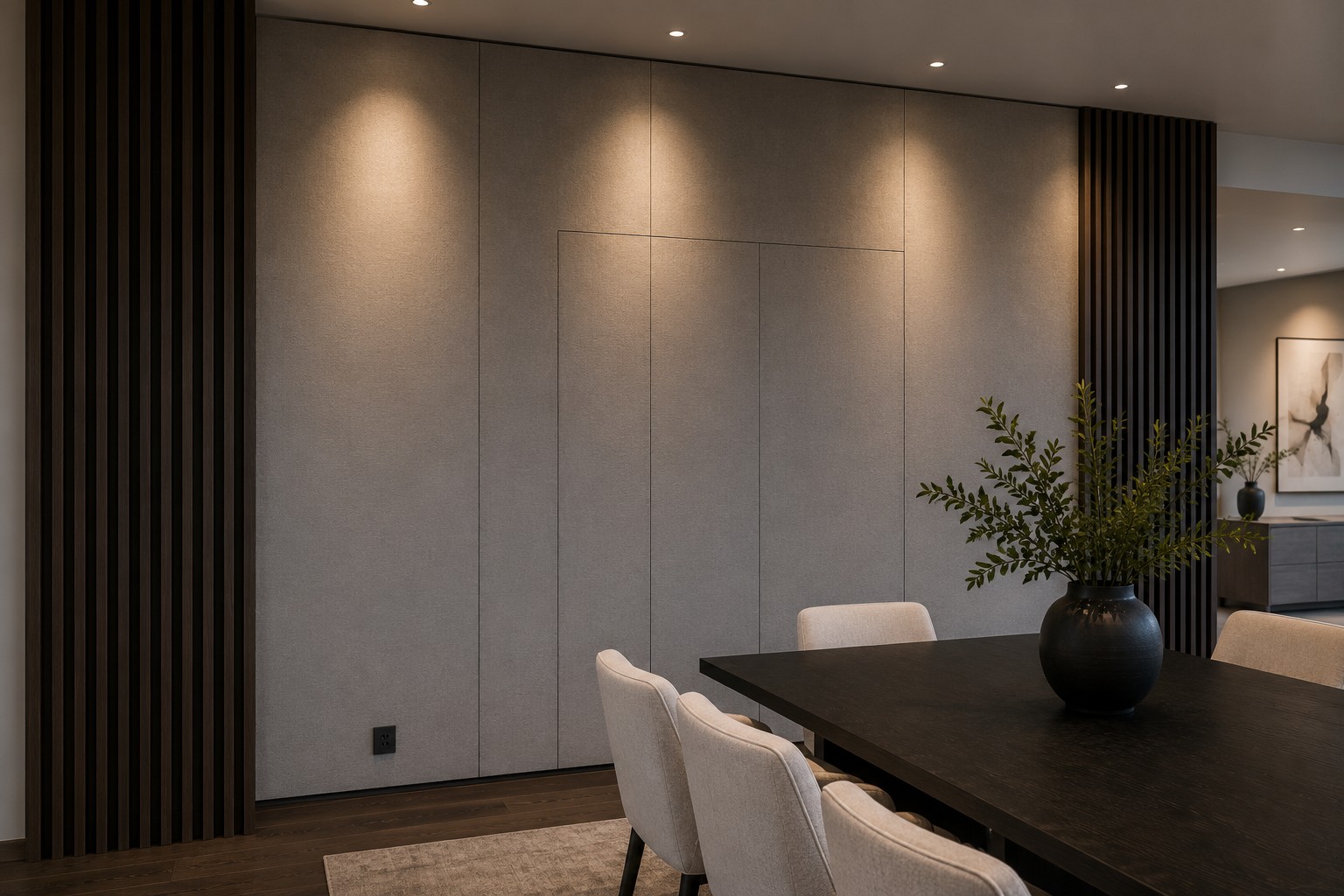
Not every hidden TV needs a moving part. Flush-mounting a screen recessed into a feature wall — surrounded by matching tile, paneling, or millwork — reads as intentional and architectural even with the screen fully visible.
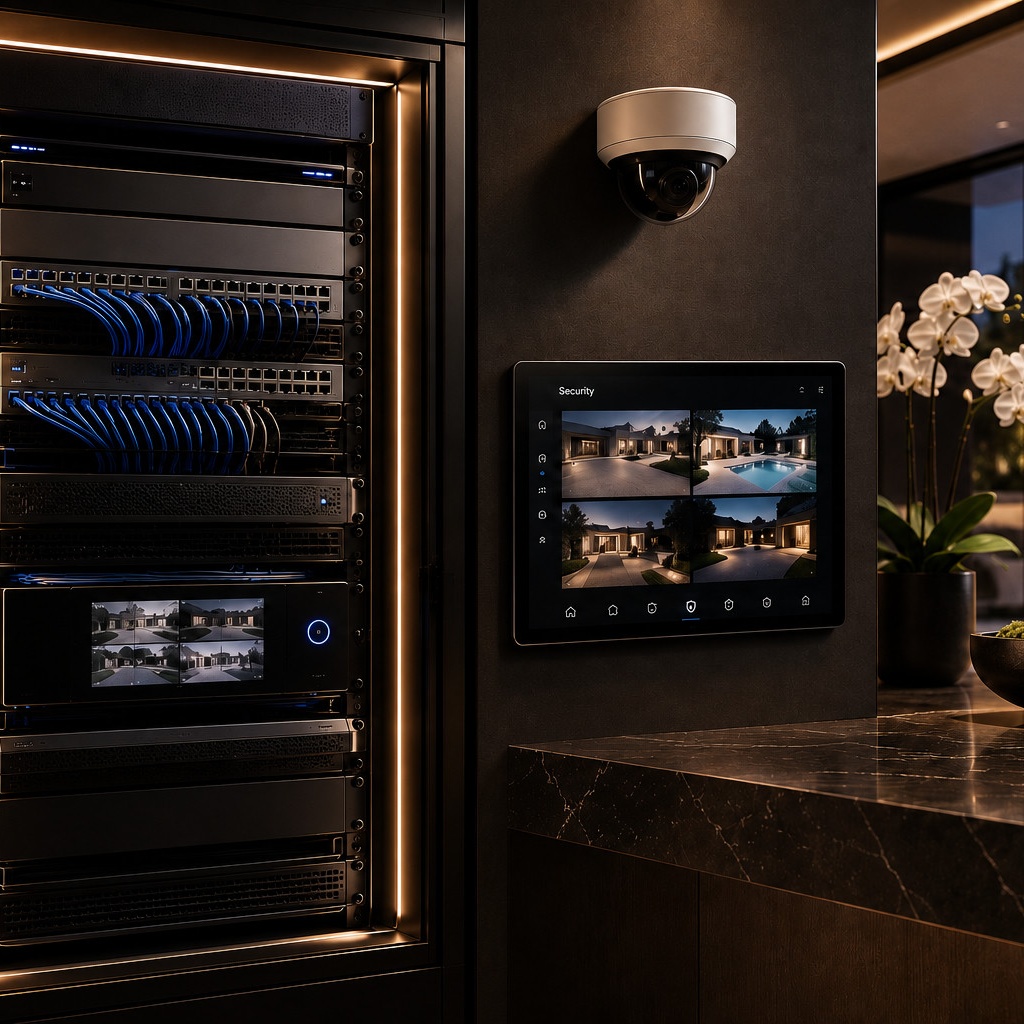
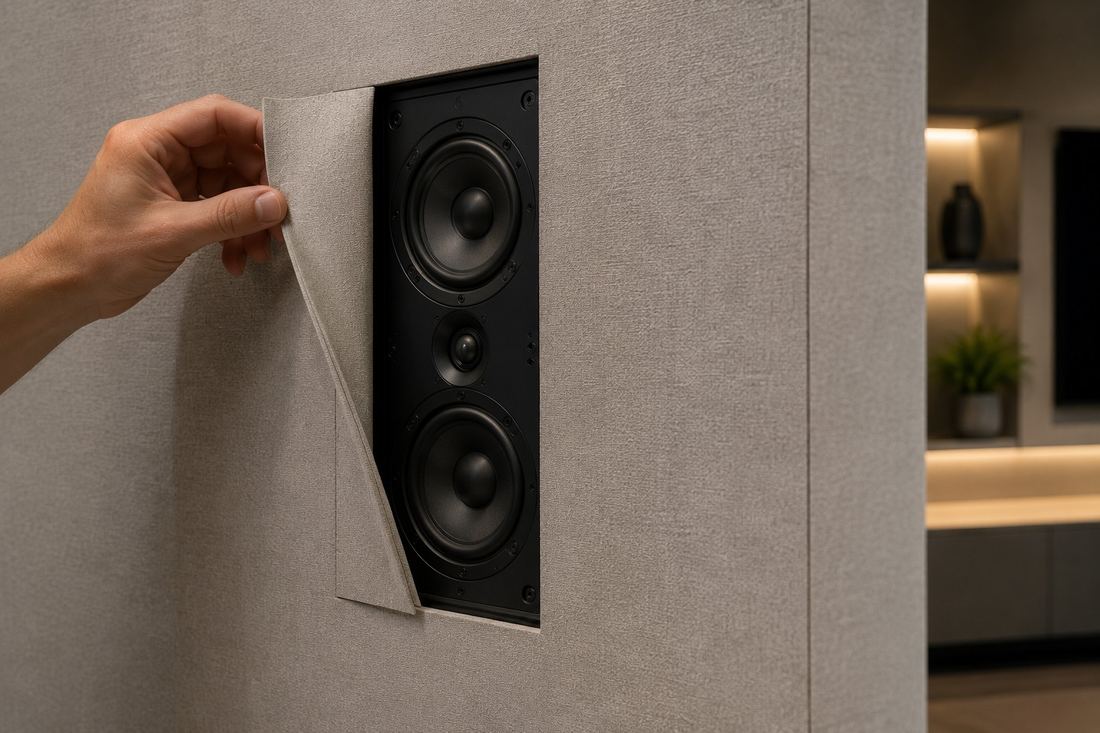
Pair whichever method you choose with in-wall speakers and a hidden equipment rack, and the room reads as pure design when the system is off — not a media room in disguise.
A cabinet lift rises from a piece of furniture or built-in millwork; a ceiling lift drops down from a ceiling pocket and retracts completely out of sight. Cabinet lifts are generally easier to retrofit; ceiling lifts need more structural planning but leave no furniture footprint.
Yes — a mirror TV sits behind a genuine two-way mirrored panel, so with the screen off it reads as an ordinary mirror. Image quality through the mirrored layer is slightly softer than an uncovered screen, which suits ambient viewing better than critical movie-watching.
Yes, with the right weatherproof-rated equipment and enclosure — see Outdoor Hidden TVs above. Indoor-rated lifts and displays should never be used in an uncovered or partially covered outdoor space.
It depends on the mechanism, the millwork involved, and how much structural planning is needed — see our Cost Guide above for three general tiers. The most accurate number comes from a consultation with a Luxury Technology Advisor.
A cabinet lift in an existing piece of furniture, or an art-frame TV, since neither requires structural blocking or ceiling work — both can be added without modifying the room itself.
See the full Invisible Technology™ service, or schedule a consultation.
Explore Invisible Technology™