ACT Outdoor™
The Luxury Outdoor Entertainment Guide.
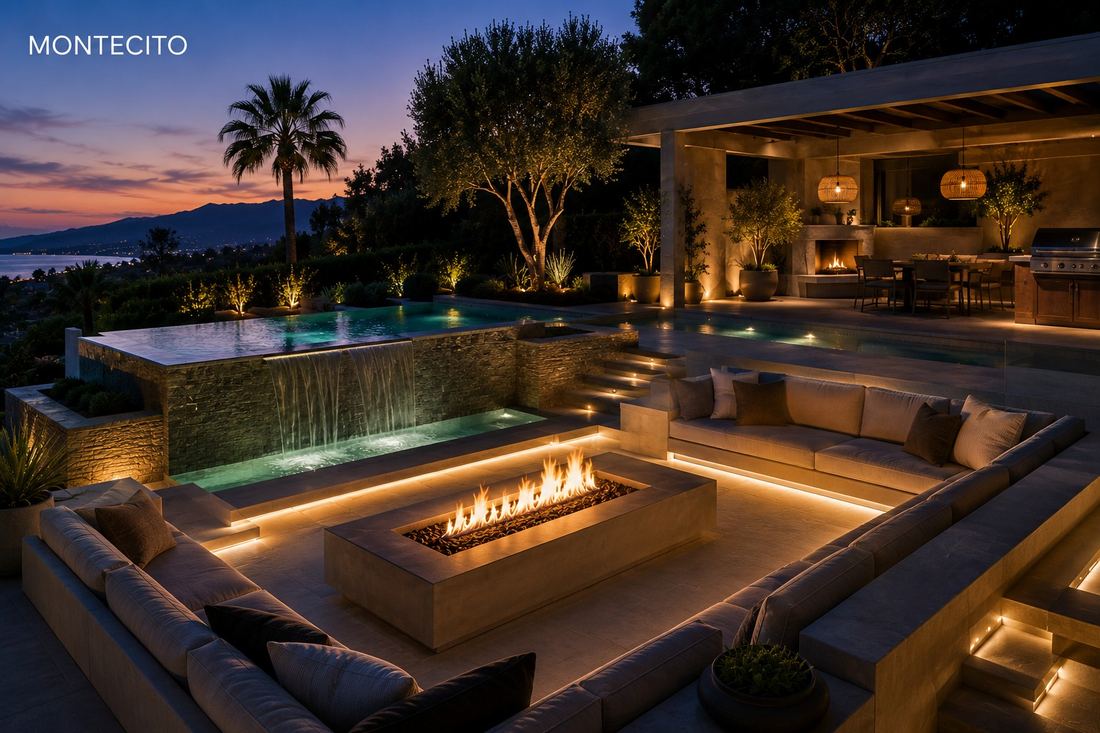
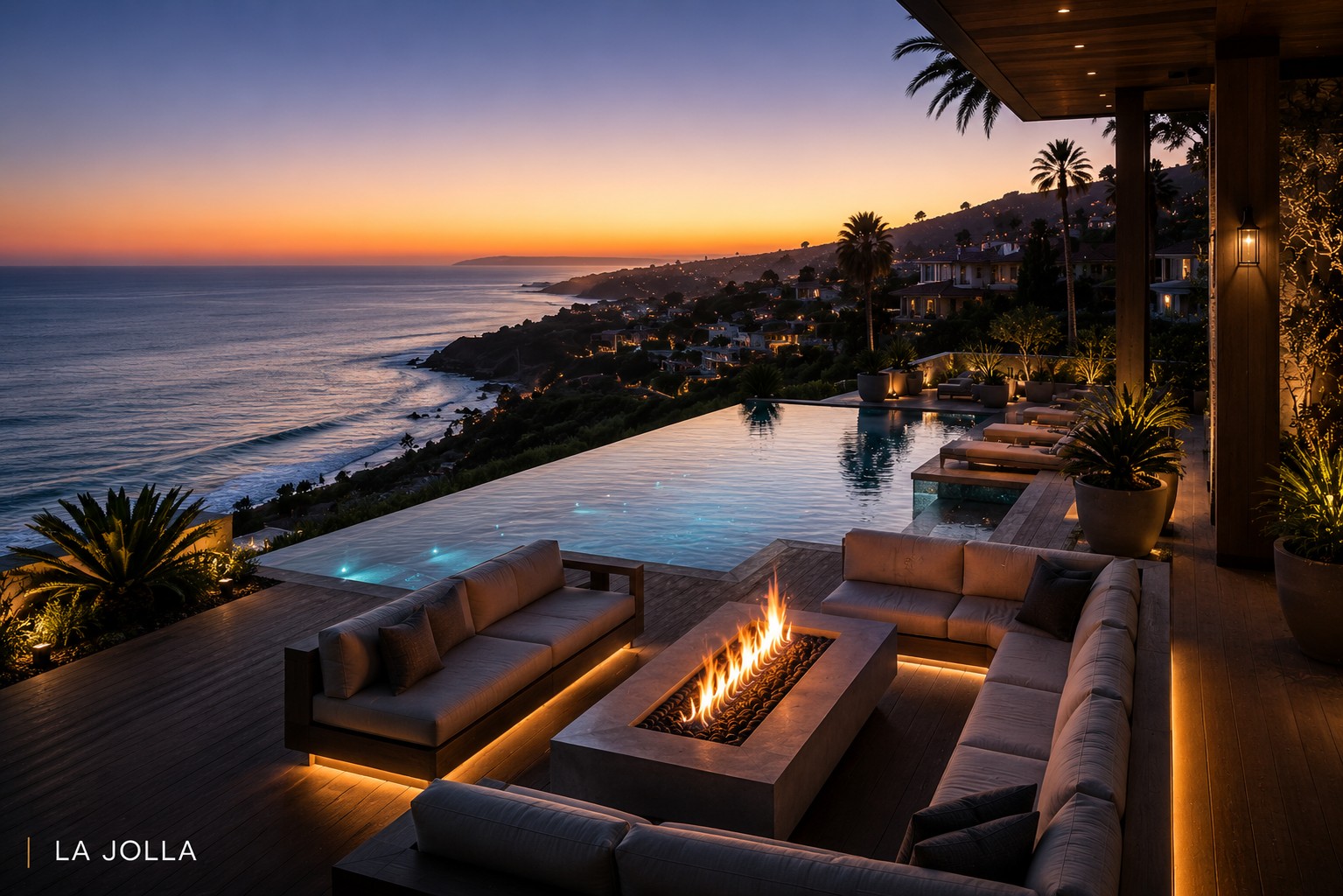
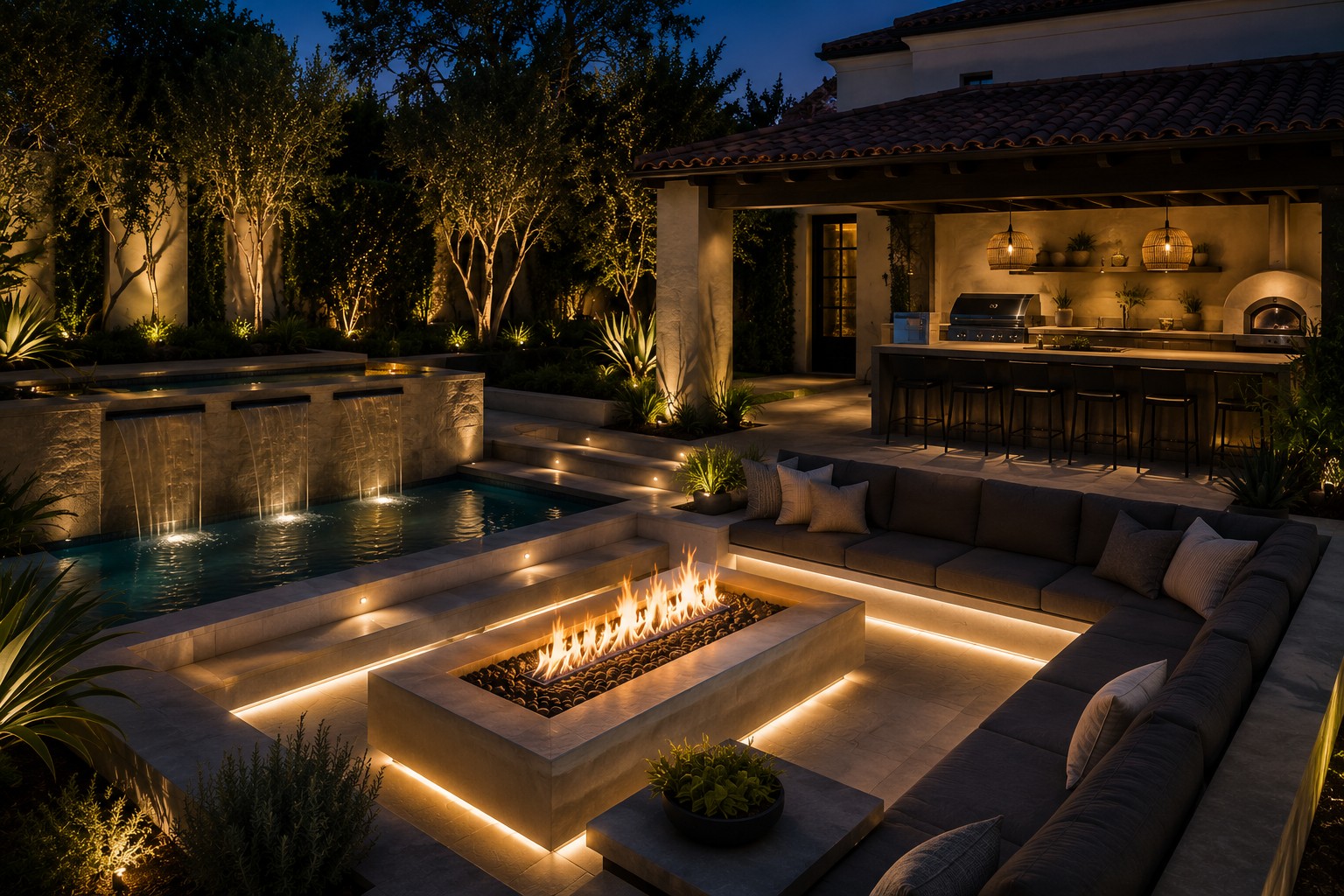
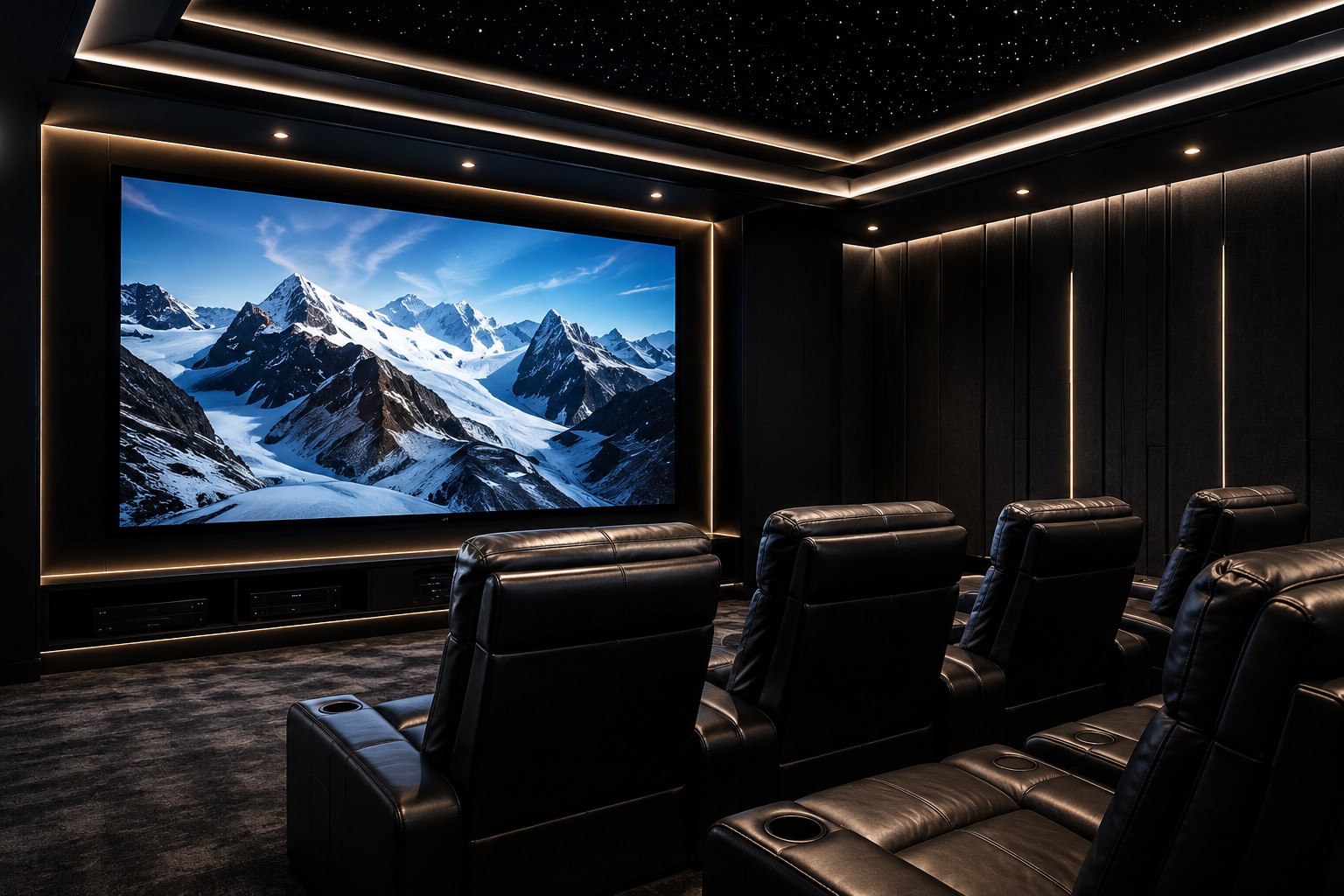
Southern California's climate turns backyards into year-round living rooms. This guide walks through the planning, equipment, and integration decisions behind an outdoor entertainment system built to perform for decades.
The Case For It
Why Invest in Outdoor Entertainment.
From Santa Barbara to San Diego, the outdoor season never really ends. A patio, pool deck, or ocean-view terrace is usable more months of the year here than almost anywhere else in the country — which makes an unfinished outdoor space one of the more wasted assets on a luxury property.
- Extends Livable Square Footage — a properly equipped outdoor room functions as a second living area, not an afterthought patio with a speaker bolted to the wall.
- Built for the Coastal Climate — marine air, direct sun, and temperature swings demand equipment rated for the environment, not consumer gear repurposed for outdoor use.
- Elevates How You Entertain — a game on the outdoor TV, music on the pool deck, and lighting that shifts at dusk changes how a property feels to guests.
- Adds Real Property Value — buyers in this market increasingly expect outdoor living to be finished, wired, and automated, not left as a future project.
Screens Outside
Outdoor TVs vs. Indoor TVs.
An indoor television moved outdoors, even under a covered patio, is a matter of when it fails, not if. True outdoor displays are built differently from the ground up.
- Sealed, Weatherproof Construction — outdoor-rated TVs use sealed enclosures and internal climate control to resist moisture, salt air, dust, and insects that would destroy a standard panel.
- Brightness for Daylight Viewing — full-sun installations need panels with significantly higher brightness output than indoor models, or the picture washes out completely by midday.
- Matching the Display to the Location — full-sun, partial-shade, and full-shade areas each call for a different category of outdoor display, and choosing the wrong one shortens its life.
- Temperature Tolerance — coastal Southern California is mild, but direct sun exposure on a dark panel surface still generates real heat that indoor electronics are not designed to handle.
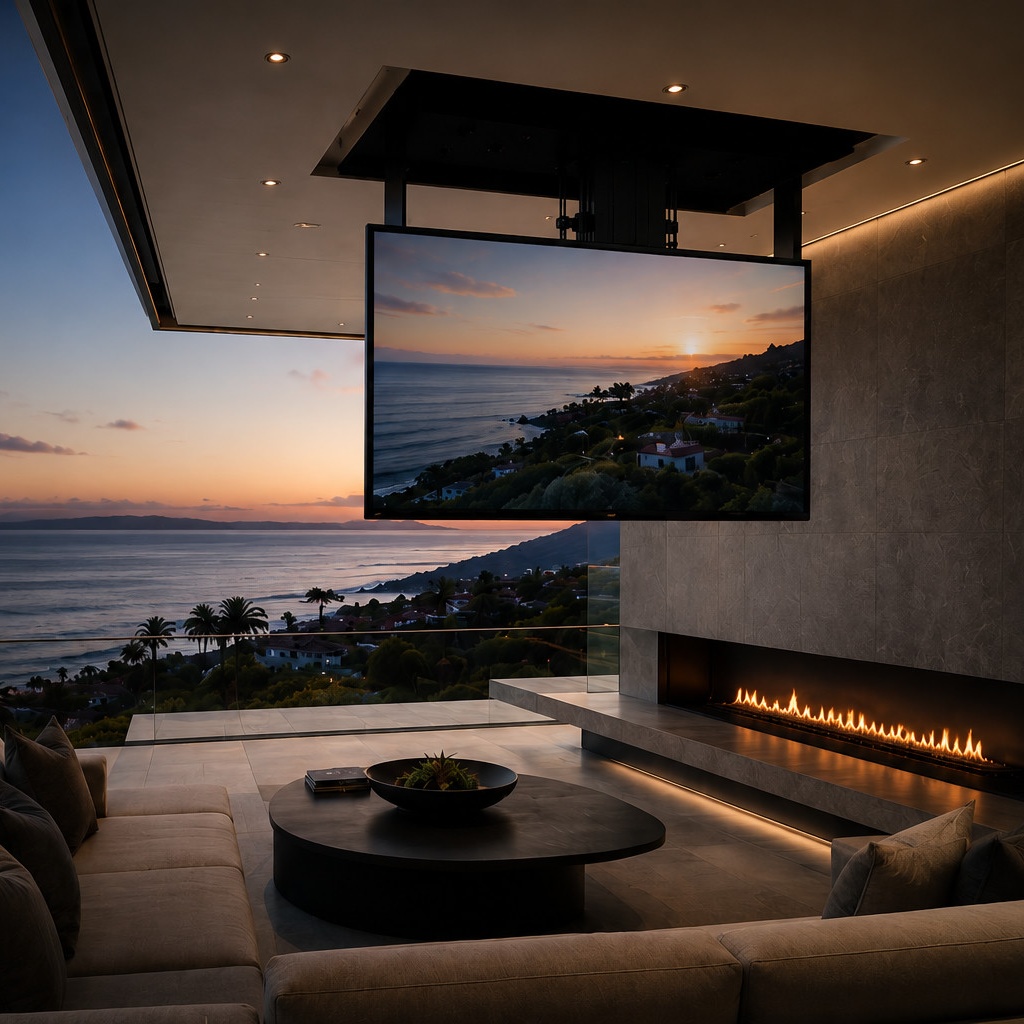
- Mounting and Concealment — motorized lifts, cabinetry, and recessed mounts keep a large outdoor display from dominating the view when it is not in use, in keeping with our Invisible Technology™ approach.
Landscape Audio
Landscape Audio Systems.
Landscape audio is about coverage, not volume. The goal is even, natural sound across a space with no single speaker calling attention to itself.
- In-Ground and Rock Speakers — enclosures designed to disappear into planting beds and hardscape, delivering sound without a visible speaker cabinet anywhere in the landscape.
- Distributed Zone Design — multiple lower-output speakers spread through a space produce more even, natural coverage than a few loud ones aimed across the yard.
- Independent Volume Zones — a dining terrace, pool deck, and side garden should each be controllable on their own, so one area can stay quiet while another plays music.
- Buried, Weather-Sealed Subwoofers — low-frequency output can be delivered from below grade, adding depth to landscape audio without adding visible hardware.
- Streaming and Multi-Room Control — landscape audio zones tie into the same whole-home audio platform as the interior of the house, controlled from a single app or keypad.
Setting the Mood
Outdoor Lighting Integration.
Lighting does more work than any other element in an outdoor space to set the mood for an evening.
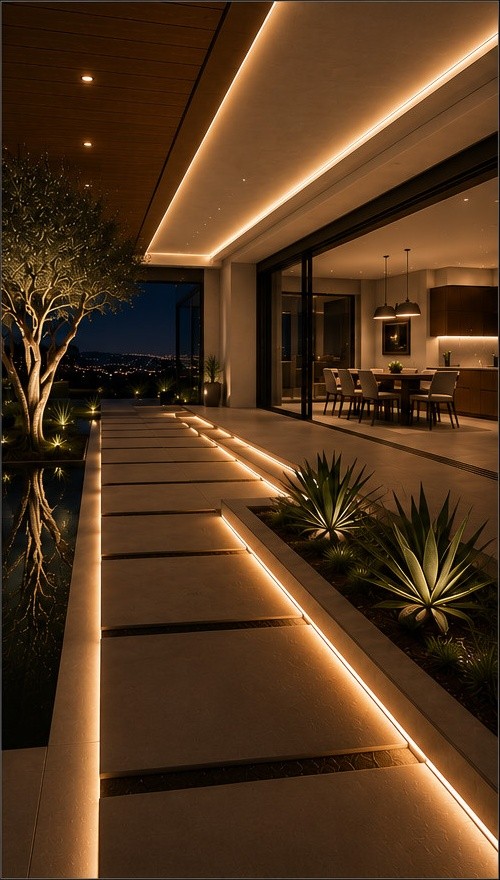
- Layered Landscape Lighting — path lighting, uplighting on trees and architecture, and step lights work together instead of relying on one flood fixture.
- The Evening Scene™ — our approach to lighting design builds a specific look for dusk and evening entertaining, with levels and color temperature that shift automatically as the sun goes down.
- Color-Changing Accent Lighting — pool, water feature, and architectural accent lighting can shift color for holidays, events, or simply a different mood on a given night.
- Lighting Tied to Audio and Video — a movie-night scene can dim the landscape lighting and bring up the screen at the same time, all from one control.
One System, Not Ten
Smart Home Integration.
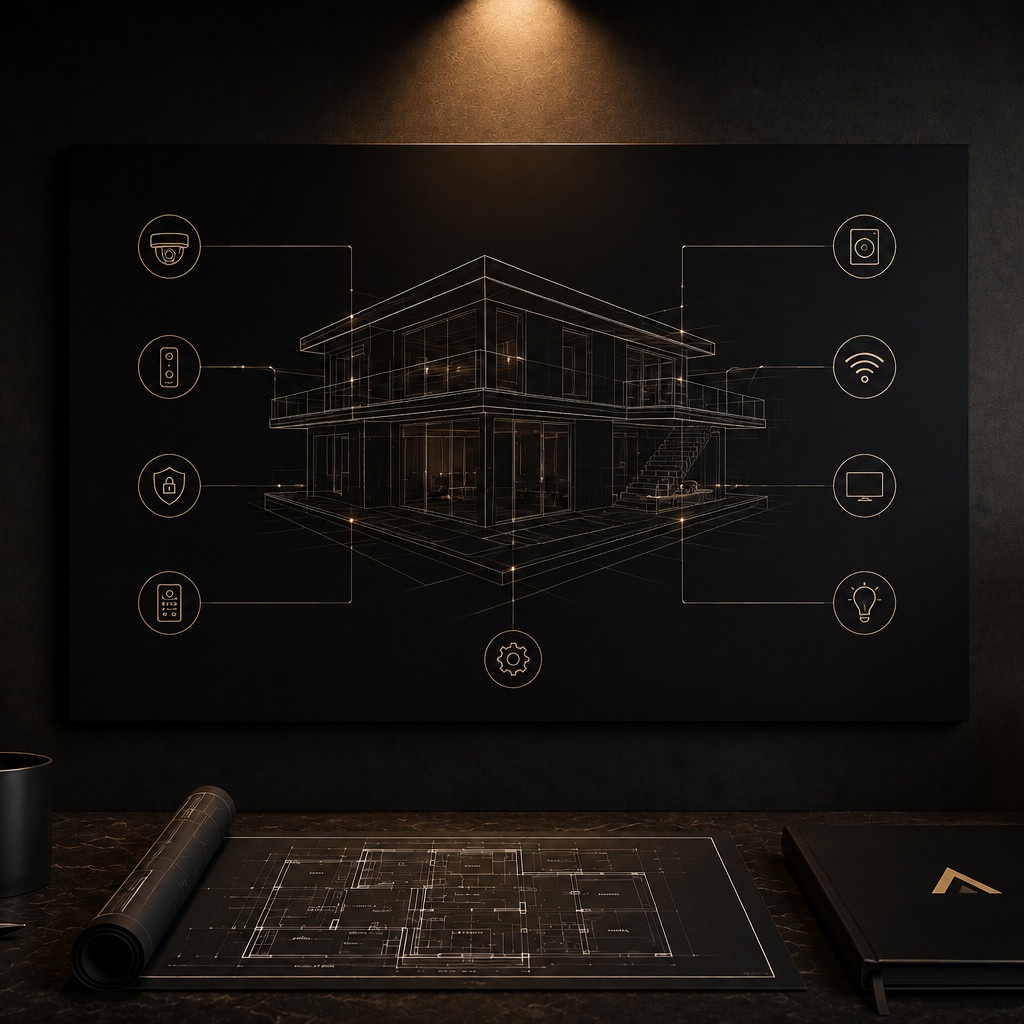
Outdoor entertainment should never live on its own separate app or remote. It belongs inside the same automation platform as the rest of the house.
- Part of ACT Estate™ — outdoor audio, video, lighting, and shading are folded into the same whole-home automation system as every other room on the property.
- One Touch Living™ — a single button labeled "Poolside" or "Movie Night" can bring up the TV, set audio zones, and adjust lighting all at once, indoors and out.
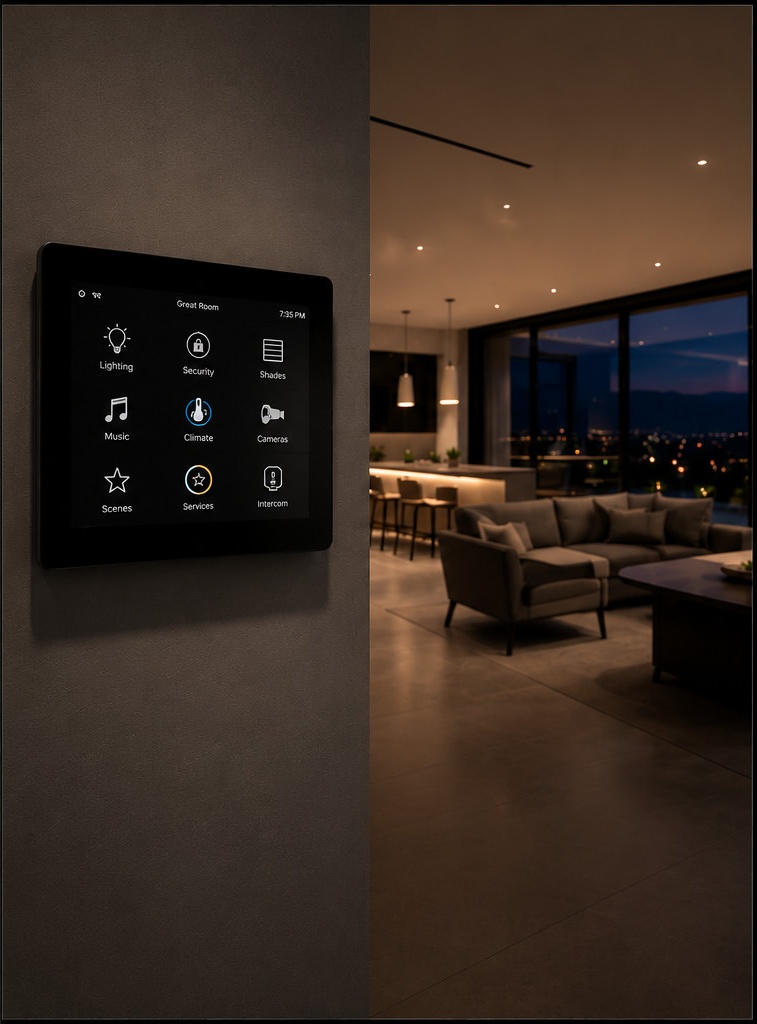
- Weatherproof Keypads and Touch Panels — outdoor control points are built to the same reliability standard as the equipment they control, so a control panel by the pool is never the weak link.
- Climate and Shading Coordination — motorized shades, misting systems, and heaters can be scheduled or scene-controlled alongside entertainment, not managed separately.
Built to Last Outside
Weatherproof Equipment.
The difference between an outdoor system that lasts fifteen years and one that fails in two almost always comes down to equipment selection, not installation quality.
- IP and UV Ratings Matter — ingress protection ratings tell you how a component handles moisture and dust, and UV-stable housings prevent plastics from cracking and fading in direct sun.
- Marine-Grade for Coastal Sites — properties near the ocean need hardware rated for salt air exposure, not just general outdoor use, particularly along exposed coastal bluffs.
- Quiet Technology™ — motorized lifts, shades, and mechanisms are selected and installed to our silent-operation standard, so nothing whines or grinds during a quiet evening outside.
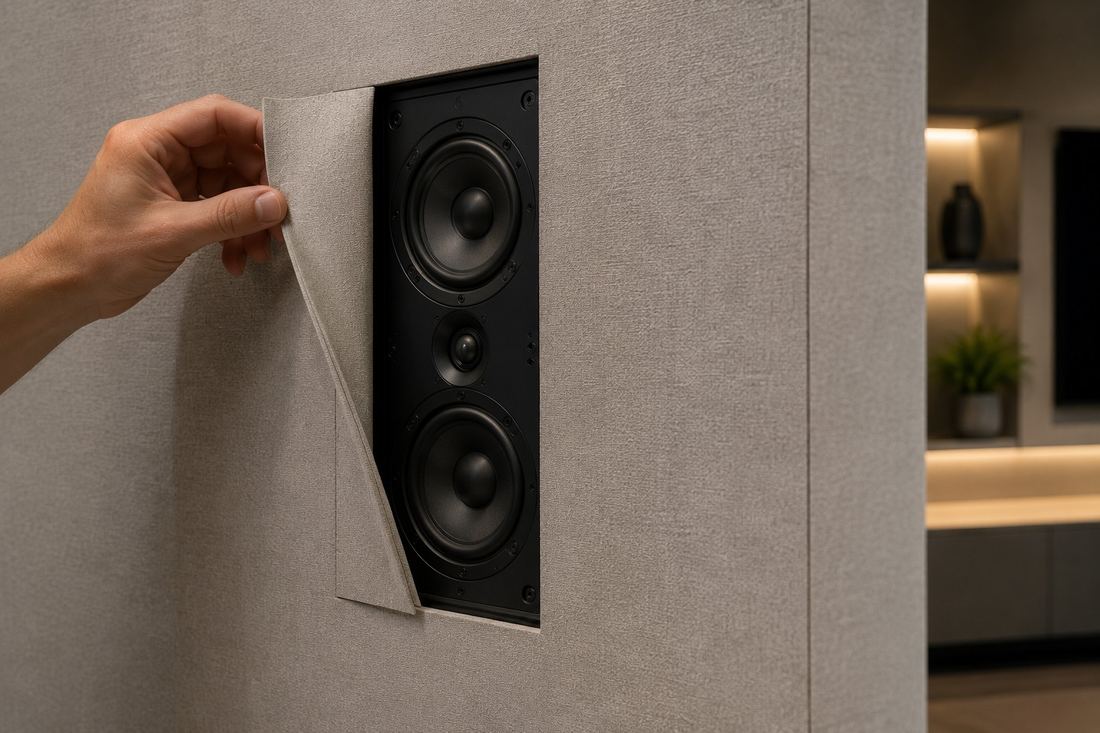
- Invisible Technology™ — concealed speakers, recessed displays, and hidden equipment enclosures keep the landscape design intact rather than cluttering it with visible gear.
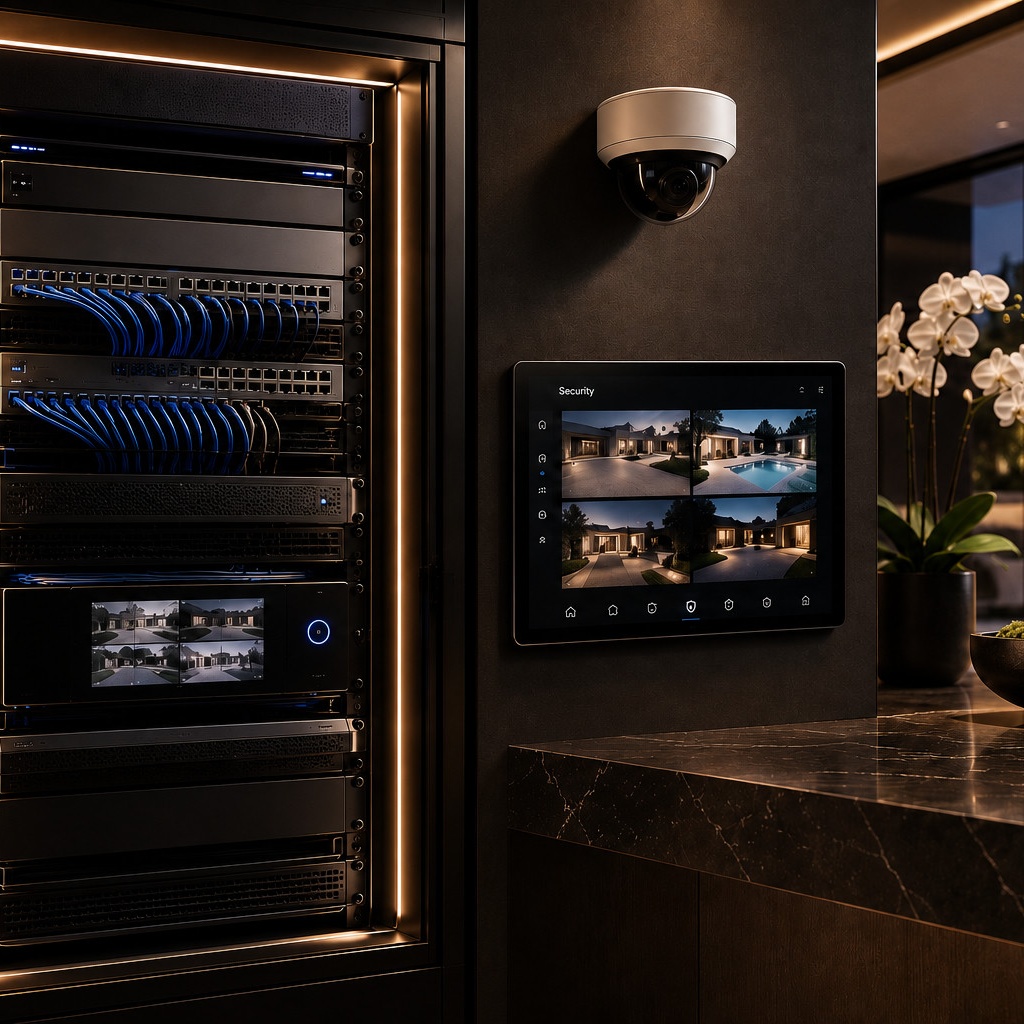
- Ventilated, Weatherproof Equipment Housing — amplifiers, receivers, and networking gear serving outdoor zones still need to live in a properly ventilated, protected enclosure, often built as part of a Signature Rack™.
Connectivity
WiFi Coverage Outdoors.
Streaming a game on the patio TV or controlling an outdoor scene from a phone both depend on WiFi that actually reaches the yard, and standard indoor routers rarely do.
- The Estate Network™ — our enterprise-grade networking approach extends coverage across the entire property, including pool decks, guest houses, and detached entertaining areas.
- Outdoor-Rated Access Points — weatherproof access points mounted under eaves or on structures deliver reliable signal without an ugly router sitting on a shelf.
- Wired Backhaul Where Possible — running data cable to outdoor access points during construction or renovation produces far more reliable coverage than relying on mesh WiFi alone across long distances.
- Bandwidth for Streaming and Control — a network sized for outdoor video streaming, security cameras, and automation traffic simultaneously avoids the lag and dropouts that plague underbuilt systems.
The Outdoor Kitchen
Outdoor Kitchens & Technology.
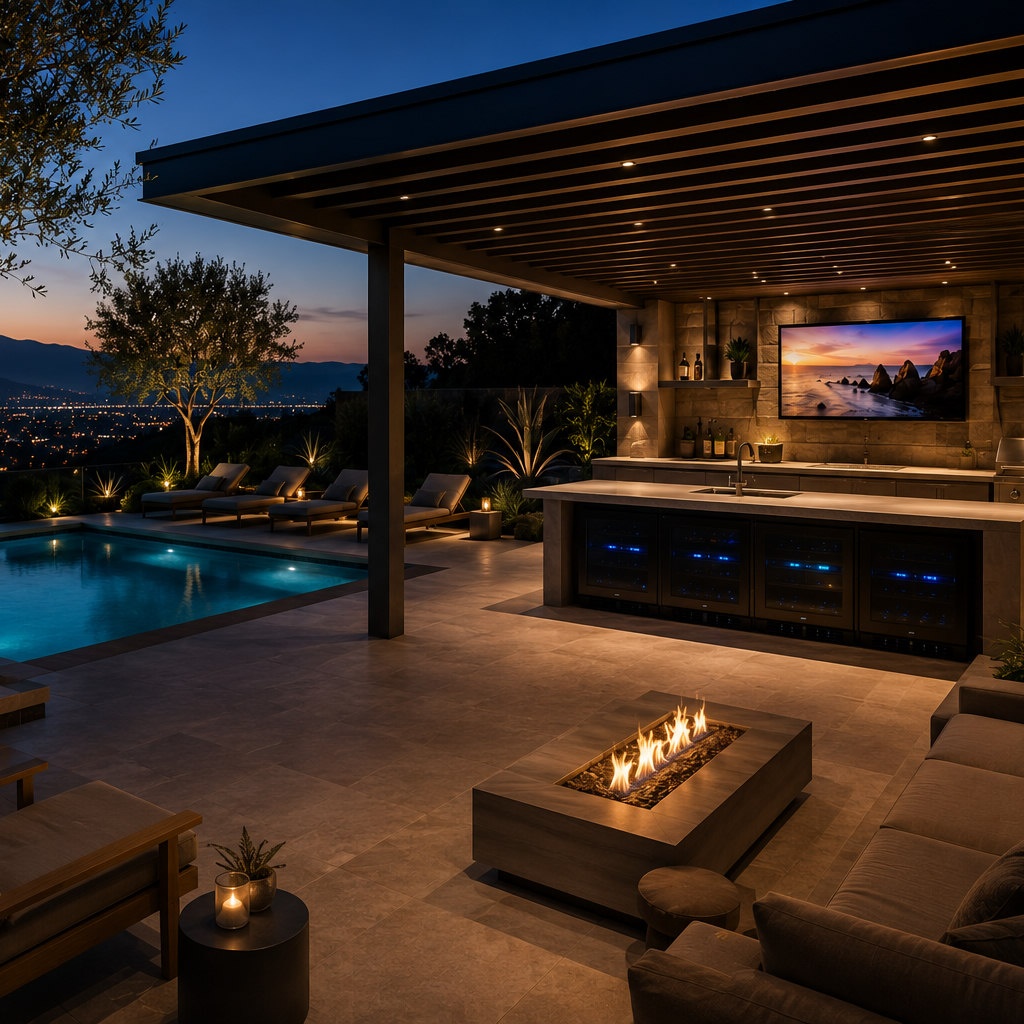
Outdoor kitchens have become a genuine second kitchen on many properties, and the technology inside them deserves the same care as the appliances.
- Weatherproof Displays for the Cook — a small outdoor-rated screen near the grill can show recipes, security cameras, or the game without pulling the cook away from the group.
- Dedicated Audio Zone — the kitchen and bar area typically gets its own volume zone, independent from the dining terrace or pool, since the acoustics and use are different.
- Task and Ambient Lighting — bright, even task lighting over prep and cooking surfaces paired with warmer ambient lighting for the surrounding seating area, on separate controls.
- Concealed Cabling and Equipment — low-voltage wiring for audio, video, and lighting is routed through the kitchen structure during construction, keeping cabinetry and countertops clean.
ACT Tip
Outdoor kitchen technology is easiest to plan during construction or a hardscape renovation, when conduit and low-voltage wiring can be run before finishes go in. If you are building, ask about our Builder Ready Program™.
Investment Levels
Budget Planning.
Outdoor entertainment budgets vary enormously based on property size, terrain, coastal exposure, and how much of the system is planned during construction versus retrofitted later. Rather than quote figures that would not apply to your property, here are three general tiers of scope.
Tier 01Essential Outdoor
A single outdoor TV with a discreet audio zone on the main patio, integrated into the home's existing automation and network. A focused upgrade to one primary living area.
Tier 02Multi-Zone Living
Landscape audio and lighting spanning several distinct areas — pool, dining terrace, and lounge — with weatherproof displays, scene control, and extended outdoor WiFi coverage.
Tier 03Full Estate Grounds
A complete outdoor ecosystem across the entire property, including surround sound viewing areas, fire feature automation, kitchen technology, and full integration with ACT Estate™.
Protecting the Investment
Maintenance Tips.
Outdoor technology takes more day-to-day wear than anything indoors. A little routine care goes a long way toward a long service life.
- Cover or Retract Displays When Not in Use — even weatherproof TVs last longer with a motorized lift, cabinet, or cover protecting the screen from prolonged direct sun and debris.
- Rinse Salt Air Residue Near the Coast — properties close to the ocean benefit from an occasional light rinse of exterior equipment housings to prevent salt buildup on hardware and connectors.
- Trim Landscaping Around Speakers — overgrown planting can muffle in-ground and landscape speakers over time, so keep growth clear of speaker grilles and rock enclosures.
- Schedule an Annual System Check — a yearly visit to test weatherproof seals, firmware, and connections catches small issues before they become failures during a summer of heavy use.
- Keep Firmware and Automation Software Current — outdoor components tied into your smart home system should stay updated along with the rest of the platform for reliability and security.