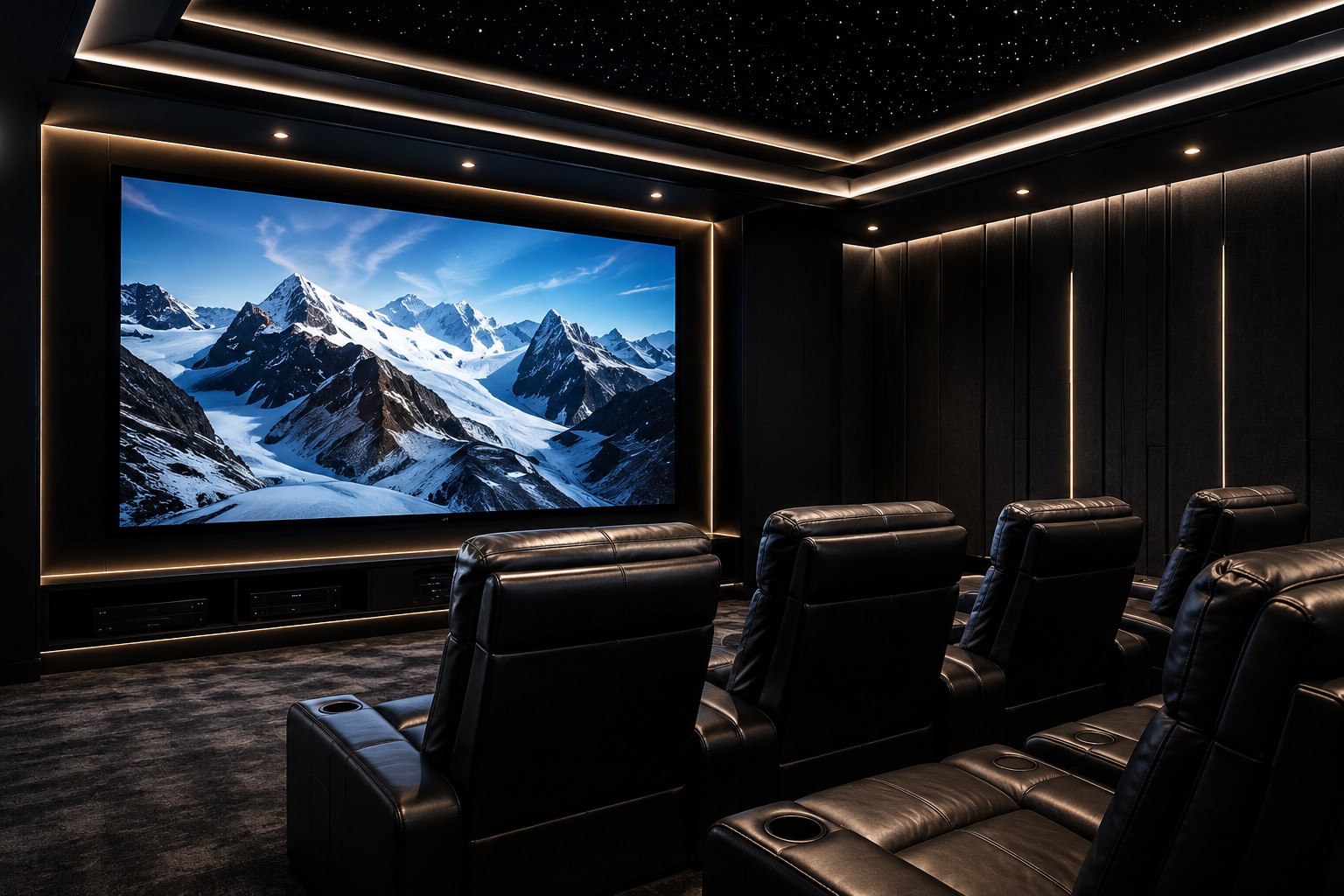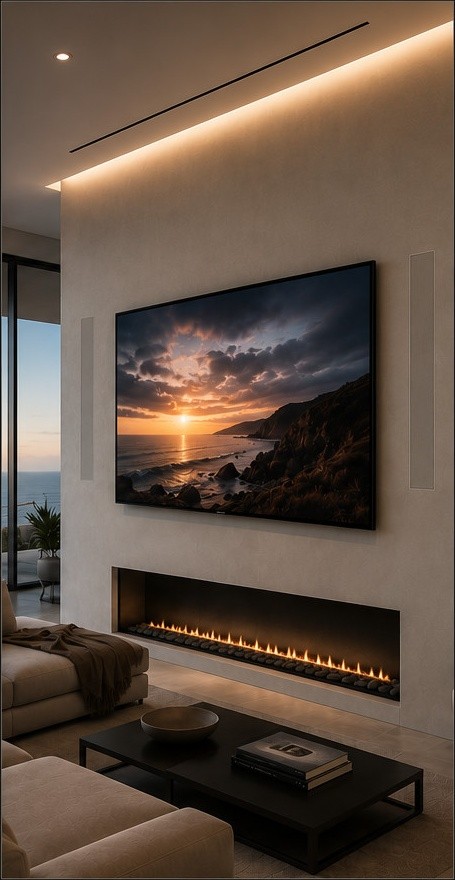
A theater's speakers matter more than its screen — picture quality has a ceiling most people can't perceive past, but sound quality scales with how much you invest almost indefinitely. The right speaker choice depends on channel configuration first, and brand or model second. Here's how we build it out.
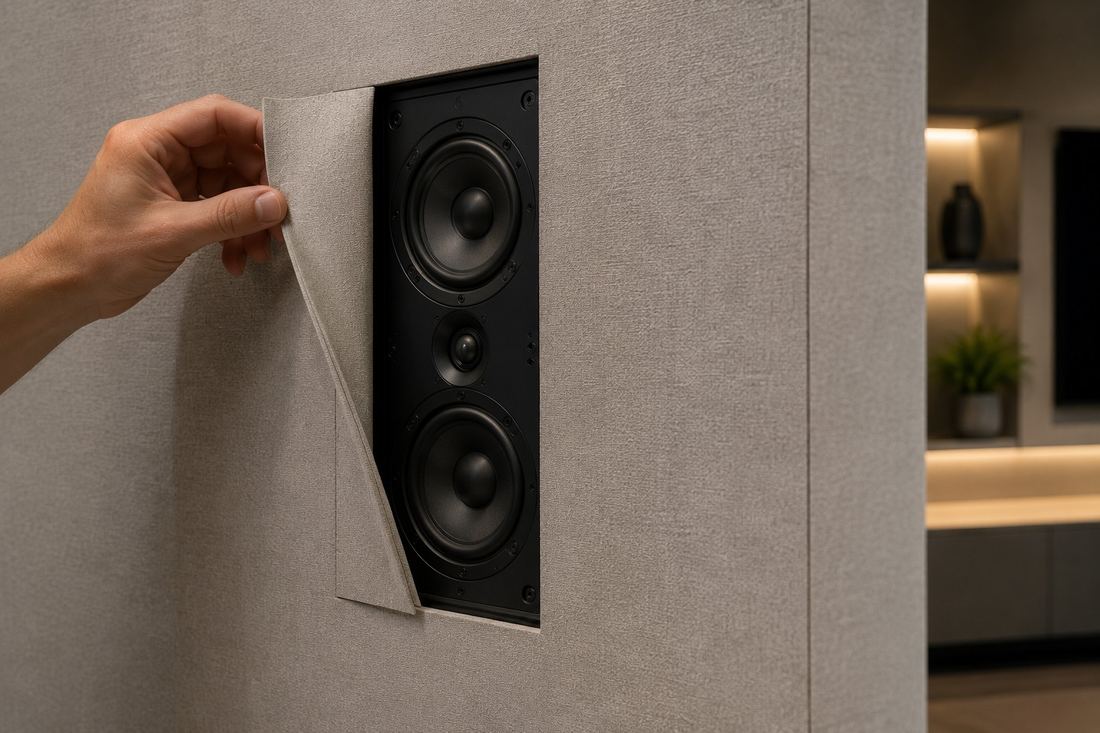
Freestanding tower and bookshelf speakers still deliver a slight edge in cabinet volume and bass extension at the reference-grade end. In-wall and in-ceiling speakers, properly specified, close nearly all of that gap while disappearing entirely into the room — the choice we make on most theaters built into a design-forward home.
For the deeper case on that tradeoff, see our Invisible vs. Traditional Speakers comparison.
It depends on room size — 5.1.2 delivers a genuine Atmos experience in most media rooms, while 7.1.4 fills out larger dedicated theaters more completely.
For the main channels, yes — matched timbre across left, center, and right keeps dialogue and effects sounding consistent as they pan across the screen. Surrounds and heights have more flexibility.
It can work in a smaller room, but two subwoofers positioned correctly deliver dramatically more even bass throughout the seating area than one larger single sub.
For the vast majority of listening, yes, once paired with a properly placed subwoofer — see our full comparison for where the remaining gap is.
See the full Home Theaters service, or read the Ultimate Home Theater Guide for how every tier comes together.
Explore Home Theaters