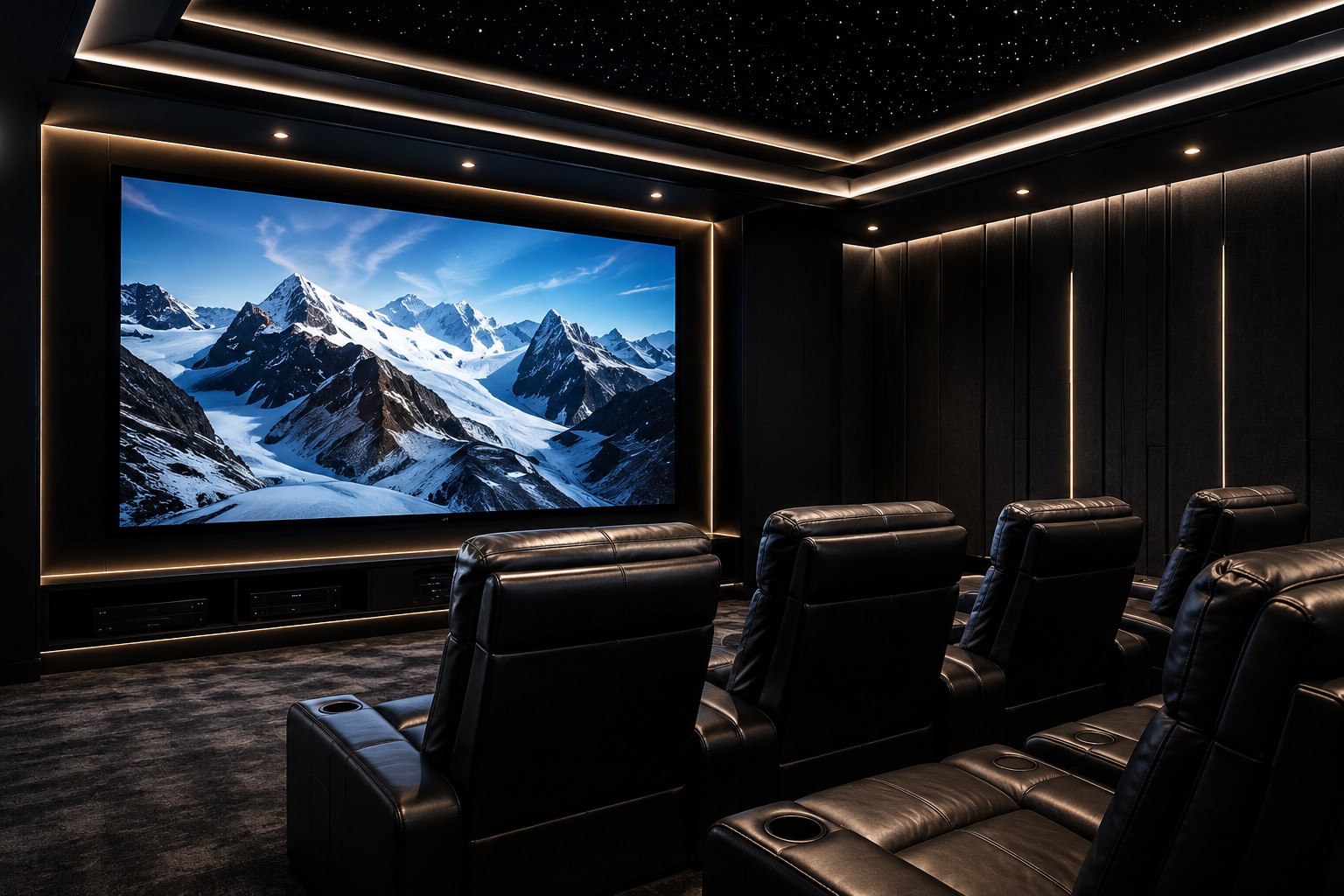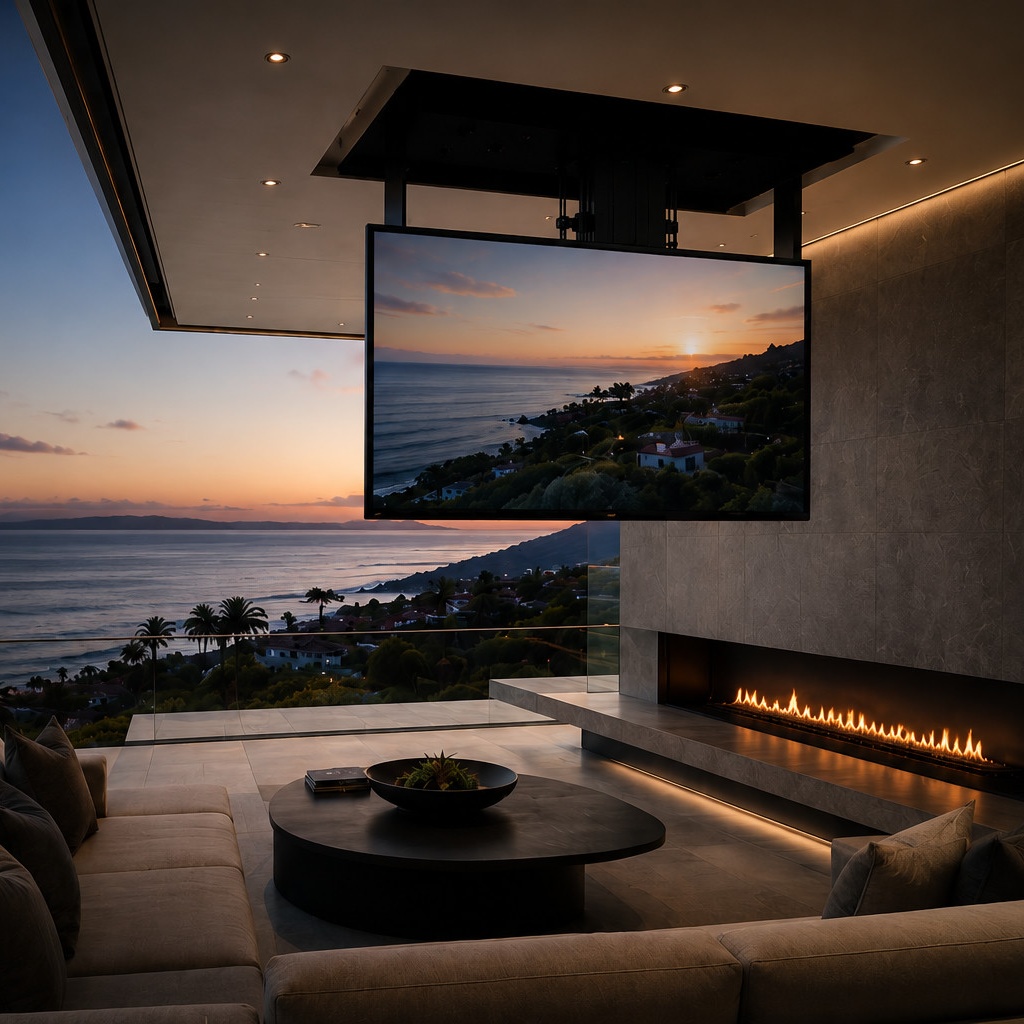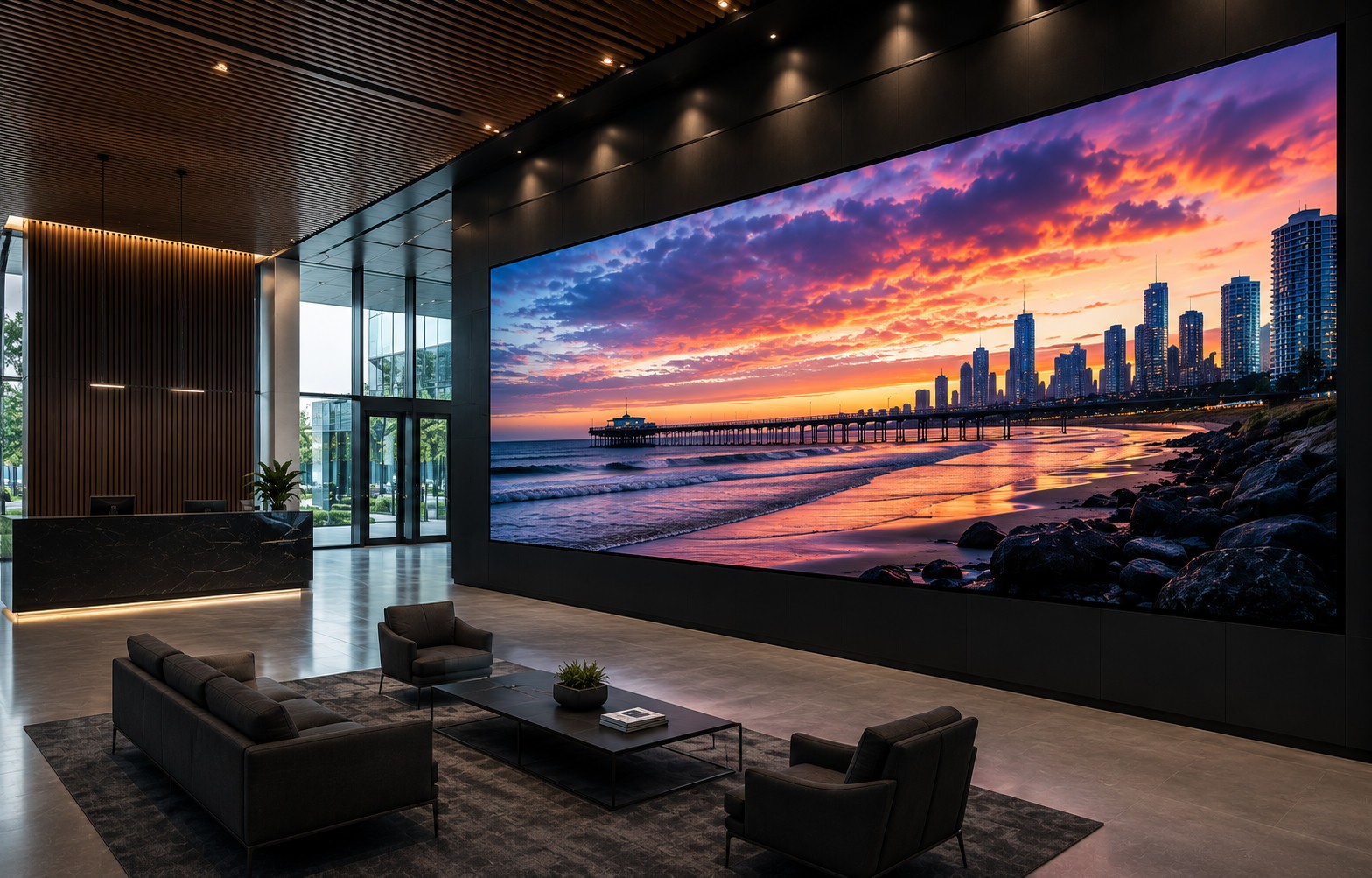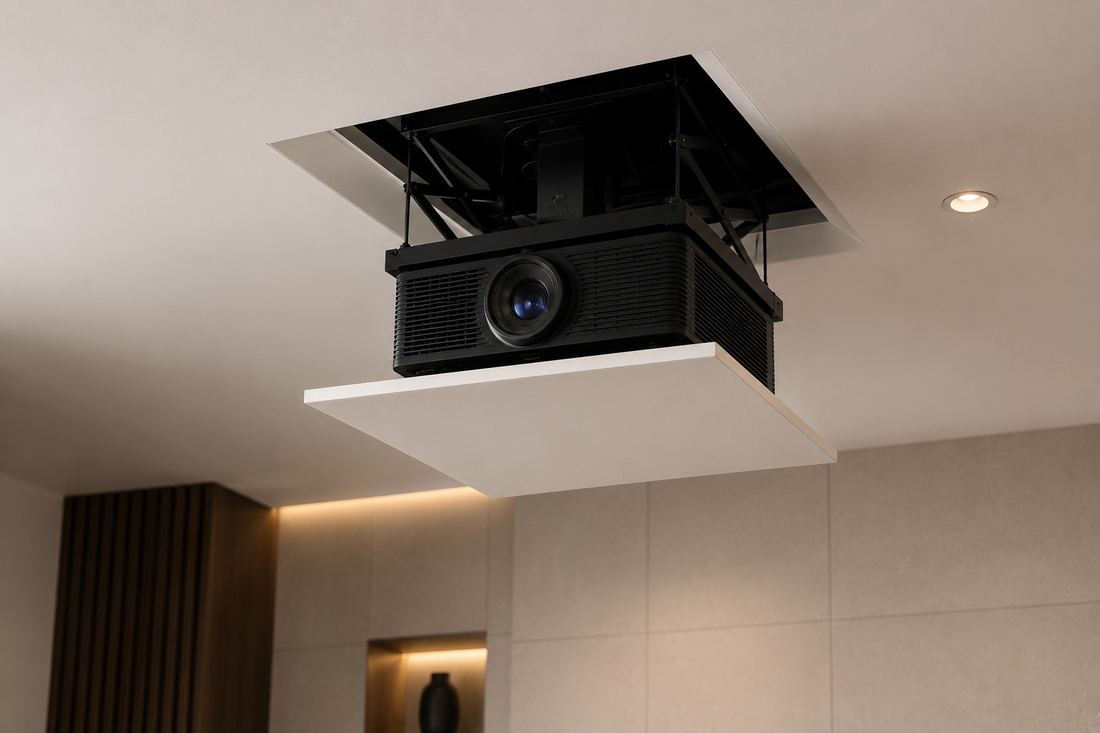
Once a screen gets past about 85-100 inches, the projector-versus-TV conversation stops being about picture quality alone and starts being about the room. Both can deliver an incredible image today — modern laser projectors have closed most of the old brightness and black-level gap. The real decision comes down to ambient light, screen size ambitions, and how the room needs to look when the system is off.
| Criteria | Projector + Screen | Large-Format TV |
|---|---|---|
| Max practical size | 100-180 in.+, scales affordably | Diminishing returns past 98-110 in. |
| Ambient light | Needs control; laser models help | Handles daylight and bright rooms well |
| Black level & contrast | Excellent in a dark, treated room | Excellent regardless of room light (OLED) |
| When off | Screen recedes or disappears | Remains a visible panel on the wall |
| Install complexity | Ceiling mount, screen, light control | Wall mount or lift, simpler in general |
| Best for | Dedicated theaters, media rooms | Living rooms, flexible daytime viewing |
If a room can be light-controlled — blackout shades, no windows, or used primarily at night — a projector is very often the better value at true theater scale. A 120-inch screen from a well-specified laser projector costs a fraction of an equivalent-size flat panel, where they even exist.
If the room gets daytime use, has windows that won't be fully blacked out, or needs to double as a normal living space, a large-format TV — particularly OLED — simply performs better in real ambient light and looks intentional, not like a screening room, when it's off.
Most of the theaters and media rooms we build don't force a single choice — they're engineered so the room reads as a normal living space until the system is called on.
Laser projectors have closed much of that gap, but a room with meaningful daytime ambient light will still favor a large-format TV, especially OLED, for consistent daytime picture quality.
Usually yes, at true theater scale — a 120-inch-plus image from a well-specified projector and screen typically costs less than an equivalent-size flat panel, where one is even available.
Yes — it's a common hybrid setup: a TV lift or wall-mounted display for daytime and casual use, with a drop-down screen and ceiling-mounted projector for evening theater-scale viewing.
It depends on the projector's brightness and the screen's gain, but for reference-quality black levels and contrast, most dedicated theaters we build use full blackout shades or no windows at all.
See the full Home Theaters service, or talk to a Luxury Technology Advisor about the right screen for your room.
Explore Home Theaters