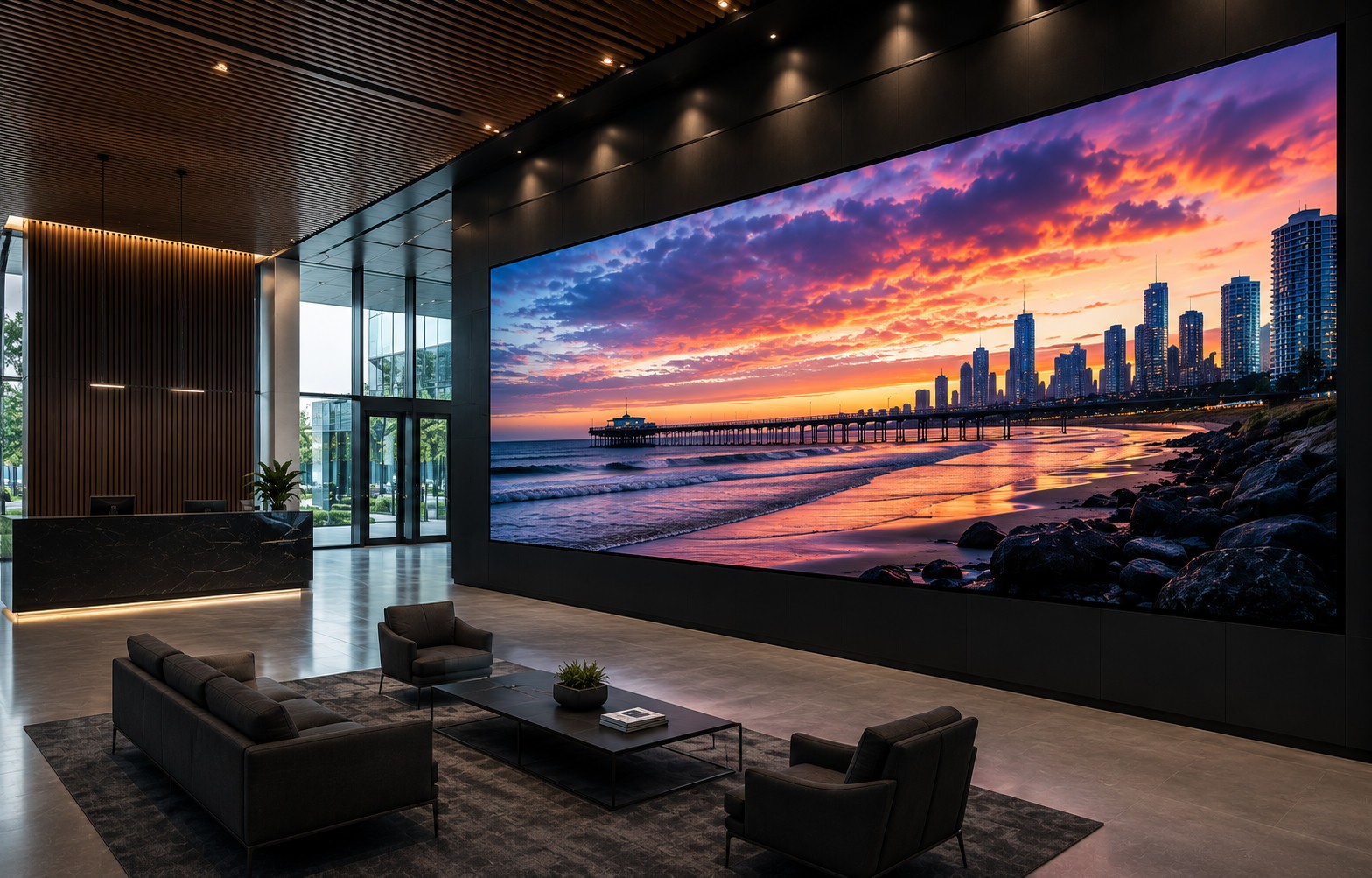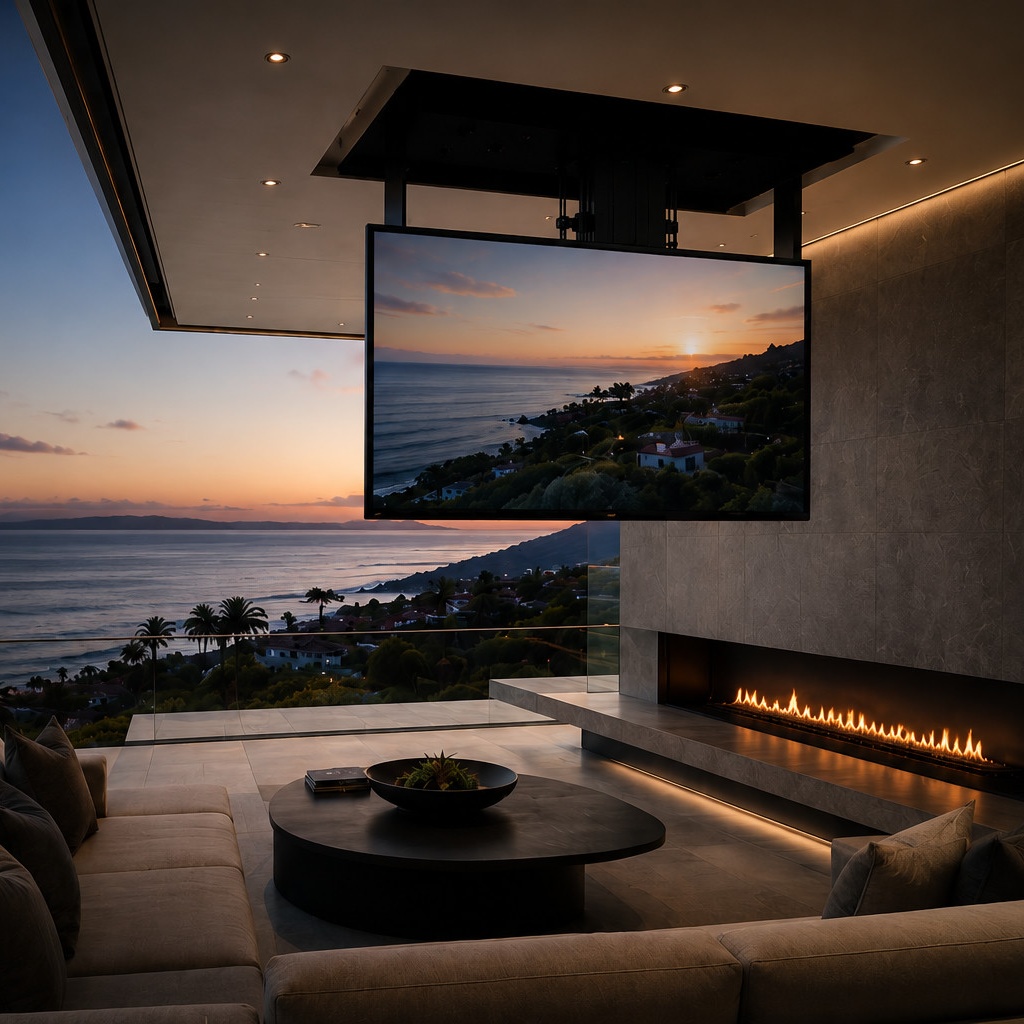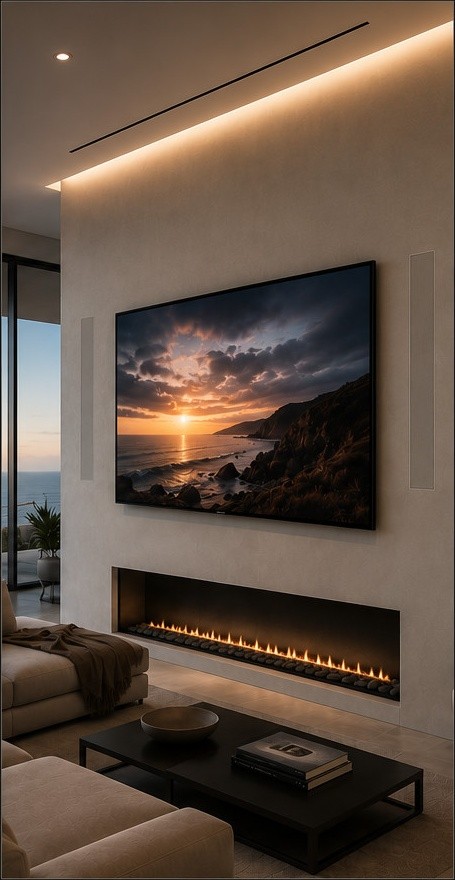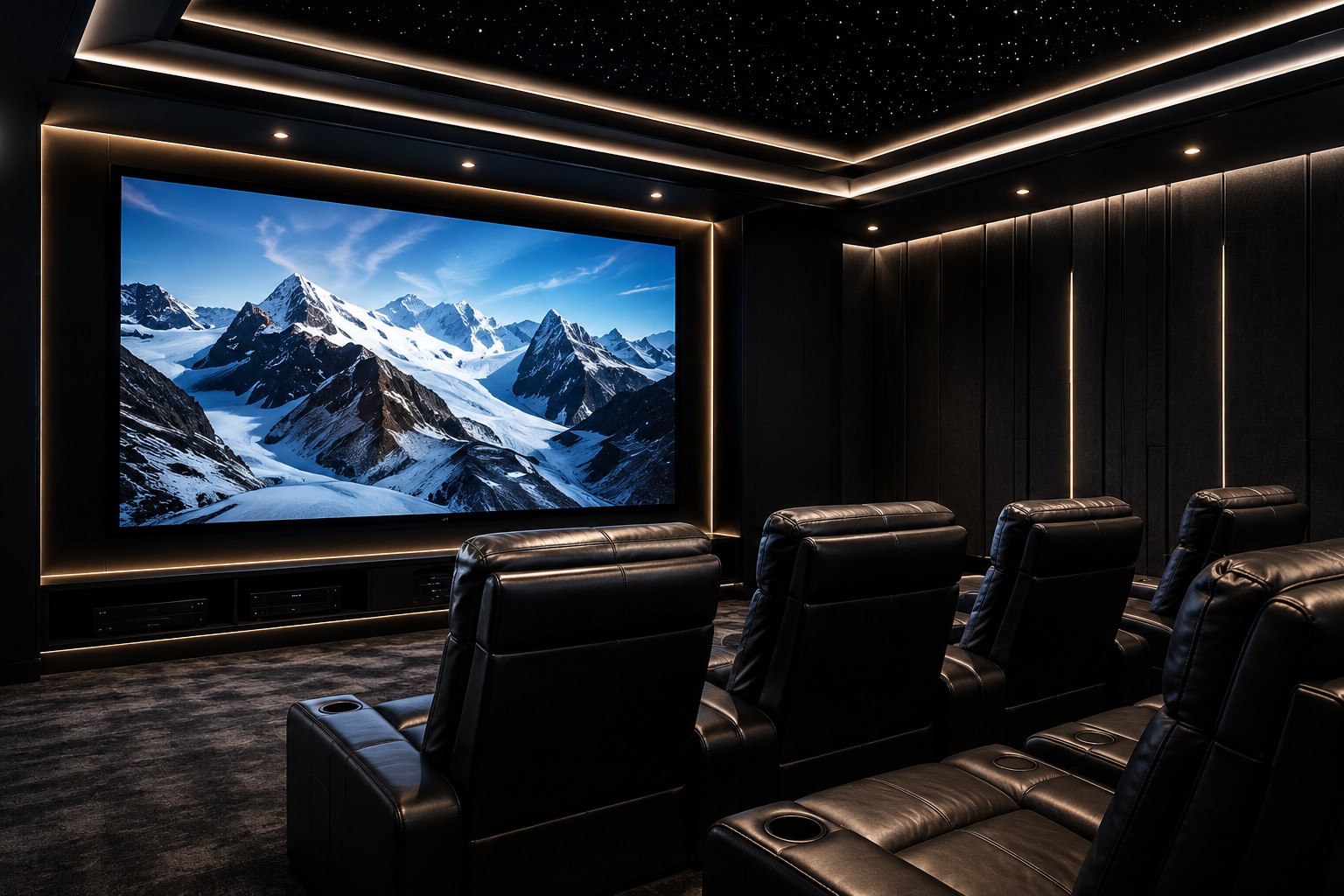
The two terms get used interchangeably, but they describe genuinely different rooms. A dedicated home theater is a single-purpose space — tiered seating, full acoustic treatment, light control, built to replicate a commercial cinema experience. A media room is multi-purpose — a large screen and good sound integrated into a space that's also used for everyday living, game days, and casual movie nights.
| Criteria | Home Theater | Media Room |
|---|---|---|
| Purpose | Single-purpose, dedicated cinema room | Multi-purpose living & entertainment space |
| Seating | Tiered, dedicated theater seating | Sofas, sectionals, everyday furniture |
| Acoustic treatment | Full room treatment, isolation | Light treatment, balanced with livability |
| Light control | Full blackout | Motorized shades, partial control |
| Screen | Large projector screen, theater-scale | Large-format TV or hybrid projector setup |
| Best for | Dedicated cinema experience seekers | Families wanting flexible everyday use |
A dedicated theater makes sense when a home has the square footage to spare a room entirely for it — typically a lower level, a windowless interior room, or a space with no other practical use. It delivers the closest thing to a commercial cinema experience available in a home, with acoustic treatment, isolation, and seating engineered specifically for critical viewing.
A media room makes sense when that dedicated square footage isn't available, or when the household genuinely wants one flexible room that does more than one job — movie nights, game days, and everyday family time in the same space, with a large-format screen and quality sound built into a room that still functions as a living space day to day.
We ask clients how the room will actually be used before recommending either — a theater built for a household that really wanted a flexible family space sits unused; a media room built for a household that wanted true cinema immersion feels like a compromise. Both are built to The ACT Standard™ either way.
Some elements can — acoustic treatment and better light control can often be added, but a media room's multi-purpose furniture and layout are fundamentally different from tiered theater seating, so a full conversion is usually a real renovation, not a simple add-on.
Not necessarily less, but usually different — a media room typically prioritizes a versatile large-format TV setup, while a dedicated theater invests more heavily in projection, acoustic treatment, and isolation.
It varies by design, but dedicated theaters typically need enough depth for tiered seating and screen distance plus room for acoustic treatment — generally more square footage than an equivalent media room built into existing living space.
It depends on the buyer pool in your market — a flexible media room appeals to a broader range of buyers, while a dedicated theater is a bigger draw for a specific type of buyer but less universally useful.
See the full Home Theaters service, or read the Ultimate Home Theater Guide for how we design every tier, from essentials to reference.
Explore Home Theaters