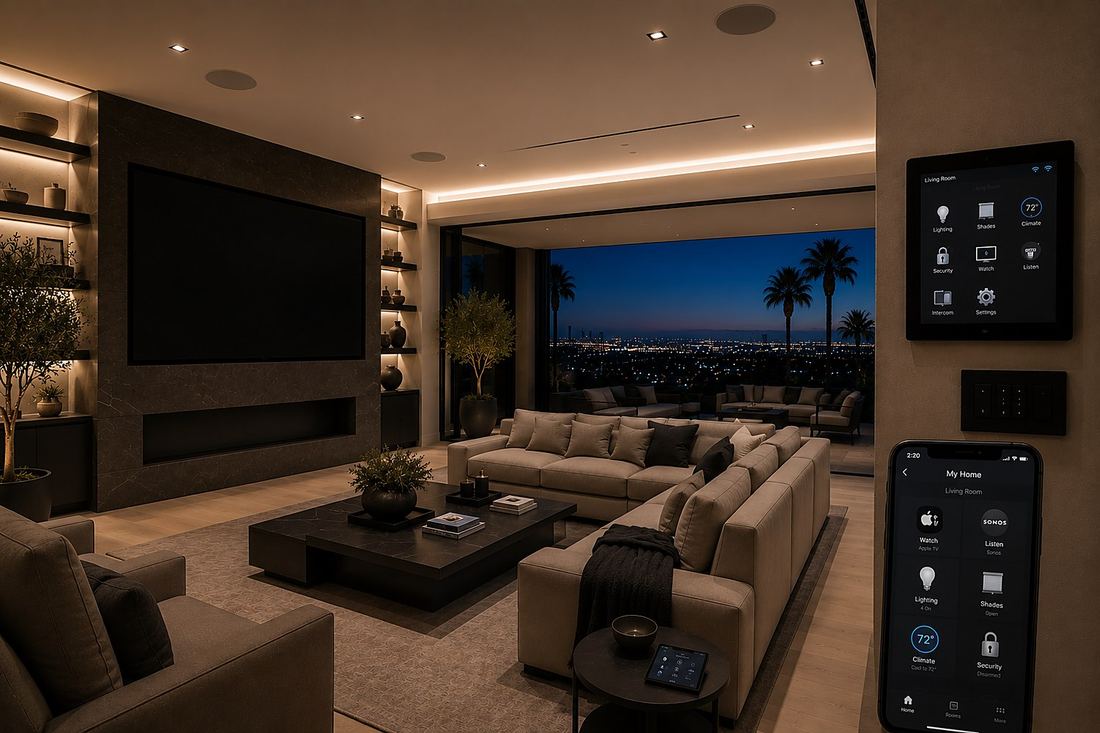
Consumer smart home ecosystems (Alexa, Google Home, Apple Home) are genuinely good products for a single apartment or a handful of devices. Once a property reaches estate scale — dozens of lighting zones, multiple AV rooms, shades, climate, and security on one system — a different category of platform is required, and the gap between the two only widens as the home grows.
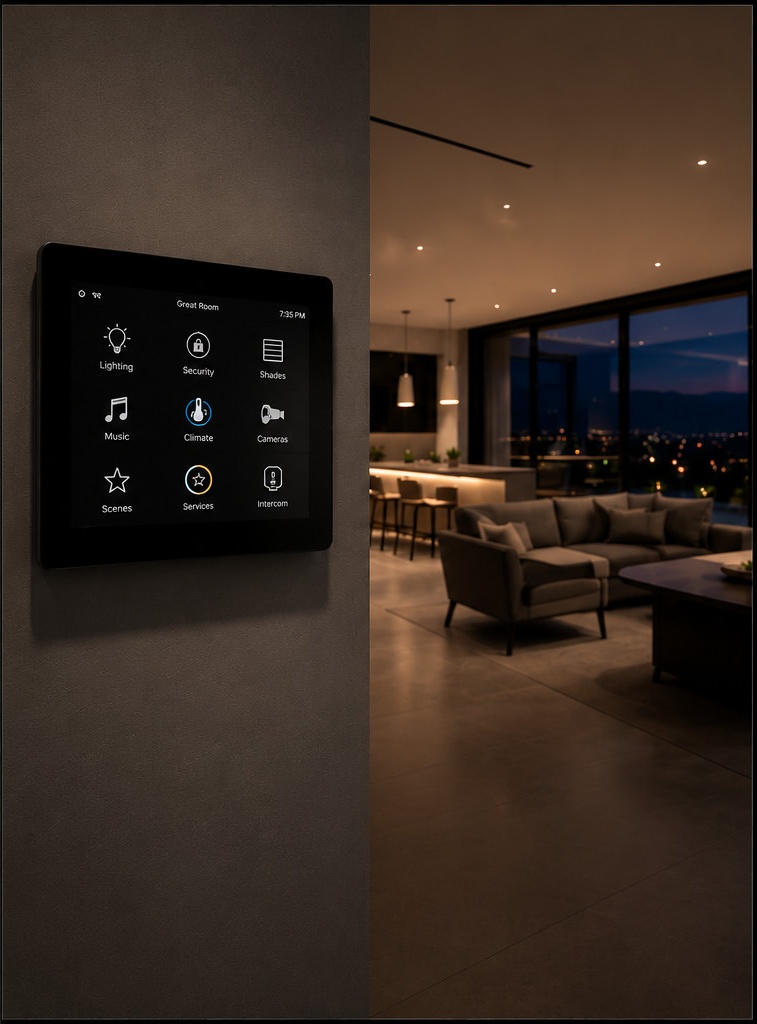
Every ACT Estate™ is unified under One Touch Living™ — Simplify. Automate. Control. — a single command layer over every system in the home rather than a stack of separate apps and remotes.
Read the Control4 vs. DIY Smart Home comparison for the fuller case against building a luxury home on consumer ecosystems.
For a smaller property with limited scope, it can work reasonably well. Once a home has more than a handful of rooms and system types to unify, most owners outgrow it quickly.
Core automation — lighting, climate, scenes — runs on local processing and keeps working. Only cloud-dependent features like remote access or voice services are affected.
In many cases, yes — some consumer devices can be integrated into a professional platform, though a clean, purpose-built install typically performs and looks better.
Significantly — a system programmed around how a household actually moves through the day feels effortless, where a default template still requires manual effort.
See the full Smart Homes service, or read the Smart Home Planning Guide for how a project comes together room by room.
Explore Smart Homes