ACT Cinema™ Guide
The Ultimate Home Theater Guide.
Everything that goes into a luxury home theater — room selection, screen size, speaker layouts, acoustic treatment, lighting, budget, and the equipment rack behind the curtain.
The Fundamentals
What Makes A Great Home Theater?
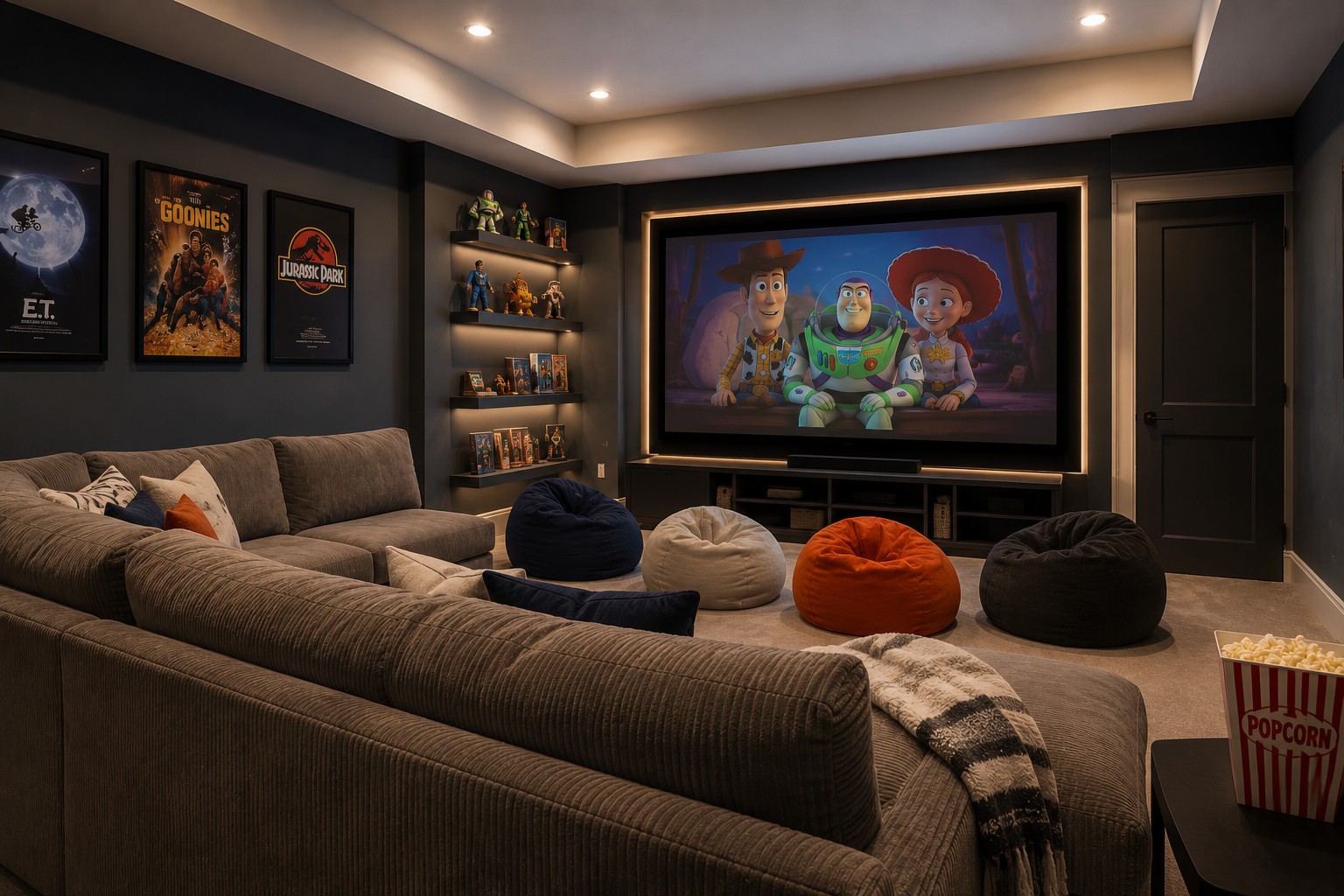
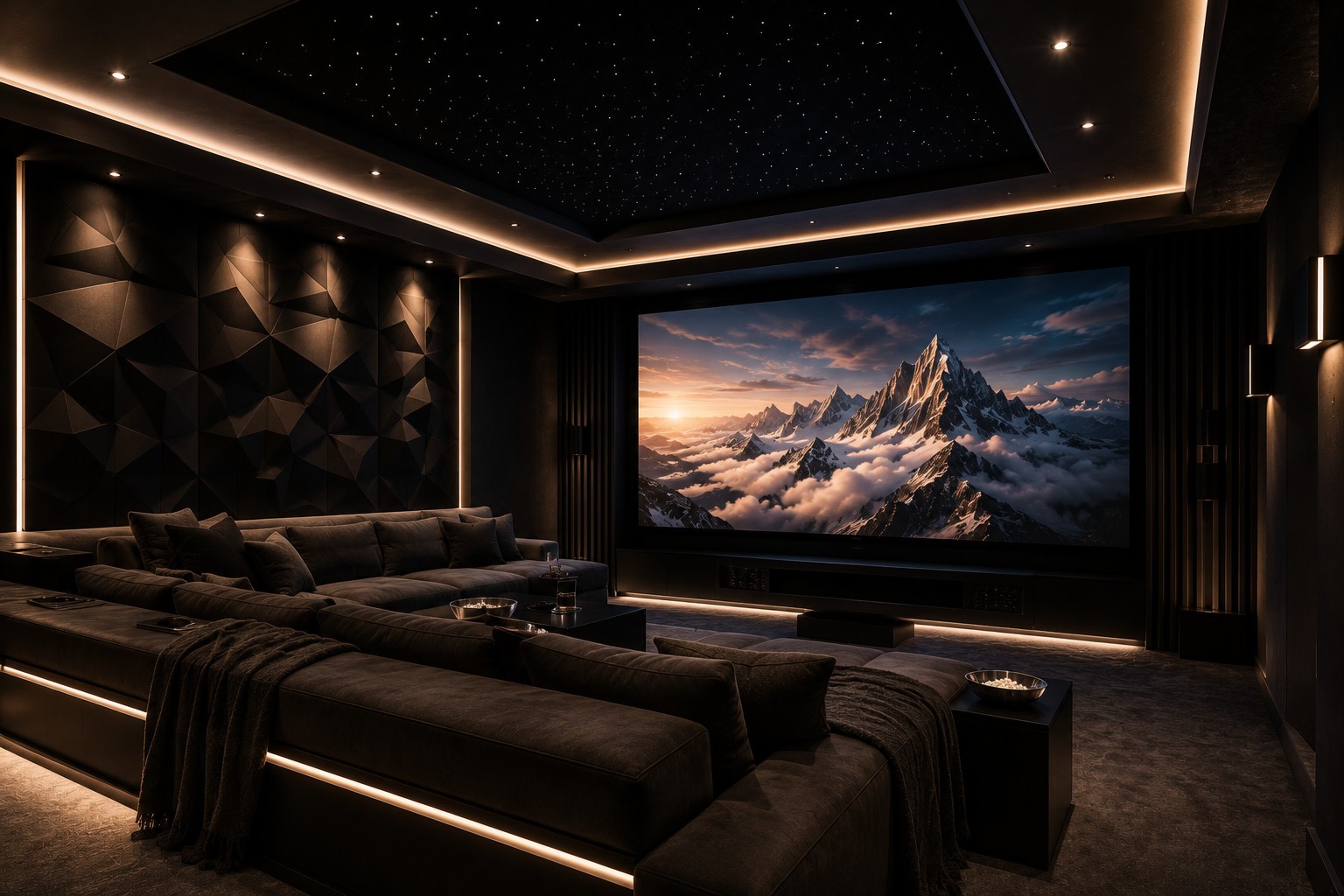
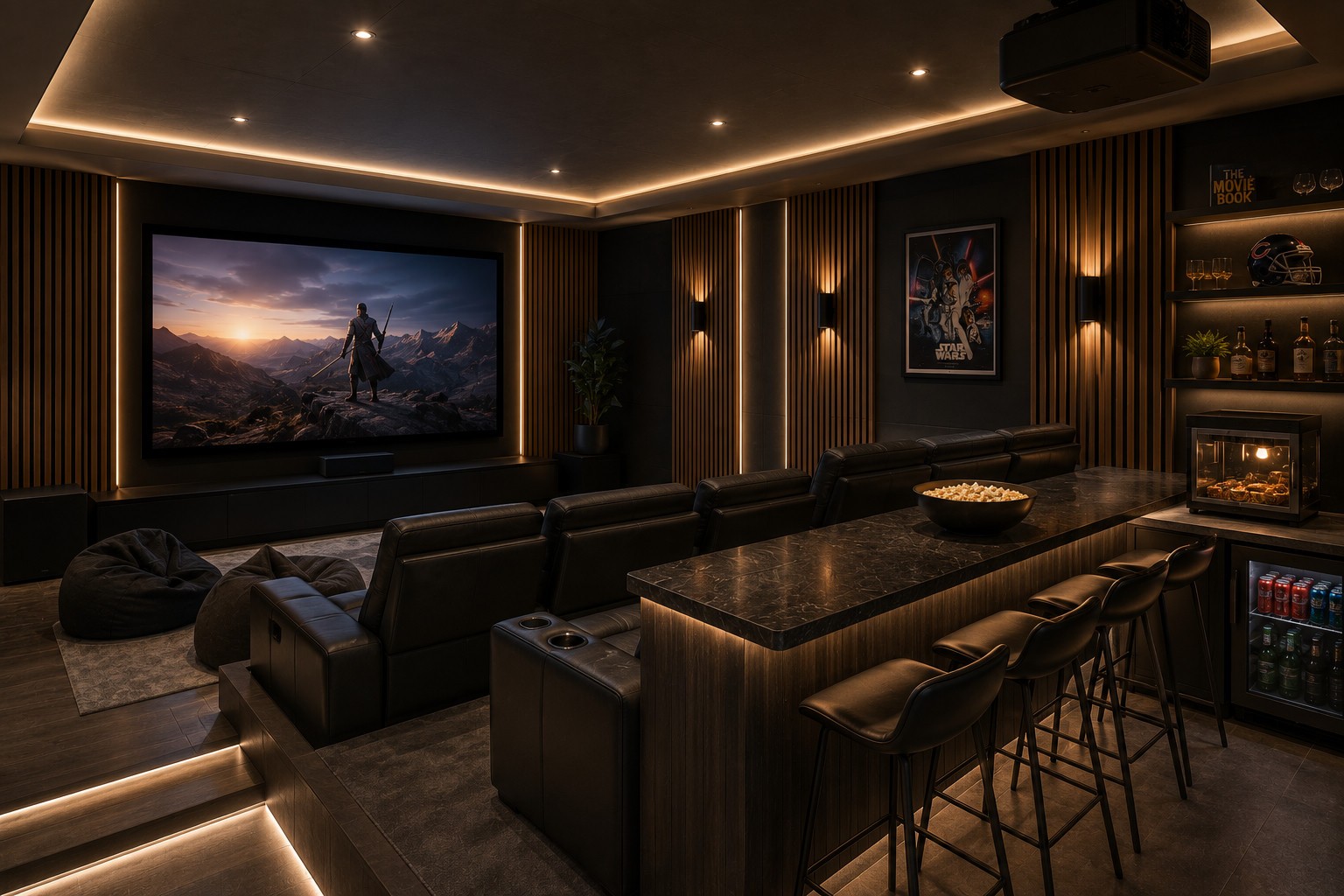
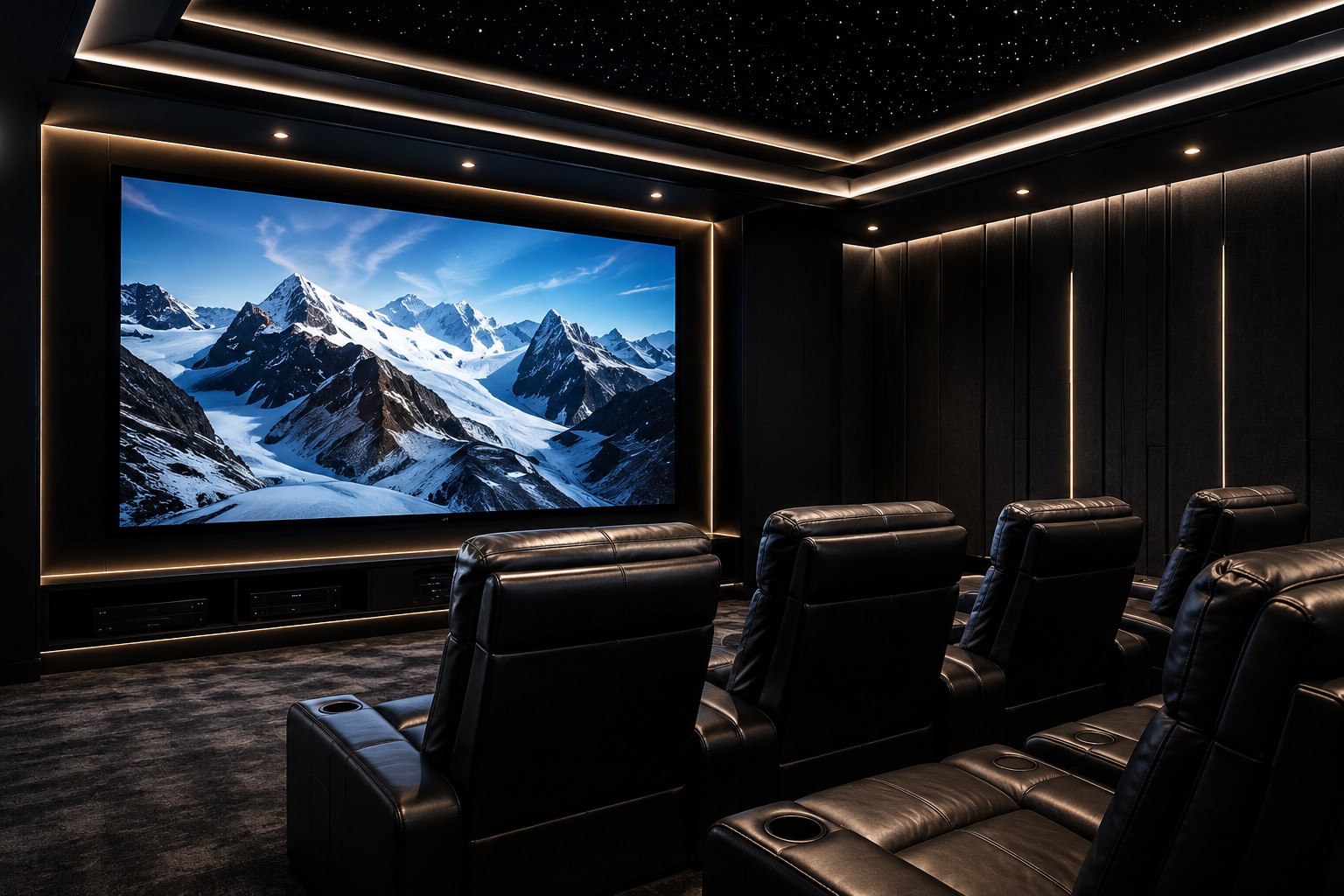
A great home theater isn't defined by any one piece of equipment — it's the room, the screen, the sound, the seating, and the control system working as one. Home theater design is really room design first and equipment selection second: get the room's proportions, light control, and acoustics right, and even a modest system will outperform an expensive one dropped into the wrong space.
- Picture — a screen sized and positioned correctly for the room, with ambient light controlled to match.
- Sound — a speaker layout and acoustic treatment matched to the room's size and shape.
- Comfort — seating and sightlines that hold up for a two-hour movie, not just a demo.
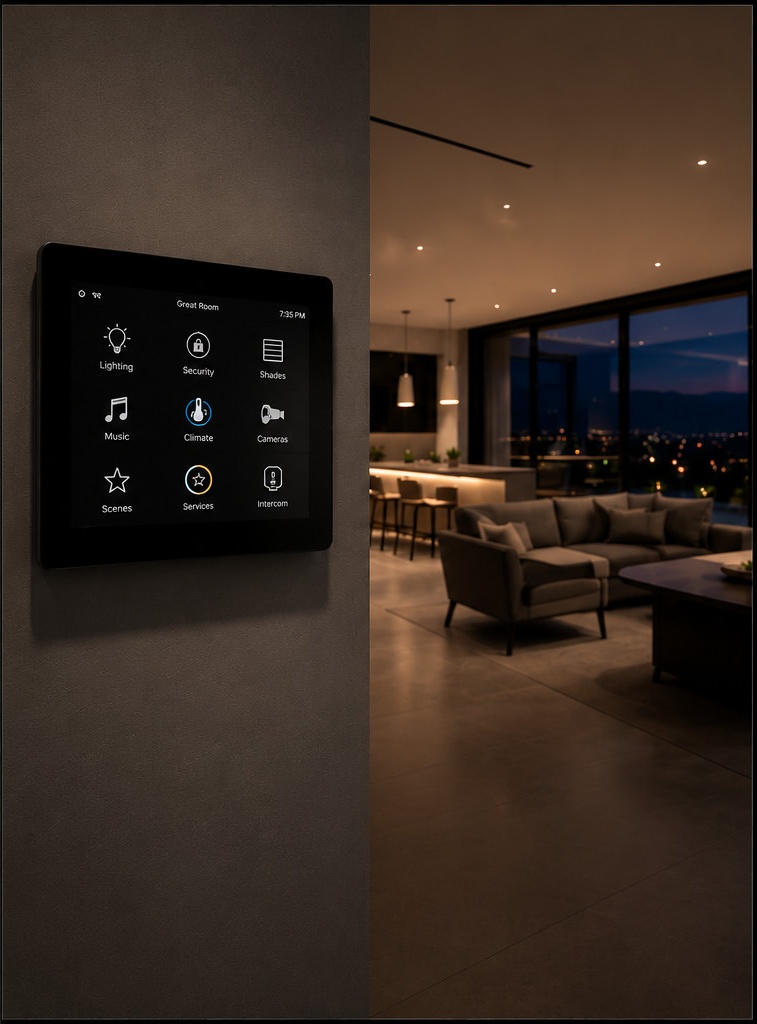
- Control — one button that gets the room ready, instead of four remotes and a dozen settings.
Room Selection
Choosing The Right Room.
Not every home has a purpose-built theater room, and that's fine — a great home theater can be a dedicated, light-controlled room or a more casual media room that does double duty. The room itself sets most of the constraints before a single piece of equipment is chosen.
- Proportions — a rectangular room with the screen on the short wall gives the most even sound and sightlines.
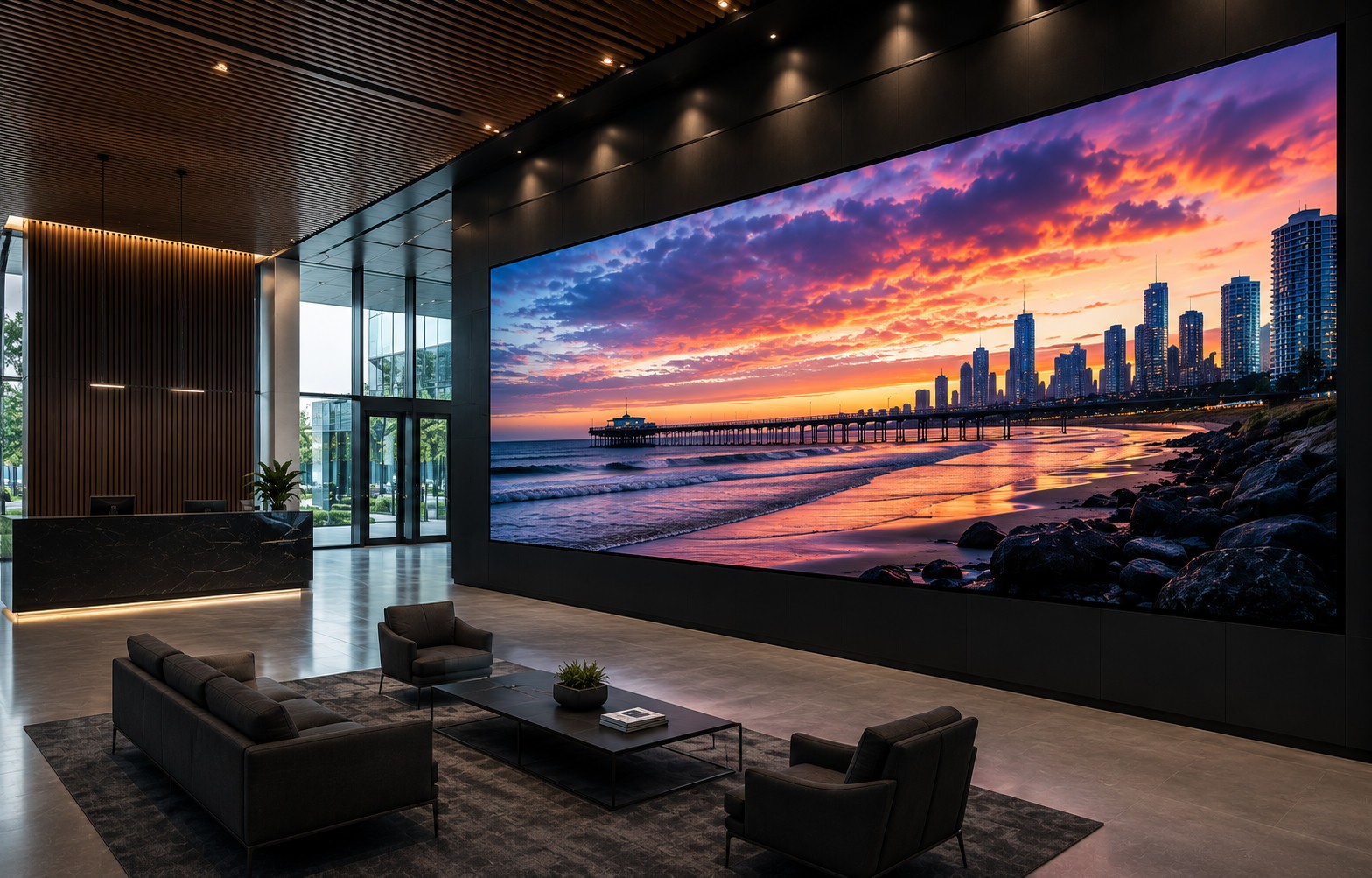
- Ambient light — windows and daylight push the design toward a brighter, direct-view screen rather than a projector.
- Isolation — distance from bedrooms and shared walls matters more than most people expect, especially for a dedicated room with real bass.
- Ceiling height — tiered seating, in-ceiling speakers, and projector placement all depend on it.
Sizing It Right
Screen Size Guide.
Screen size should be chosen from the back row forward, not the other way around. As a starting point, most rooms land somewhere between one and one-and-a-half times the screen's diagonal measurement as the ideal distance to the back row — closer for a sharper, more immersive image; farther for a more relaxed, TV-like view.
ACT Tip
Model screen size against your actual room dimensions in the ACT Theater Builder™ — it prices projector and video wall options side by side at your exact screen size and seating distance.
Audio
Speaker Layouts, Explained.
Home theater audio is described in a shorthand like 5.1 or 7.2.4. The first number is main channels, the second is subwoofers, the third (if present) is Dolby Atmos height channels for overhead effects.
- 5.1 — Immersive Essentials. Front left/center/right, two surrounds, one subwoofer. The entry point for a real theater experience.
- 7.2.4 — adds side and rear surrounds, a second subwoofer, and four Atmos height channels for overhead effects.
- 9.2.6 — wide front channels, dual subwoofers, and six height channels for a fully enveloping field.
- 11.4.6 — our top tier: maximum channel count, quad subwoofers, reference-level everything.
Every surround and height speaker is placed as a mirrored pair — left and right at matching depth — so the sound field stays balanced no matter where you're seated.
The Equipment
Equipment Selection & The Signature Rack™
Every processor, amplifier, and streaming source — engineered, labeled, and hidden.
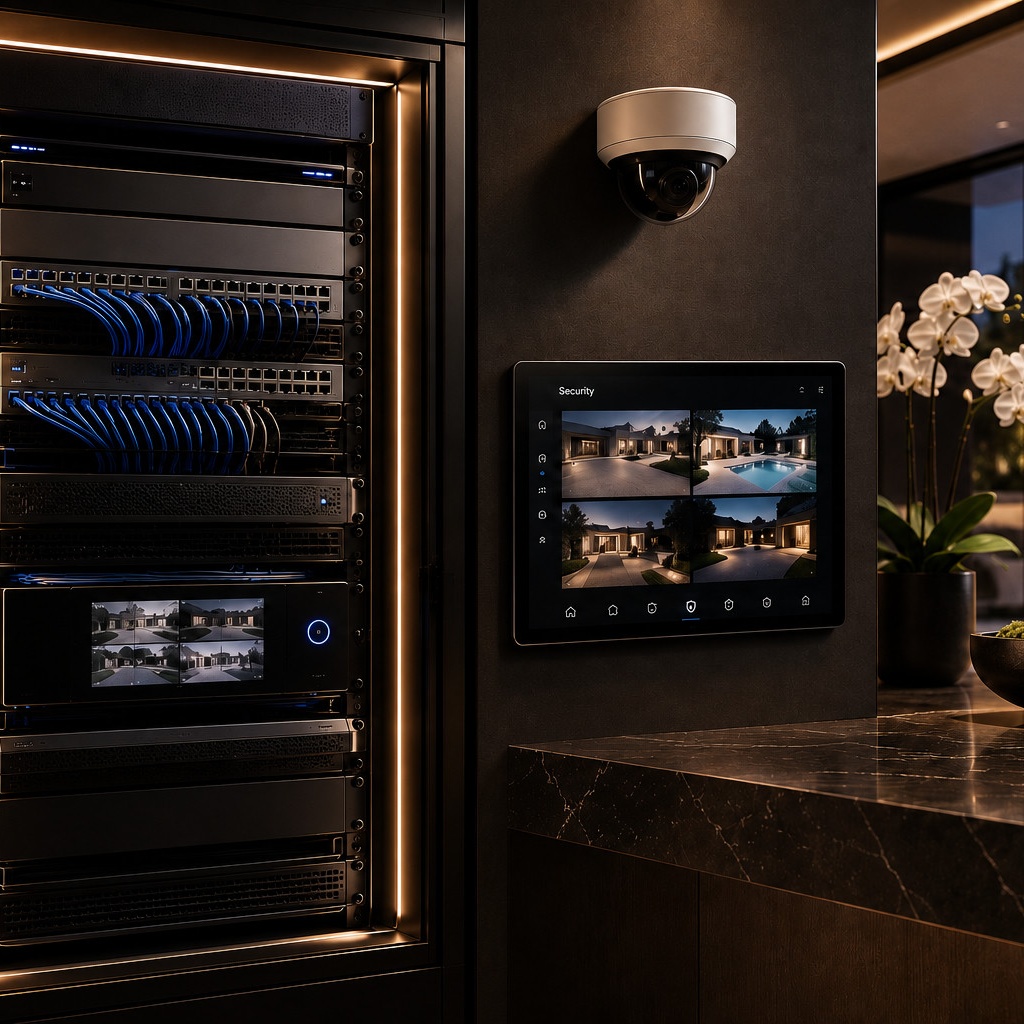
Equipment should be chosen to match the room and the speaker layout, not the other way around — a processor and amplification sized correctly for the space, sources chosen for how you actually watch. The Signature Rack™ is built off-site, tested, then installed as a single unit. No exposed equipment in the room, no tangle of cables behind the screen — just the picture and the sound.
Invisible Technology™
Hidden Technology Ideas.
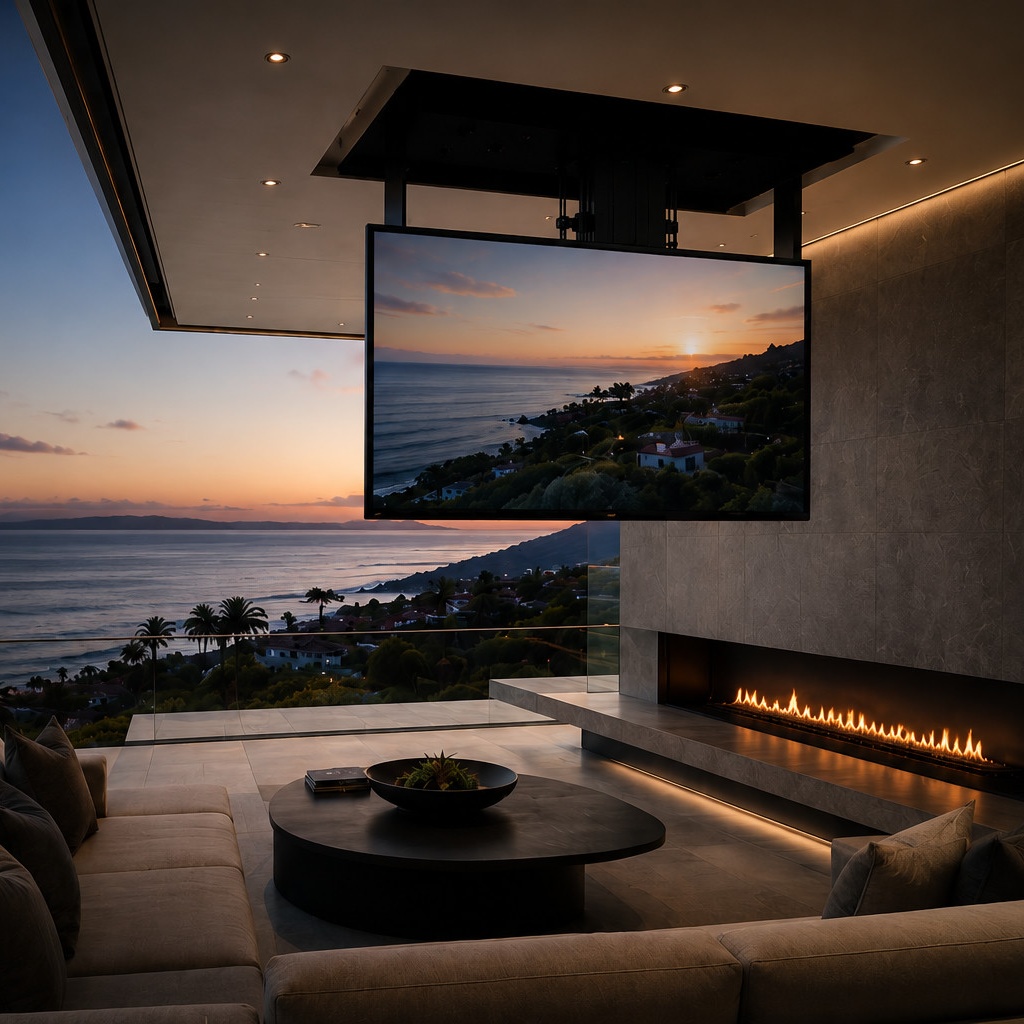
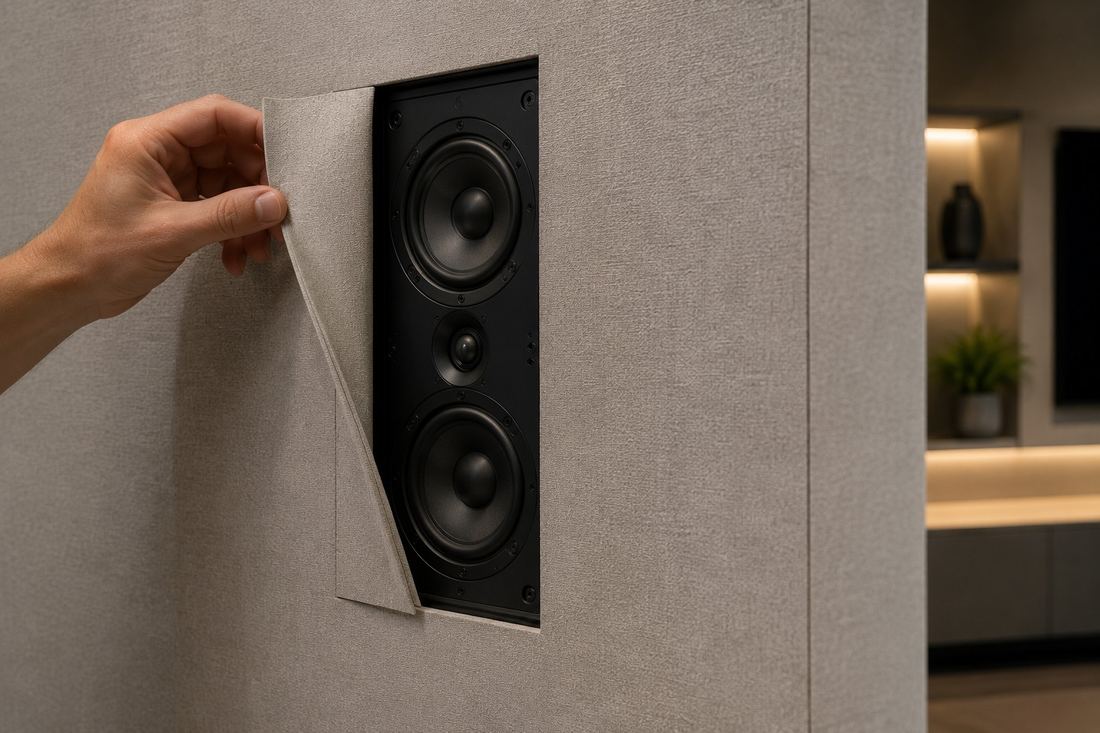
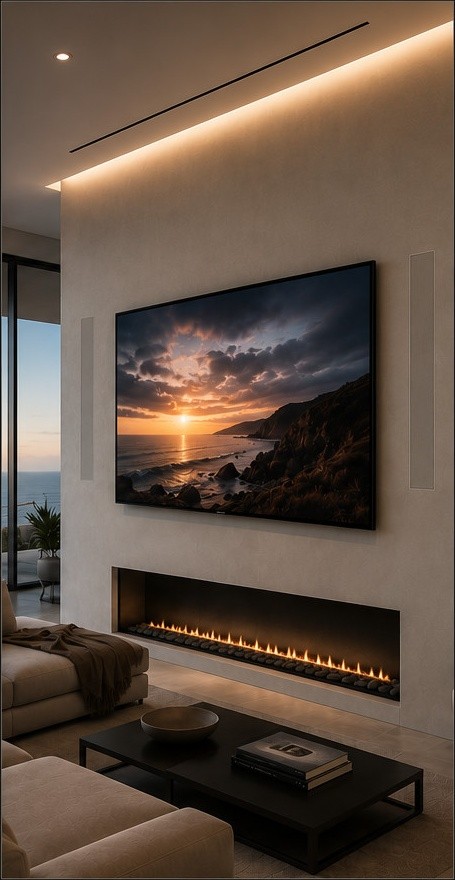
A theater doesn't have to look like a theater when the system is off. In-wall and in-ceiling speakers keep the room clean, a motorized screen or masking system disappears entirely, and the rack lives in a closet or adjacent room, not behind glass.
See Also
If you'd rather the screen itself disappear — behind an art frame, a sliding panel, or into a lift — see our full Hidden TV Guide.
Home Theater Cost
Budget Planning.
Home theater cost varies enormously with room size, screen type, audio tier, and how much of the room is custom-built versus off-the-shelf — so instead of a single number, we plan every project against three general tiers.
Tier 01
Essentials
A dedicated screen and a real 5.1 or 7.2.4 system, properly calibrated, with simple one-touch control. The entry point for a genuine theater experience.
Tier 02
Signature
Tiered seating, full acoustic treatment, a larger channel count, and The Signature Rack™ — our most common build for a dedicated room.
Tier 03
Reference
Maximum channel count, structural isolation, custom millwork, and reference-level everything — built to the same standard as a commercial screening room.
ACT Tip
Because so much depends on your specific room, the most accurate way to budget is a real quote — model your room in the ACT Theater Builder™ or schedule a consultation with a Luxury Technology Advisor.
Long-Term Care
Maintenance.
A home theater is a system, and systems need occasional attention: firmware and software updates, projector lamp or filter service, periodic re-calibration as furnishings change, and a network health check. We build every project on remote-monitorable equipment where possible, so many issues are caught and resolved before you notice them — part of the same Quiet Technology™ standard we hold every system to.