Estate security used to mean a keypad by the front door and a sign on the lawn. That approach does not hold up on a property with multiple structures, long driveways, guest houses, and staff coming and going on their own schedules.
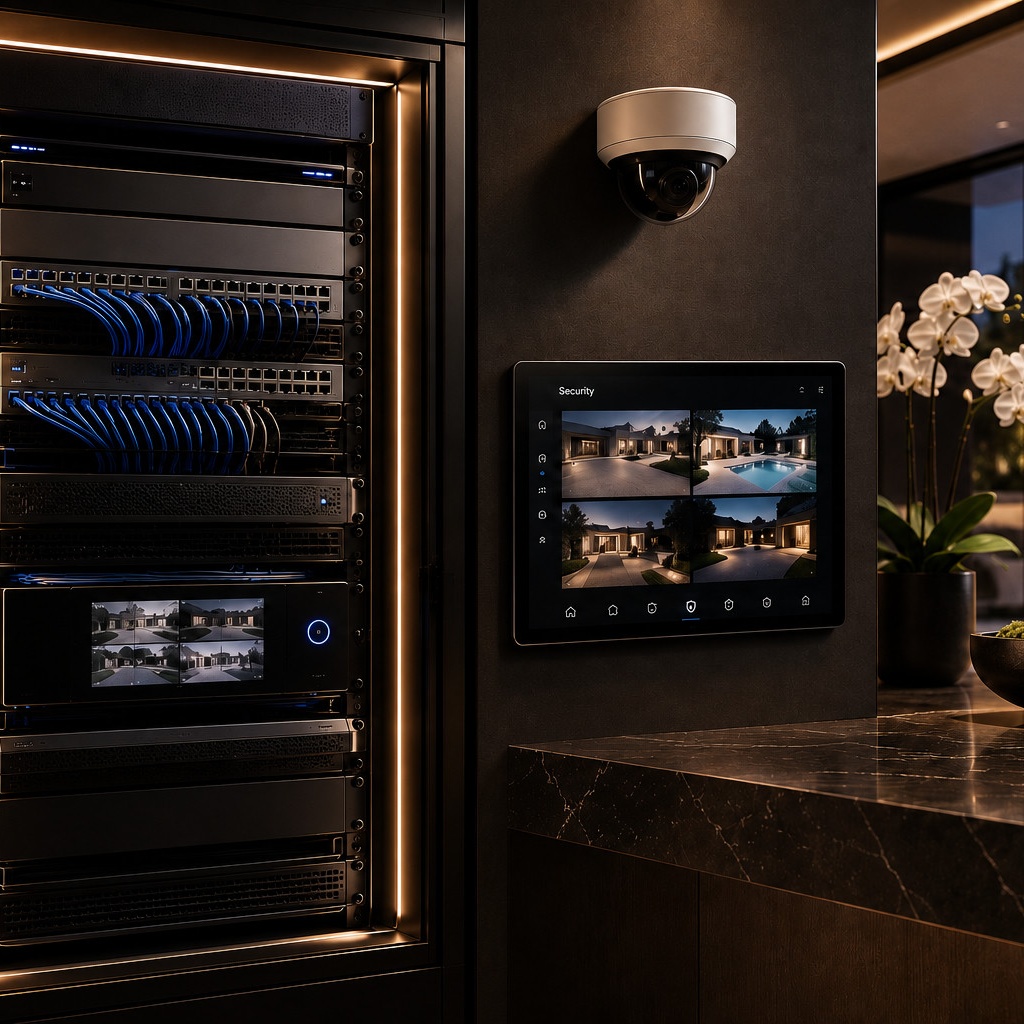
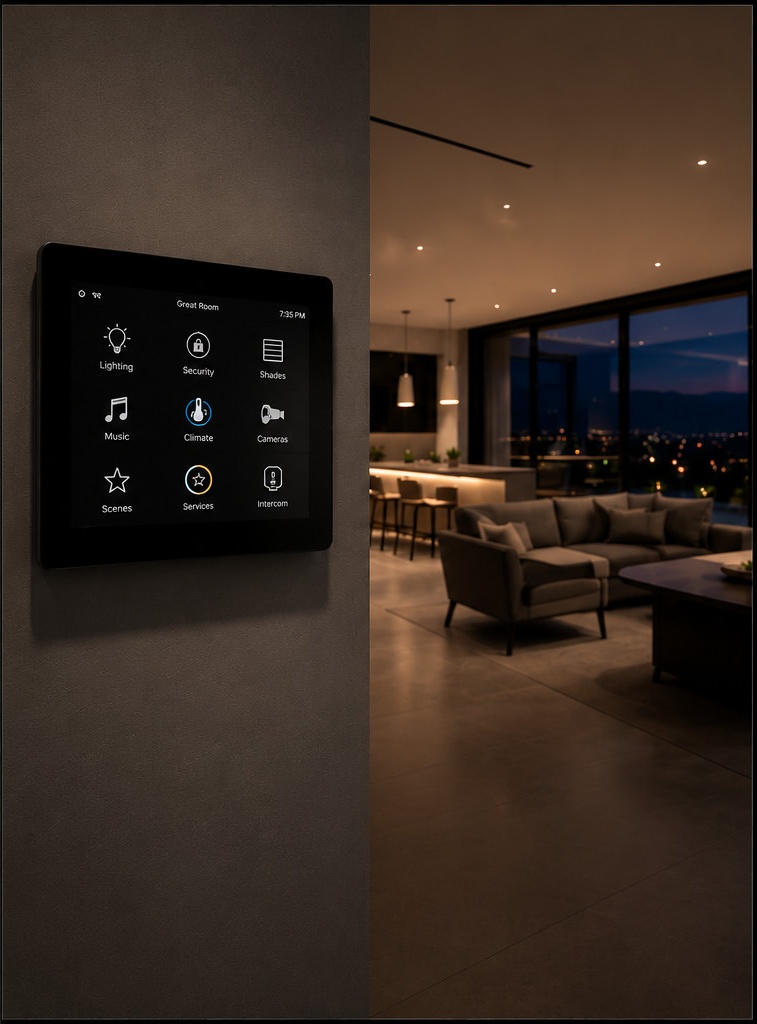
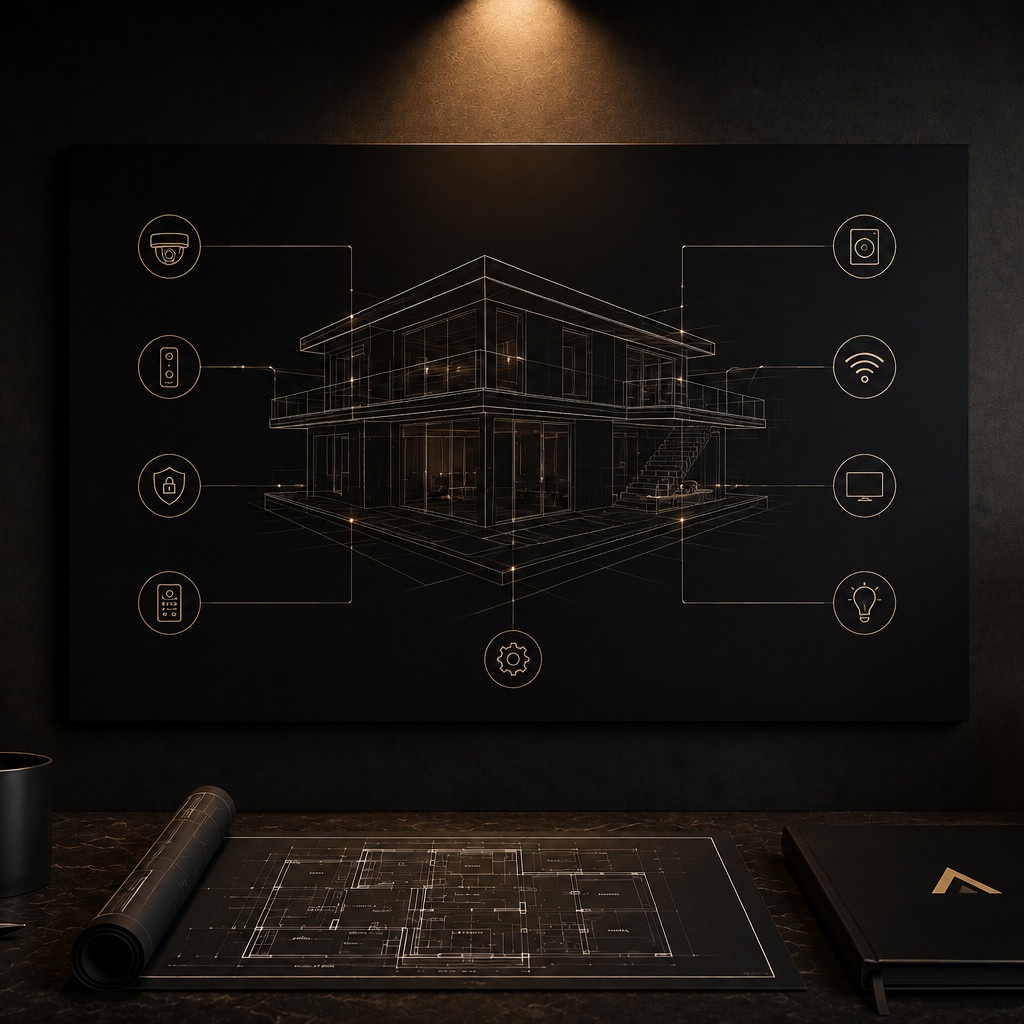
Under ACT Estate™, security is designed alongside lighting, gates, and climate — not as a separate system layered on top. A single interface controls cameras, locks, and alarm state, and the same automation logic that runs your evening lighting also arms the property.
Camera count matters less than camera placement. A handful of well-positioned security cameras covering the right sightlines outperform a dozen scattered around the property for the sake of a number.
The difference between smart security and a plain camera system is what happens after the footage is captured. Modern video analytics filter out noise — blowing branches, passing cars, a neighbor's cat — so alerts mean something.
ACT Installs designs and installs Ubiquiti camera systems for estates that want enterprise-grade hardware managed through one clean interface, alongside other analytics-capable platforms depending on the property's needs.
Analytics quality varies more by camera hardware and processing than by marketing claims. A Luxury Technology Advisor can walk you through what a given camera platform actually detects reliably — schedule a consultation to compare options for your property.
Access control replaces the physical key with something more flexible — and more accountable. Every credential can be tracked, scheduled, and revoked instantly, without rekeying a lock.
A gate is often the first thing a visitor — or an intruder — encounters. On properties with driveway gates, entry systems are one of the most visible expressions of how the estate is secured.
This is also where The Arrival Experience™ begins. A recognized vehicle or credential can trigger the gate, exterior lighting, and unlock sequence together, so arriving home feels effortless rather than transactional.
Traditional alarm panels were designed to stand alone. On an integrated estate, the alarm system talks to lighting, locks, and cameras, so arming the house does more than start a countdown.
Second homes and frequently traveled estates raise the same question — what is actually happening at the property right now. Remote monitoring answers it without a phone call to the property manager.
The fastest way to make a security system useless is to flood the homeowner with alerts until they get ignored. Smart notifications are the difference between a system you trust and one you eventually mute.
A well-designed system protects the household without watching every corner of it.
Camera placement is planned around private spaces, not through them. Interior cameras are generally limited to entry points, hallways, and shared living areas — bedrooms and bathrooms are excluded by design. Access to footage is credentialed, so staff, family, and property managers see only what their role requires. Retention settings and who can view archived footage are decisions made deliberately at design time, not left to default settings on whatever app came with the cameras.
Every camera, lock, and sensor on the property is also a device on the network. If that network is treated as an afterthought, the security system meant to protect the home can become its weakest point.
This is why estate security and The Estate Network™ are designed together, not separately. Security devices sit on their own segmented network, isolated from guest WiFi and general household traffic.
If your current security cameras were installed on the same network as every laptop, smart TV, and guest device in the house, that is worth revisiting. Schedule a consultation with a Luxury Technology Advisor to review how your system is segmented.
It depends entirely on the property — driveway length, number of structures, and entry points matter more than square footage. A well-placed handful of cameras at chokepoints often outperforms a large number placed without a plan.
In many cases, yes. An existing alarm panel can often be integrated so it works alongside cameras, locks, and automation rather than being replaced outright, though this depends on the age and type of panel.
No. Discreet, well-placed cameras under our Invisible Technology™ approach are just as effective for detection and evidence as visible hardware, and they preserve the look of the architecture.
Local storage keeps footage on-site, which can mean faster access and less dependence on internet bandwidth. Cloud storage adds off-site backup and remote access convenience. Many estate systems use a combination of both.
Not necessarily. A smart, integrated system can still route alarm events to a professional monitoring company for dispatch, while also giving the homeowner far richer context — live video, notifications, and history — than a monitoring center alone provides.
Because every estate is different, pricing depends on camera count, access control needs, and network requirements. The most accurate way to get a real number is a walkthrough with a Luxury Technology Advisor or a consultation through ACT Installs.
Schedule a consultation with a Luxury Technology Advisor.
Schedule Your Consultation