A router from the internet provider works fine in an apartment. In a 6,000 square foot home with stucco, stone, steel framing and a pool house, it runs out of range almost immediately — and the symptoms rarely look like a WiFi problem.
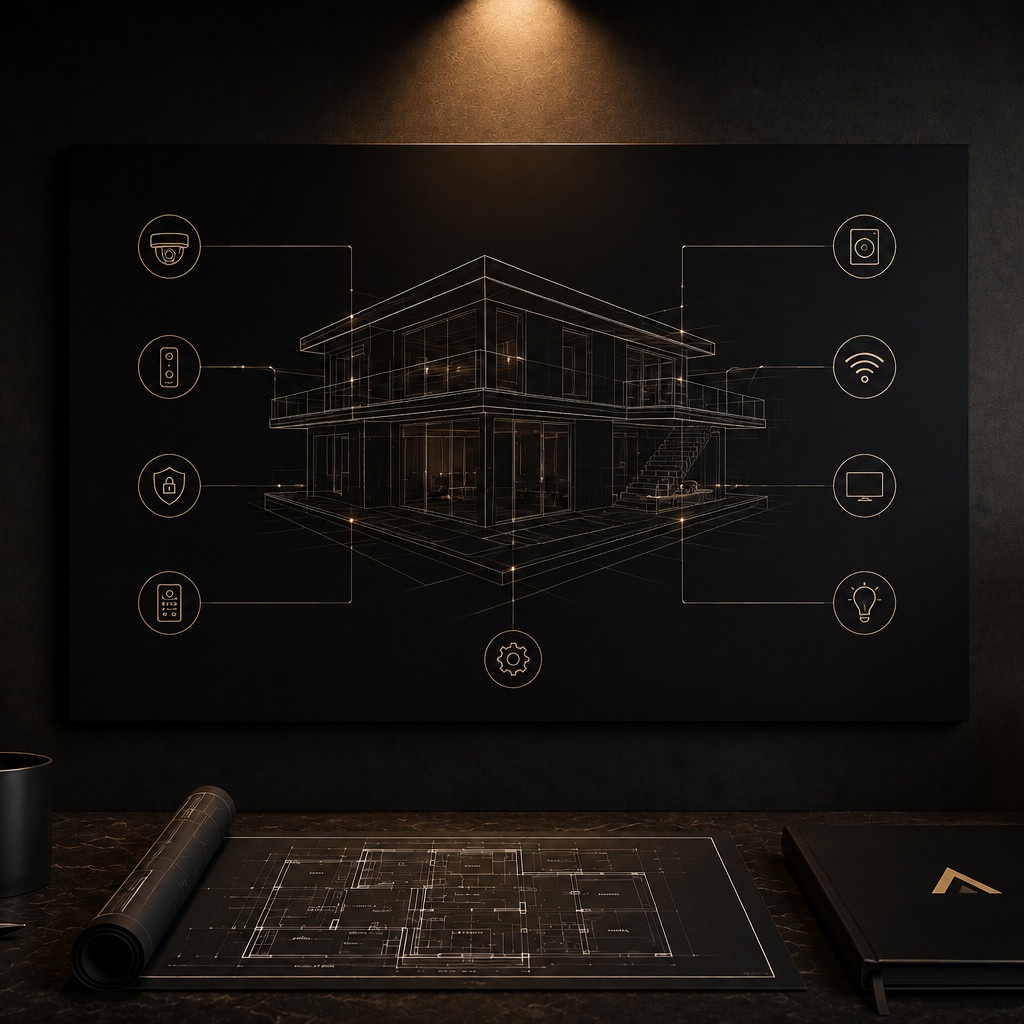
Every Estate Network™ project starts with a site survey, not a shopping list. We walk the plans, note wall construction, ceiling heights and problem materials, then map access point locations to actual coverage — not the manufacturer's best-case number on the box.
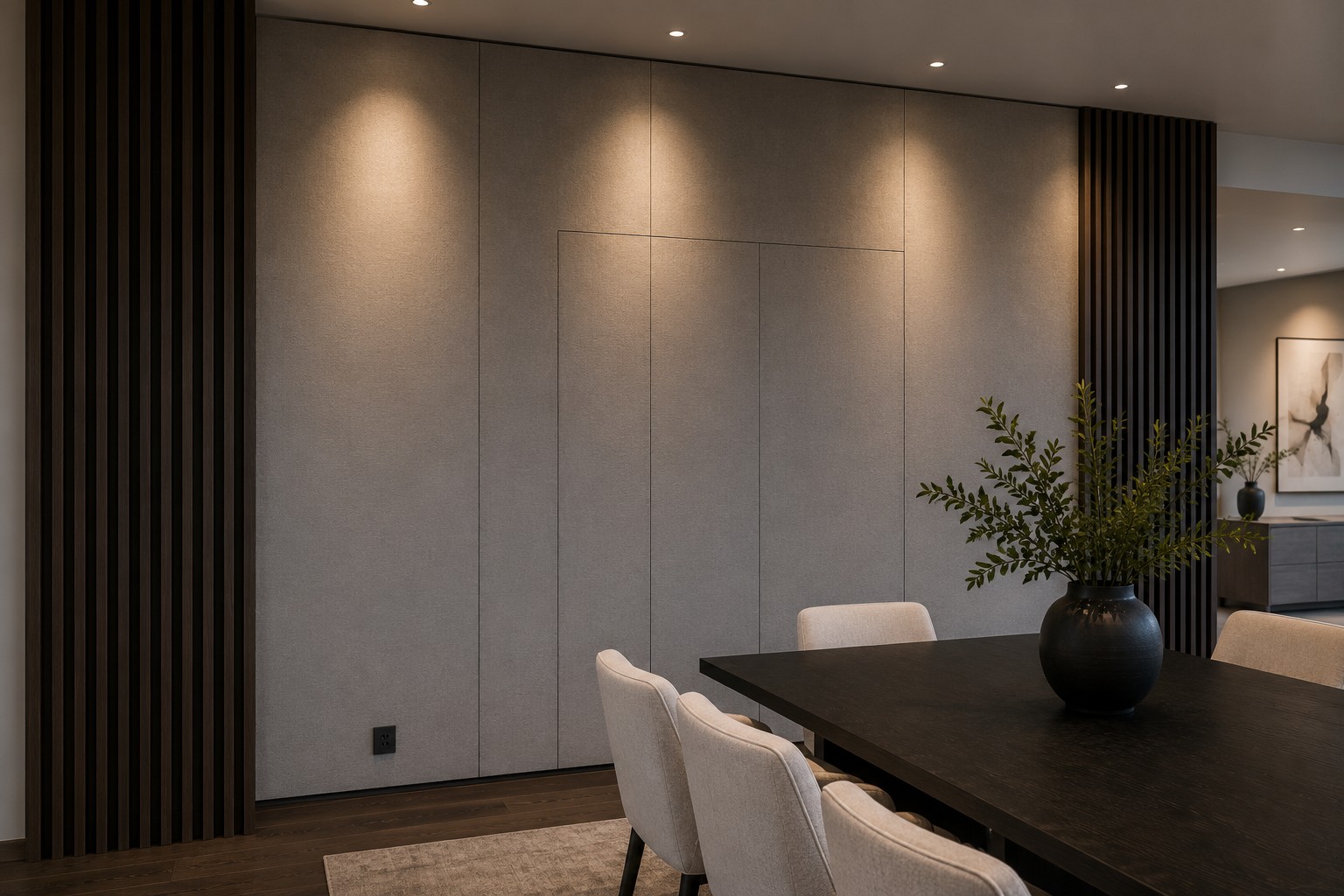
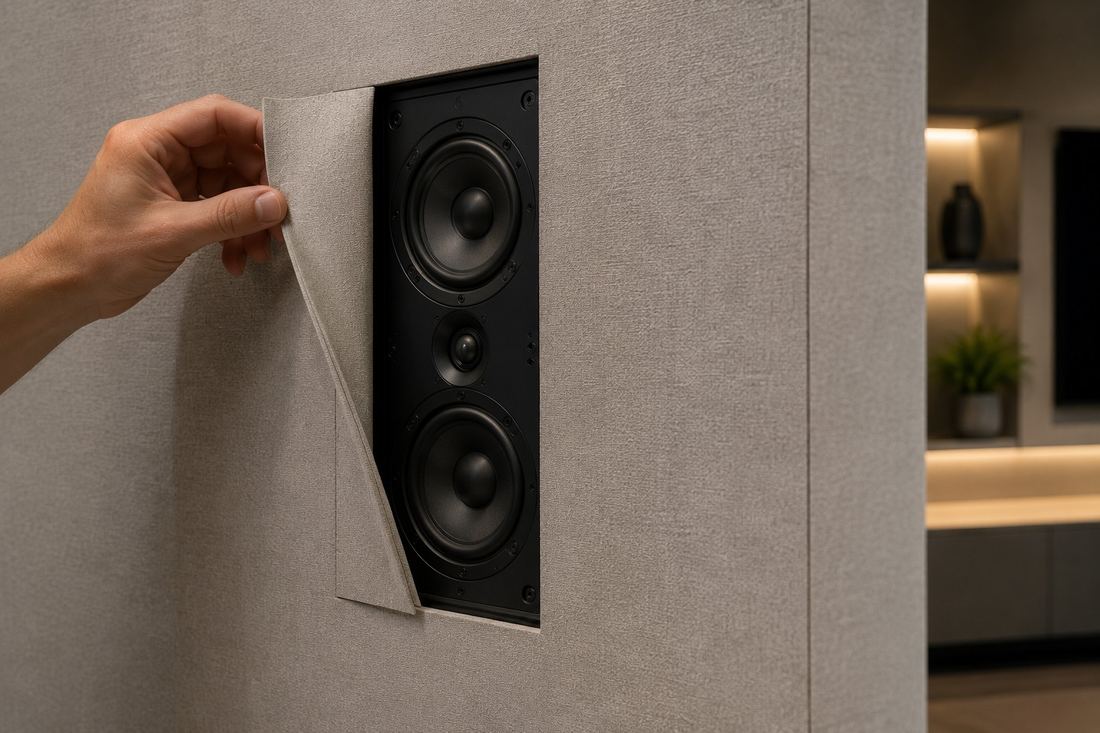
Access points are wired, not repeating over WiFi, and finished flush into ceilings or walls under Invisible Technology™ principles. The hardware disappears. The coverage doesn't.
Both promise whole-home coverage. They get there very differently, and the difference matters more as a property grows.
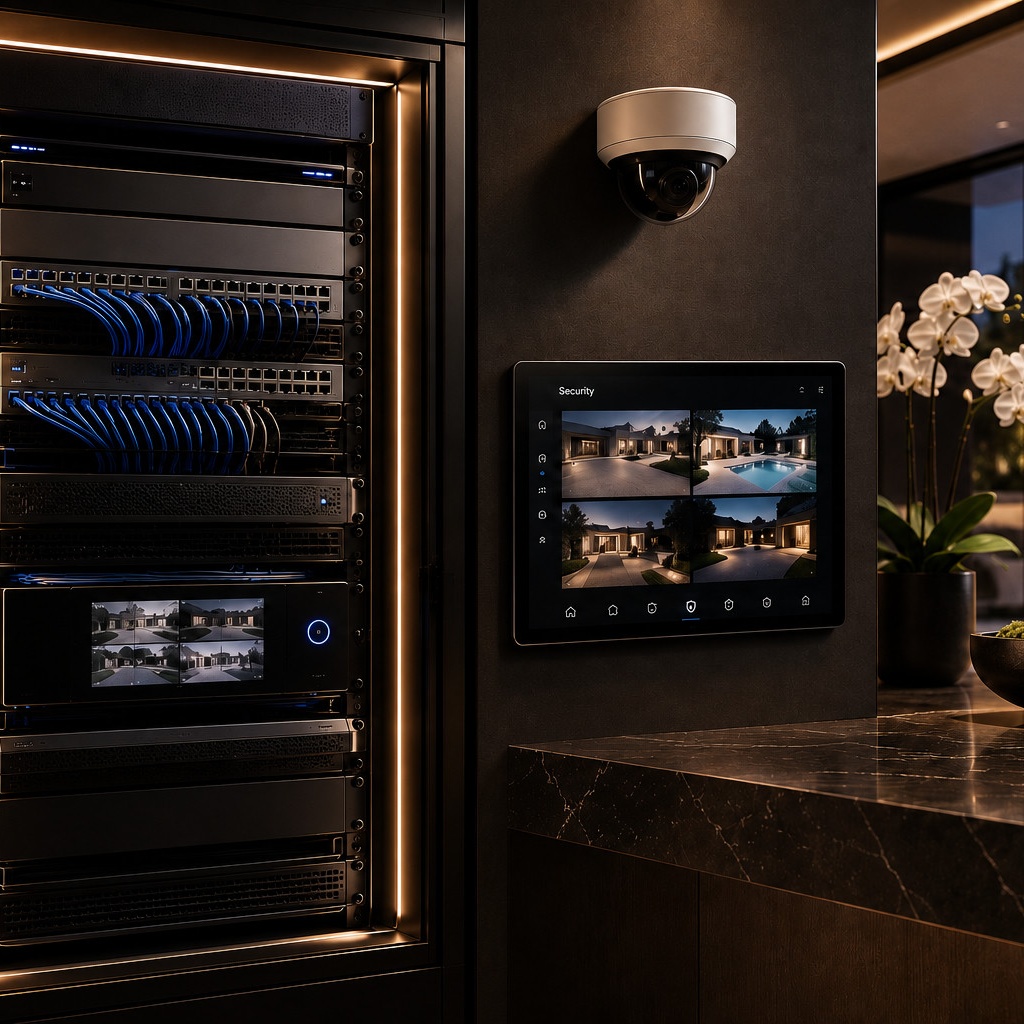
Every access point, camera and automation controller ultimately lands in one place: the network rack. It's the least glamorous part of a smart home and the most important.
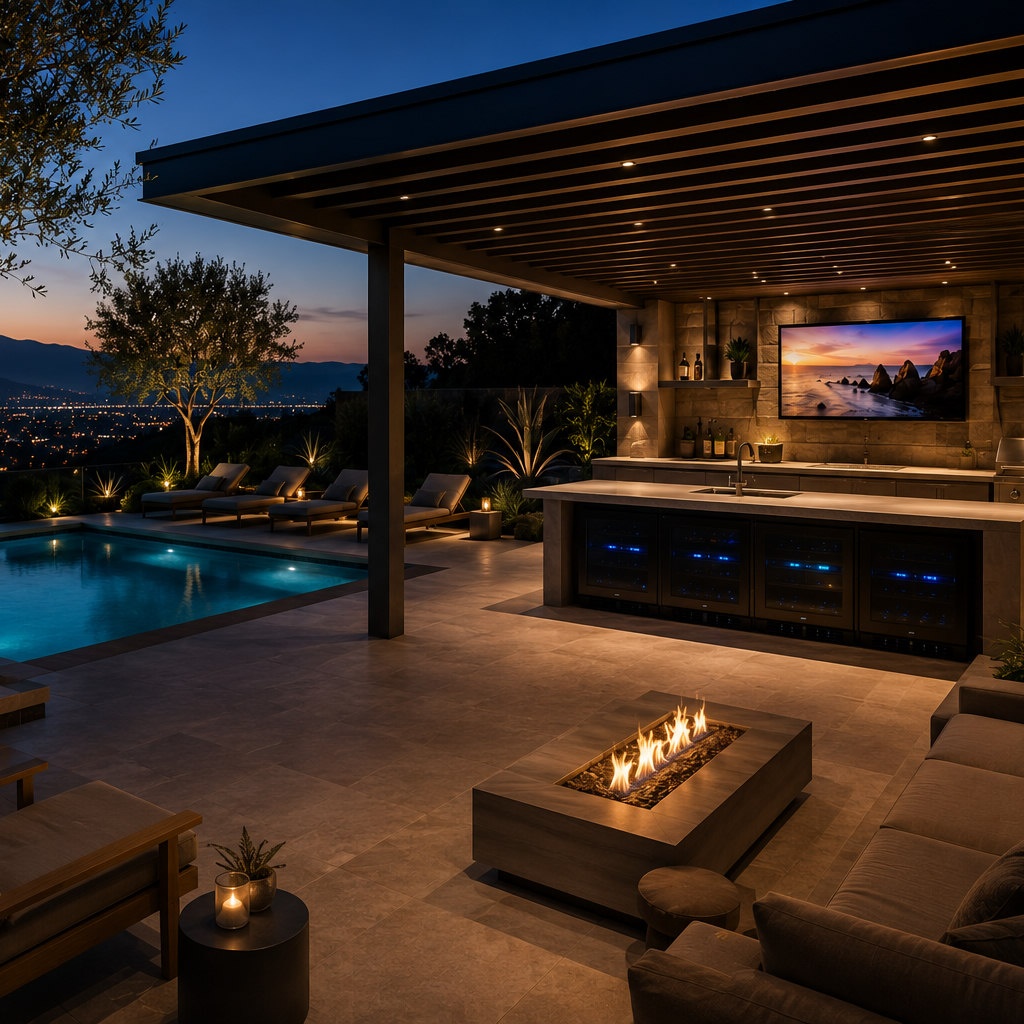
Pool decks, guest houses, cabanas and motor courts are where WiFi typically dies first — and where owners increasingly expect it to work best.
A guest network isn't just a courtesy password — it's a security boundary between visitors and the devices that run your home.
A home with cameras, door locks, and automation is only as secure as the network underneath it. Segmentation and monitoring matter as much as the WiFi password.
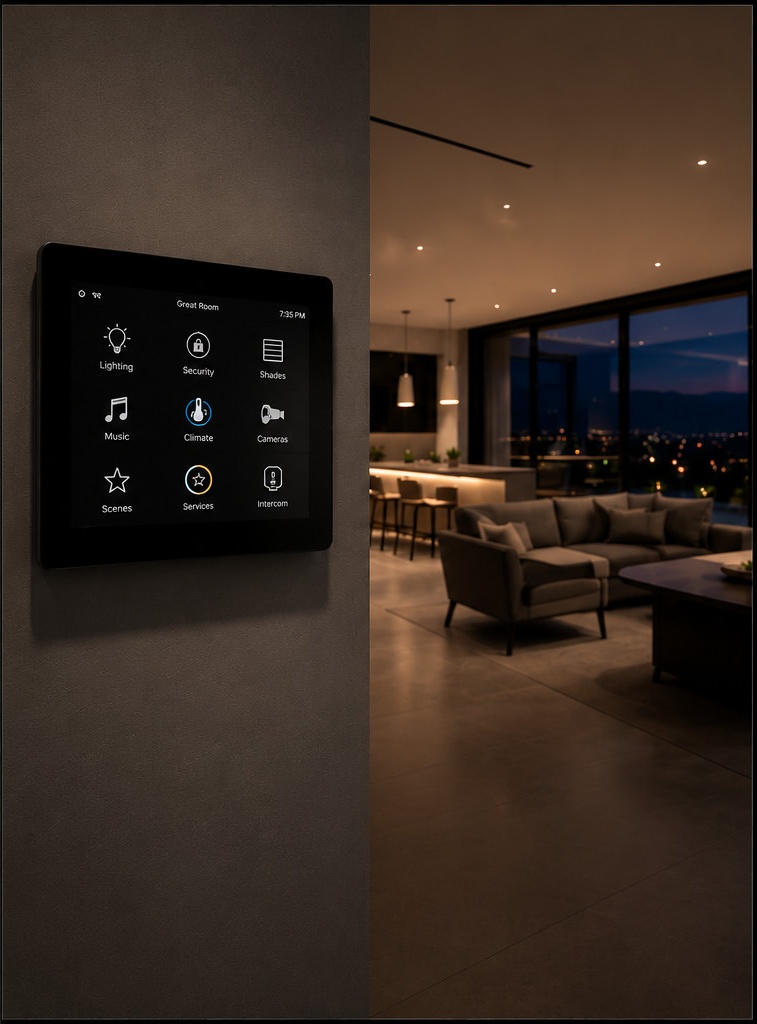
One Touch Living™ only works if the network underneath it never hesitates. Every scene — The Evening Scene™, The Arrival Experience™, The Vacation Mode™ — is a burst of commands to lights, shades, locks and audio happening at once. That traffic needs a network built to carry it without a stutter.
A speed test app is a reasonable gut check on internet speed. It's a poor way to judge whether a home's WiFi is actually working well.
WiFi standards evolve every few years, and the number of connected devices in a home only goes up. A well-designed network is built to absorb both without a rebuild.
Every home's construction, layout and device load are different, which is why we don't quote network scope over the phone. A consultation with a Luxury Technology Advisor starts with a real look at the property.
For a smaller, single-story home, a quality mesh kit can work reasonably well. Once you're dealing with multiple floors, detached structures, dense construction materials, or a real automation and camera system, enterprise WiFi becomes the more reliable foundation.
Yes. Wired access points are the ideal, but where running new cable isn't practical, point-to-point bridges and carefully placed access points can still deliver strong coverage without opening up walls.
It depends on square footage, layout, and construction materials, not just square footage alone. This is determined during a site survey rather than estimated from a floor plan.
A properly designed and managed network is sized with headroom for peak use — multiple streams, cameras, and automation traffic running at once — so performance stays consistent under load.
No. Access points, switches and the rack itself are all designed to disappear under Invisible Technology™ principles — flush-mounted, finished, or tucked out of sight, while still positioned for optimal coverage.
It's the foundation. Every scene under ACT Estate™, from One Touch Living™ to The Arrival Experience™, depends on a network that responds instantly and never drops a device.
Schedule a consultation with a Luxury Technology Advisor.
Schedule Your Consultation