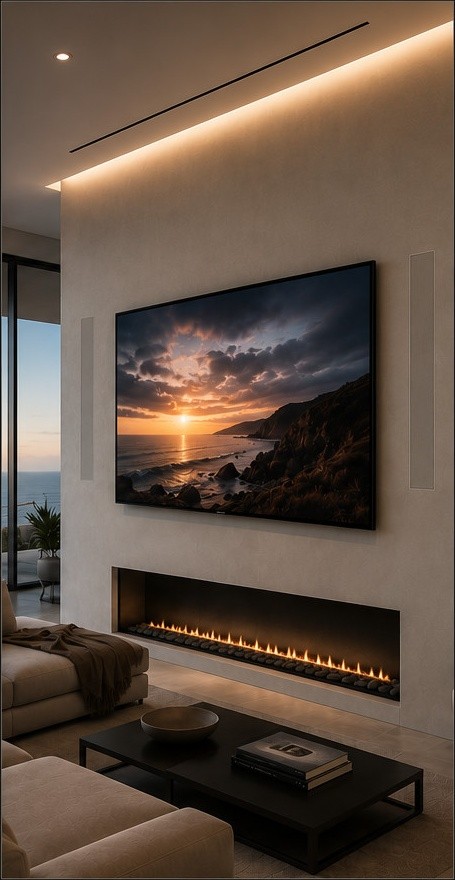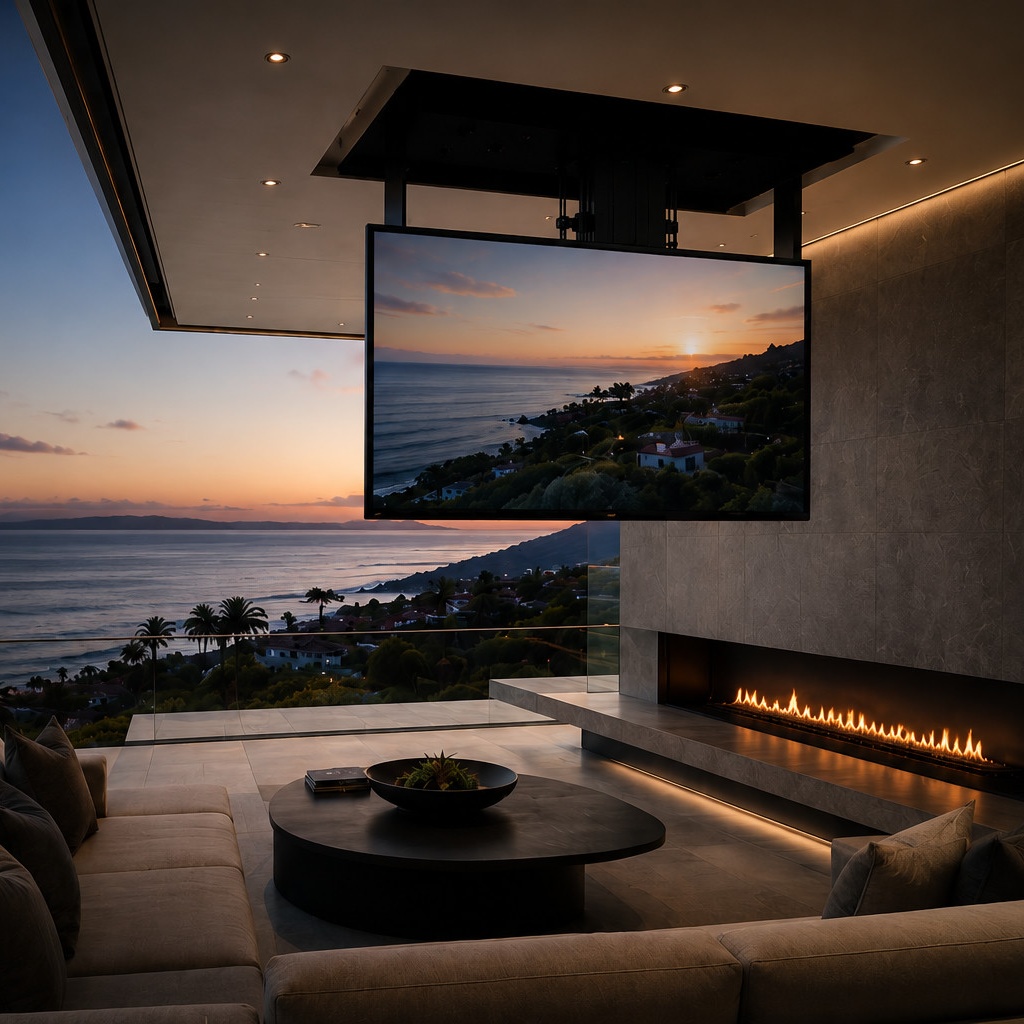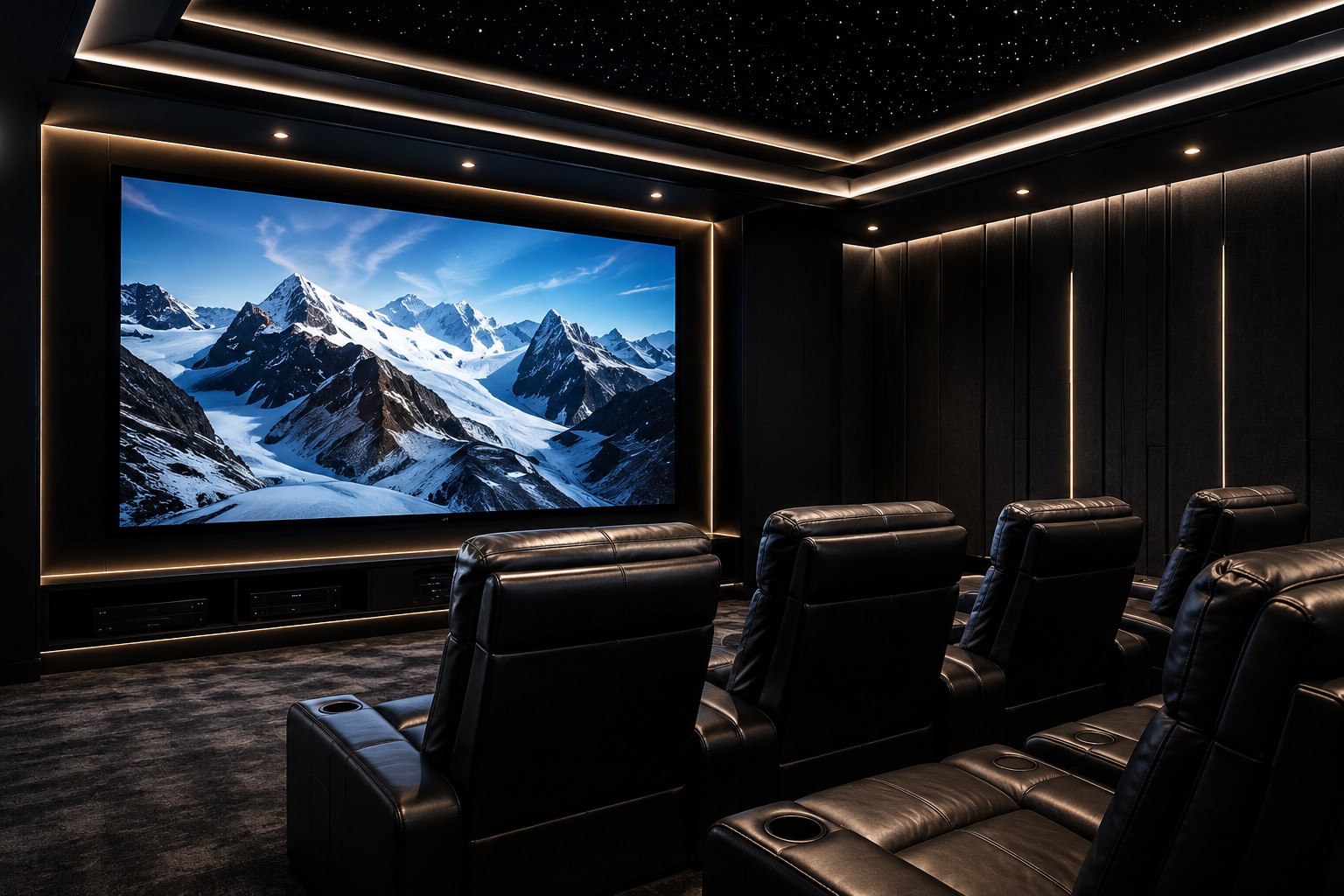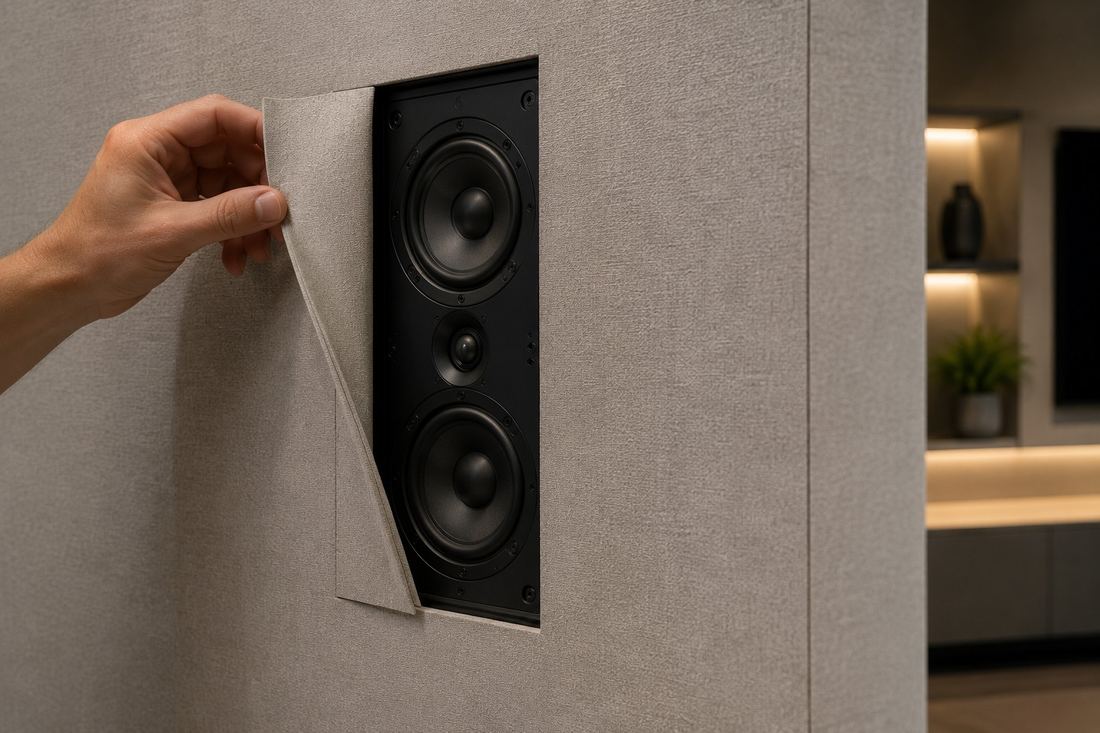
Traditional speakers — bookshelf, tower, or even in-wall models with a visible grille — are simpler to spec and, watt for watt, generally the least expensive way to get great sound. Invisible speakers go a step further: flush in-wall and in-ceiling models finished flat and painted to match the wall, or true invisible drivers mounted behind skim-coat plaster so there's no visible grille at all. The gap between them today is smaller than most people expect.
| Criteria | Invisible Speakers | Traditional Speakers |
|---|---|---|
| Visual footprint | None — flush, paintable, or plaster-hidden | Visible cabinet or grille |
| Sound quality | Excellent, with proper room tuning | Excellent, generally the reference point |
| Bass response | Needs a paired subwoofer for deep bass | Larger cabinets can self-produce more bass |
| Install timing | Best planned before drywall | Can be added anytime |
| Cost | Higher per point, plus finish work | Lower, especially bookshelf/tower models |
| Best for | Design-forward rooms, whole-home audio | Dedicated theaters, budget-first rooms |
Older invisible speakers earned a reputation for thin, boxy sound. Modern in-wall and in-ceiling drivers, properly specified and paired with a dedicated subwoofer for bass, close nearly all of that gap for the vast majority of listening — music, dialogue, and everyday theater use.
The remaining edge case is reference-grade critical listening, where a large traditional tower speaker's cabinet volume still gives it an advantage a flush in-wall driver can't fully match without a properly engineered enclosure behind the wall.
For whole-home audio, formal living rooms, and most home theaters, invisible speakers paired with a well-placed subwoofer deliver excellent sound with zero visual footprint. We reserve traditional cabinet speakers for rooms where reference-grade critical listening is the explicit priority.
For the vast majority of listening — music, dialogue, everyday theater use — a well-specified in-wall system paired with a subwoofer performs excellently. The gap only shows up at the reference-grade critical-listening end.
Yes — flush in-wall and in-ceiling models are designed to be primed and painted to match, and true plaster-hidden drivers have no visible surface at all.
Ideally, yes — in-wall and especially plaster-hidden speakers are far easier to install before drywall closes. Retrofitting is possible but more limited in placement.
Almost always. In-wall and in-ceiling drivers are efficient at mid and high frequencies but rely on a properly placed subwoofer for real low-end extension.
See the full Invisible Technology™ service, or read the complete Invisible Speaker Guide for placement, materials, and cost.
Explore Invisible Technology™