ACT Display™
The Video Wall Buyer's Guide.
A guide to LED video walls for private residences and commercial spaces — how they work, where they belong, and what it takes to get one installed right.
The Basics
What Is an LED Video Wall.
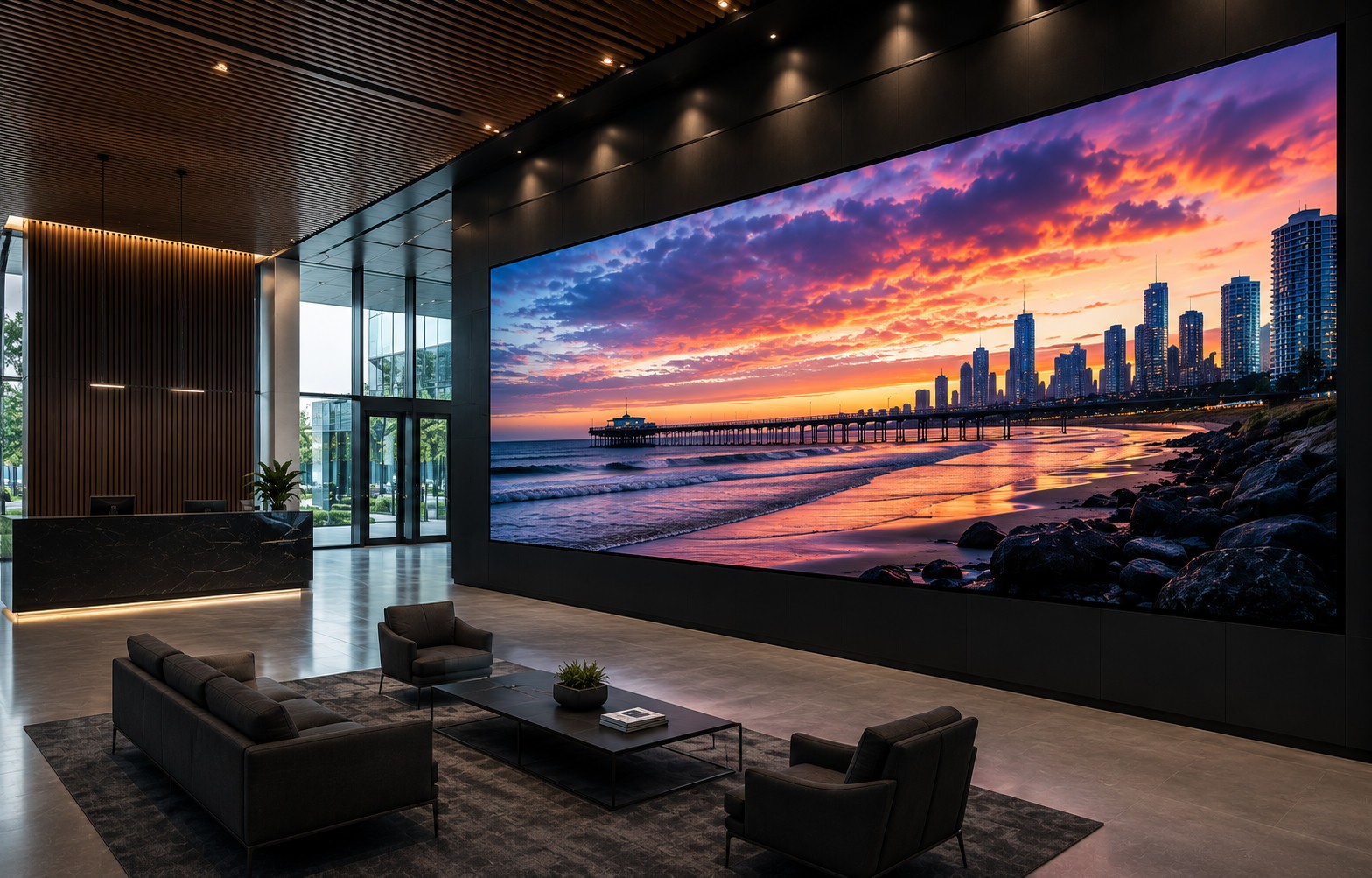
A direct view LED video wall is built from individual panels, each packed with thousands of tiny red, green, and blue diodes. Set them edge to edge and they form one seamless image — no bezels, no visible seams, no single point of failure the way a projector bulb can be.
This is different from the LED-backlit television in most living rooms. That is an LCD panel with LED lighting behind it. A true LED video wall has no LCD layer at all — the diodes themselves are the image.
- Modular by Design — walls are built from repeating panels or cabinets, so almost any size or aspect ratio is possible, not just standard television dimensions.
- Exceptional Brightness — direct view LED can produce far more brightness than a flat panel television, which matters in sunlit rooms and outdoor settings.
- No Bezels — the image reads as one continuous surface rather than a grid of screens, which is what separates a real video wall from a television array.
- Built for Long Duty Cycles — these are engineered to run for extended hours at a time, a different category of hardware than a consumer television.
The Comparison
LED vs. Projection.
For years, projection was the only way to get a truly large image. Direct view LED has changed that math, but projection still has a place. Here is how they actually compare.
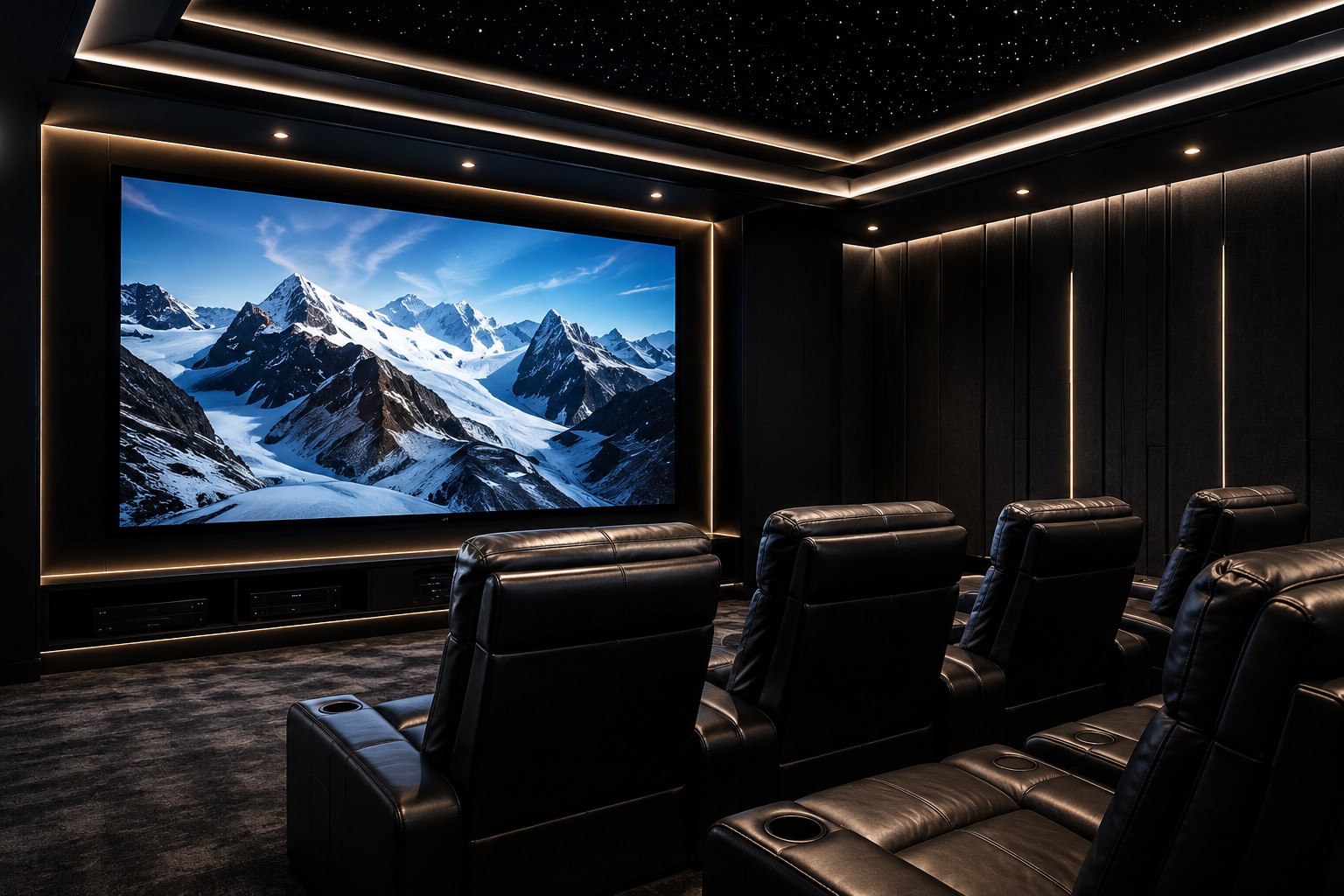
- Ambient Light — LED holds its image in a bright room; projection needs controlled or low light to look its best, which is why projection remains the standard inside a dedicated ACT Cinema™ room.
- Depth Behind the Screen — a projector needs throw distance, either from the front or a deep recess behind the screen. A video wall is flat against the surface it mounts to, which opens up rooms where a projector simply will not fit.
- Longevity and Upkeep — LED panels are rated for many years of daily use with minimal maintenance. Projector lamps and light engines have a service life and eventually need attention.
- Image Character — a well-tuned projector on a quality screen still produces a cinematic quality that many home theater purists prefer for movie watching. A video wall produces a punchier, brighter image suited to daytime viewing and mixed-use rooms.
- Scale Without a Booth — video walls scale to size without requiring the equipment closet or throw-distance planning a projector setup demands.
The Key Spec
Pixel Pitch Explained.
Pixel pitch is the single most important number in any video wall conversation. It is the distance, in millimeters, between the center of one diode cluster and the next. The smaller the number, the tighter the pixels, the closer you can stand before the image resolves into individual dots.
- Fine Pitch LED — pitches under roughly two millimeters are considered fine pitch, built for close viewing distances such as a media wall you sit ten to fifteen feet from, or a boardroom table just a few feet away.
- Viewing Distance Rule of Thumb — a practical guideline is minimum comfortable viewing distance in feet roughly equal to the pixel pitch in millimeters. A tighter pitch costs more but allows closer seating.
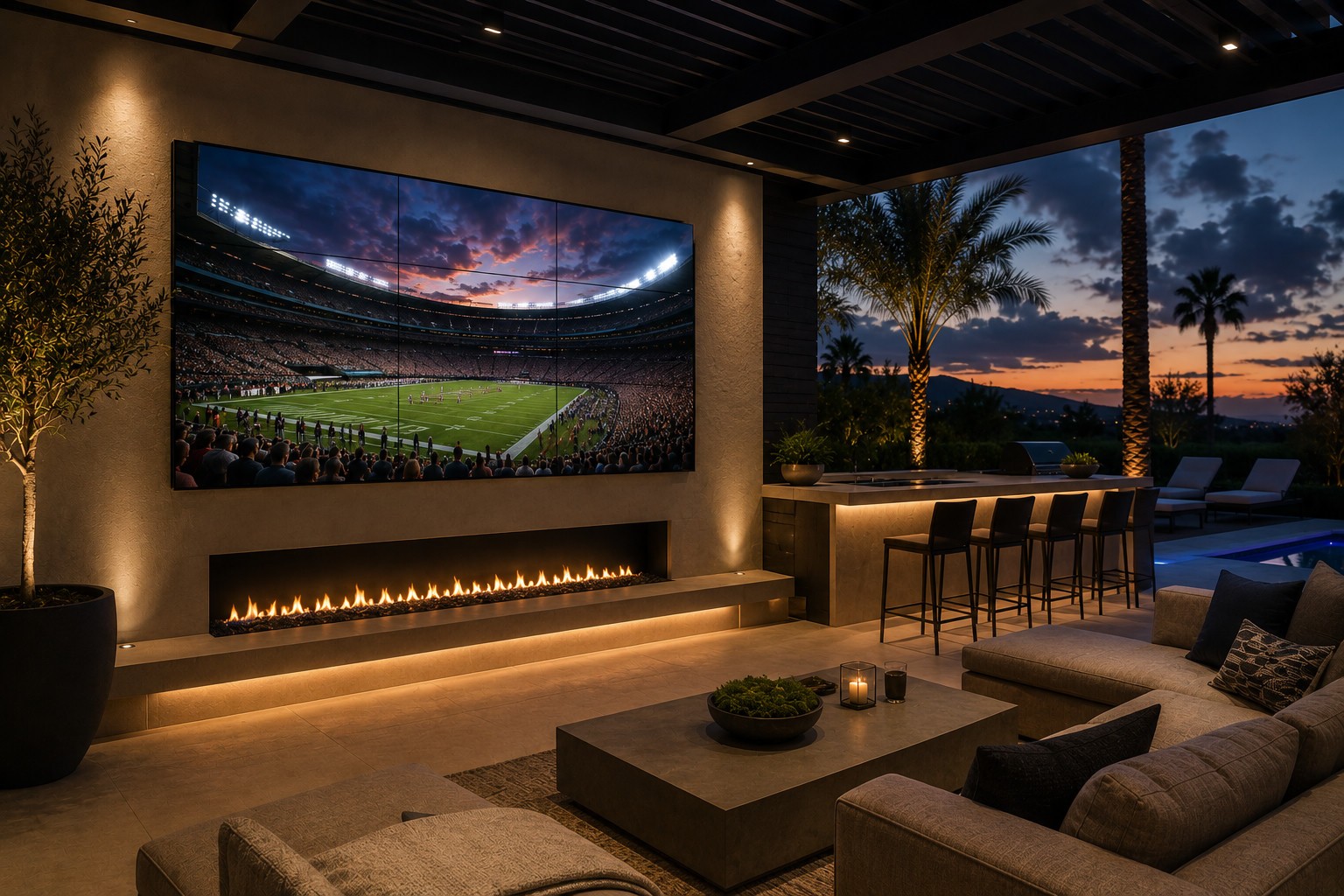
- Wider Pitch for Distance — walls viewed from farther away, like an outdoor entertaining space or a large public space, can use a wider pitch and achieve real cost efficiency without any visible loss of quality.
- Pitch Drives Panel Count — finer pitch means more diodes, more panels, and more processing power to drive the wall, which is why pitch is the first question in any real budget conversation.
ACT Tip
Pixel pitch should always be chosen against your actual seating distance, not against the biggest wall on the spec sheet. A Luxury Technology Advisor can walk the room with you and recommend the right pitch before any hardware is ordered.
Getting It on the Wall
Mounting Options.
How a video wall attaches to the structure behind it affects everything from serviceability to how flush the finished surface looks.
- Front Serviceable — individual panels can be removed or accessed from the front, which matters when there is no rear access, such as a wall built into masonry or against another finished room.
- Rear Serviceable — a service corridor or removable panel behind the wall allows technicians to access wiring and modules without disturbing the front face, generally the preferred method when the architecture allows for it.
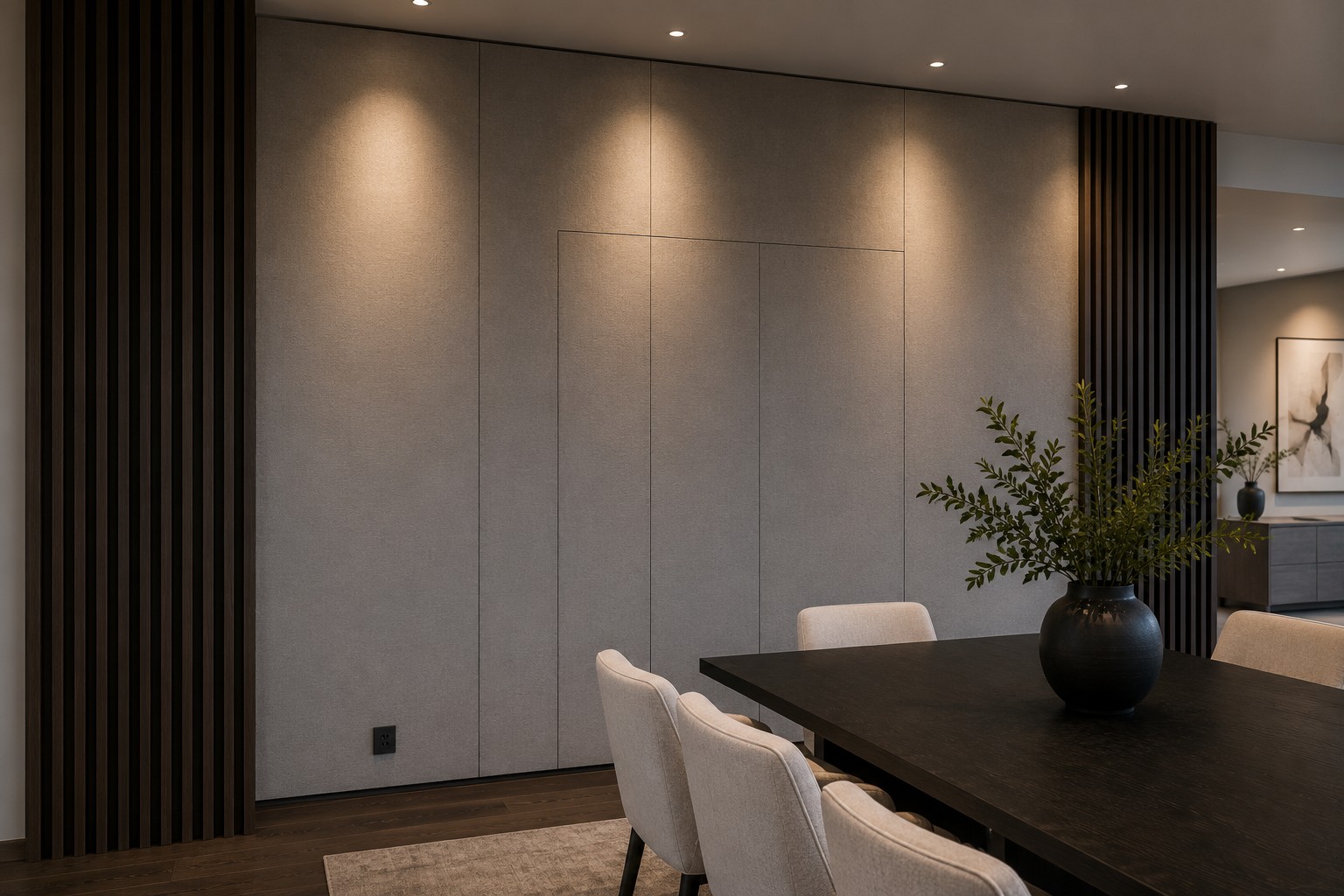
- Flush and Recessed Mounting — the wall sits within a millimeter or two of the surrounding surface, an approach consistent with our Invisible Technology™ philosophy of hiding hardware and celebrating the image.
- Structural Load Planning — video walls are heavier than a flat panel television and require a mounting frame engineered for the wall's total weight, ideally planned before drywall goes up.
- New Construction Coordination — when a video wall is planned during a build, framing, power, and low-voltage pathways can be roughed in ahead of time through our Builder Ready Program™, which avoids costly rework later.
Running the Wall
Control Systems.
A video wall is only as good as what is driving it. The processing and control layer determines what the wall can show and how easily it is operated day to day.
- Video Processing — a dedicated processor stitches the panel array into one canvas, scales incoming sources to fit, and can split the wall into multiple zones showing different content at once.
- One Touch Living™ Integration — in a residential setting, the wall becomes one more device on the same automation scenes as lighting and audio, so a single button raises a media wall from art display to full-screen viewing.
- Remote Monitoring — commercial installations benefit from remote diagnostics that flag a failing panel or power supply before it becomes visible to anyone in the room.
- Simple Daily Operation — regardless of how complex the processing is behind the scenes, the day-to-day interface should be as simple as changing a channel, not a technical console.
What Plays on It
Content Sources.
A video wall is a blank canvas until something is feeding it. The right sources depend on whether the wall is meant to entertain, inform, or simply set a mood.
- Streaming and Broadcast — standard media sources scale to fill the wall just as they would a television, ideal for sports and everyday viewing.
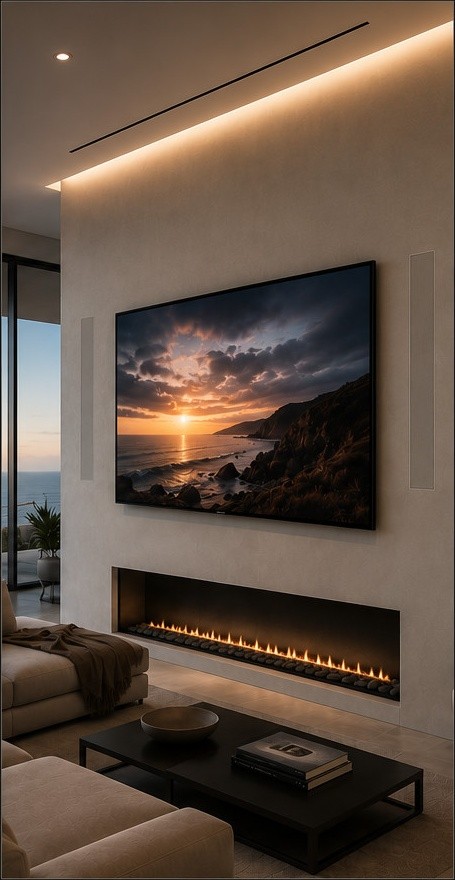
- Curated Art and Ambient Imagery — residential walls are frequently used as digital art displays between viewing sessions, an approach that suits an entry, bar, or great room that is occupied even when nothing is being watched.
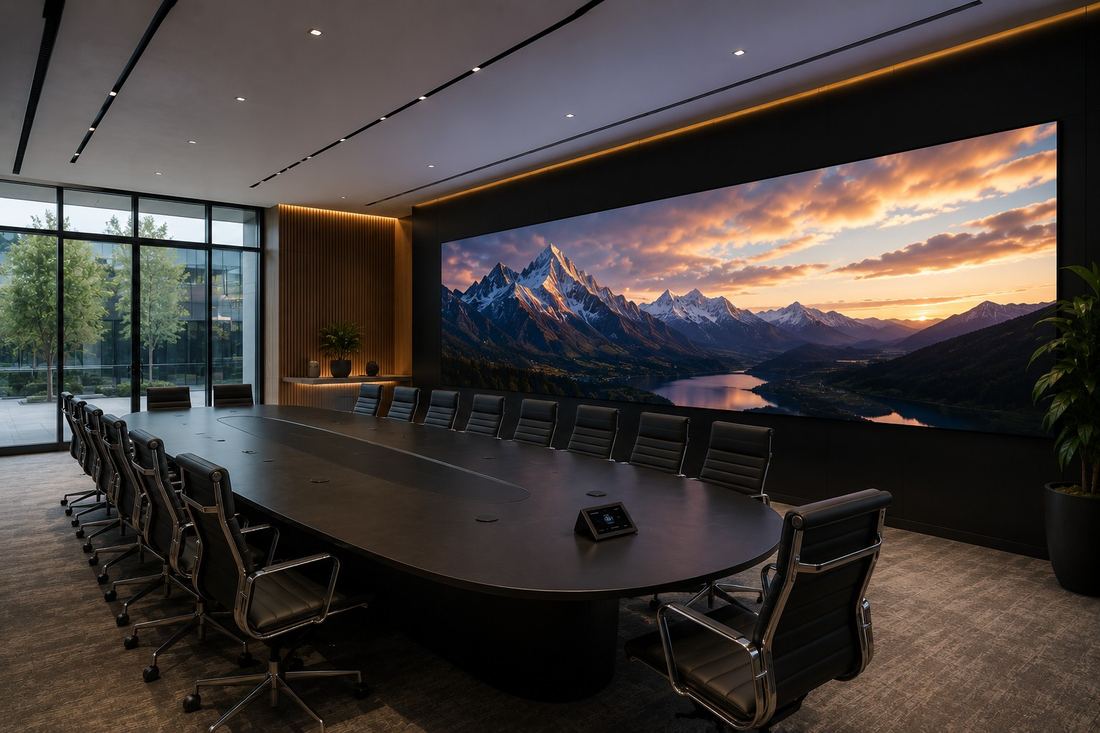
- Multi-Window and Split Content — a boardroom or media room wall can display a video call, a presentation, and a data feed simultaneously across different zones of the same canvas.
- Business and Branding Content — commercial installations often run scheduled branding, wayfinding, or presentation content managed centrally rather than by whoever is in the room.
Investment
Budget Guide.
Video wall pricing varies enormously based on pixel pitch, total square footage, indoor versus outdoor rating, and how much structural and mounting work the space requires. Rather than a single figure, it helps to think in three general tiers.
Tier 01Accent Display
A smaller-format wall in a bar, entry, or media room niche, using a moderate pixel pitch suited to a room people occupy but do not sit directly in front of.
Tier 02Feature Wall
A larger, finer-pitch installation serving as the primary display in a great room, media wall, or executive boardroom, with full integration into the home or building's control system.
Tier 03Signature Installation
A large-scale or outdoor-rated wall with fine pitch, custom architectural mounting, and dedicated processing built for a defining space in the home or business.
ACT Tip
Because pitch, size, and mounting all move the number independently, the only accurate way to price a video wall is against your actual room. Schedule a consultation and a Luxury Technology Advisor will scope the wall against your space and provide a real quote.
Living With It
Maintenance.
LED video walls are built for long service life, but like any technology, they benefit from being on a maintenance plan rather than being forgotten once installed.
- Calibration Drift — color and brightness can shift slightly across thousands of diodes over time. Periodic calibration keeps the image uniform, especially on larger walls.
- Dust and Airflow — panels rely on proper airflow to manage heat. Keeping vents and rear cavities clear is a simple habit that extends component life.
- Firmware and Processor Updates — the video processor driving the wall receives updates just like any other piece of technology in the home, and staying current avoids compatibility issues with new sources.
- Modular Repairs — because the wall is built from individual panels or modules, a failure is typically isolated to a single unit that can be serviced or swapped rather than replacing the entire wall.
- Quiet Technology™ Standards — our installations are held to the same standard of silent, reliable operation as the rest of an ACT Estate™ system, including cooling that runs without becoming a distraction in the room.