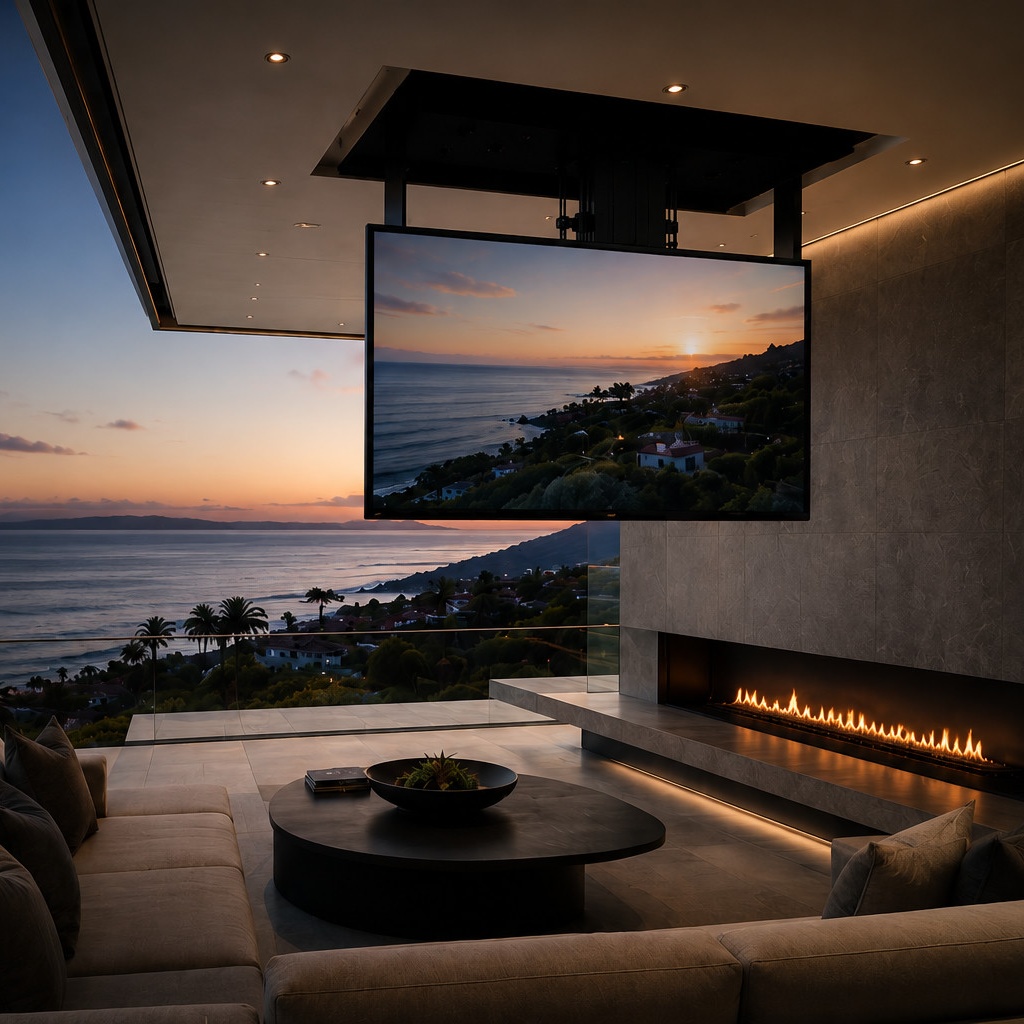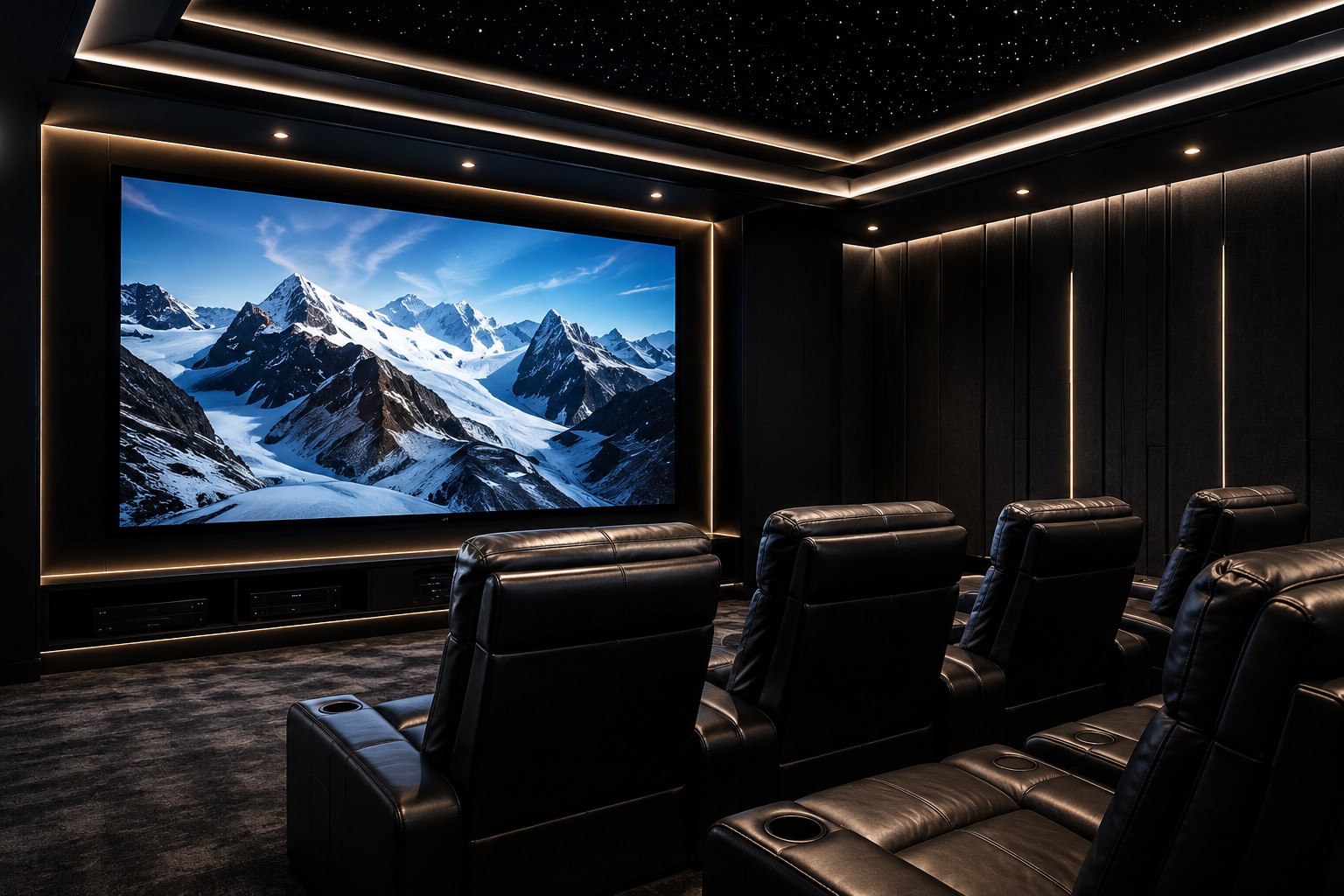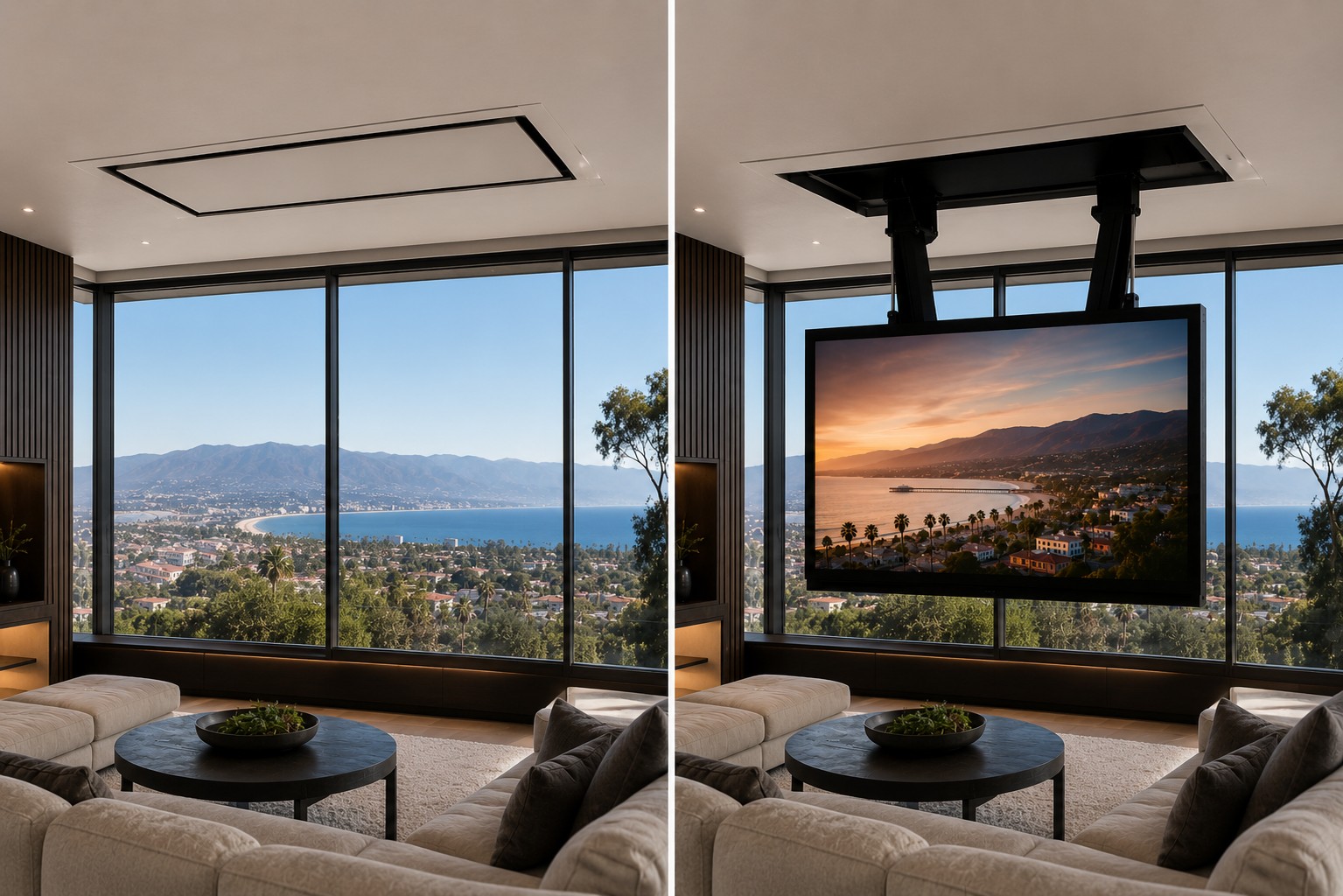
A traditional wall-mounted or on-stand television is simpler to install and cheaper up front. A hidden TV — behind a lift, a mirror, or an art frame — costs more and takes real planning, but it means a room can be designed around architecture, art, and a view instead of around a black rectangle. For a full breakdown of every concealment method, see our Hidden TV Guide; this page focuses on the decision itself.
| Criteria | Hidden TV | Traditional TV |
|---|---|---|
| When off | Disappears — art, mirror, or empty wall | Visible black panel |
| Design flexibility | Room designed around art & architecture | Room designed around the screen |
| Install complexity | Structural planning, lift or millwork | Wall mount or stand, straightforward |
| Upfront cost | Higher — mechanism + finish work | Lower |
| Best rooms | Formal living rooms, primary suites | Dedicated theaters, casual family rooms |
| Retrofit difficulty | Easier with cabinet lifts or art frames | Simple in any room |
Concealment isn't the right call everywhere. Dedicated theaters and media rooms are built around the screen on purpose — hiding it defeats the point. Casual family rooms, bonus rooms, and kids' spaces usually favor a simple, secure wall mount over the added cost and complexity of a lift or frame.
We treat this room by room, not house by house — most of the estates we build mix both, a hidden TV in the formal living room and primary suite, a straightforward mounted screen in the theater and family room.
An art-frame TV or a cabinet lift in existing furniture — neither requires structural blocking or ceiling work, making them the most accessible concealment options.
Not with a properly specified system. Mirror TVs trade some brightness and contrast for concealment; lift and frame mechanisms don't affect picture quality at all since the screen is a standard panel when visible.
Dedicated theaters and media rooms, where the screen is meant to be the focal point — concealment adds cost and complexity with no benefit there.
Sometimes — a cabinet lift can often be retrofitted into existing furniture, but ceiling lifts and in-wall pockets generally need to be planned before drywall, so retrofitting those is more involved.
See the full Invisible Technology™ service, or read the complete Hidden TV Guide for every concealment option and what it costs.
Explore Invisible Technology™