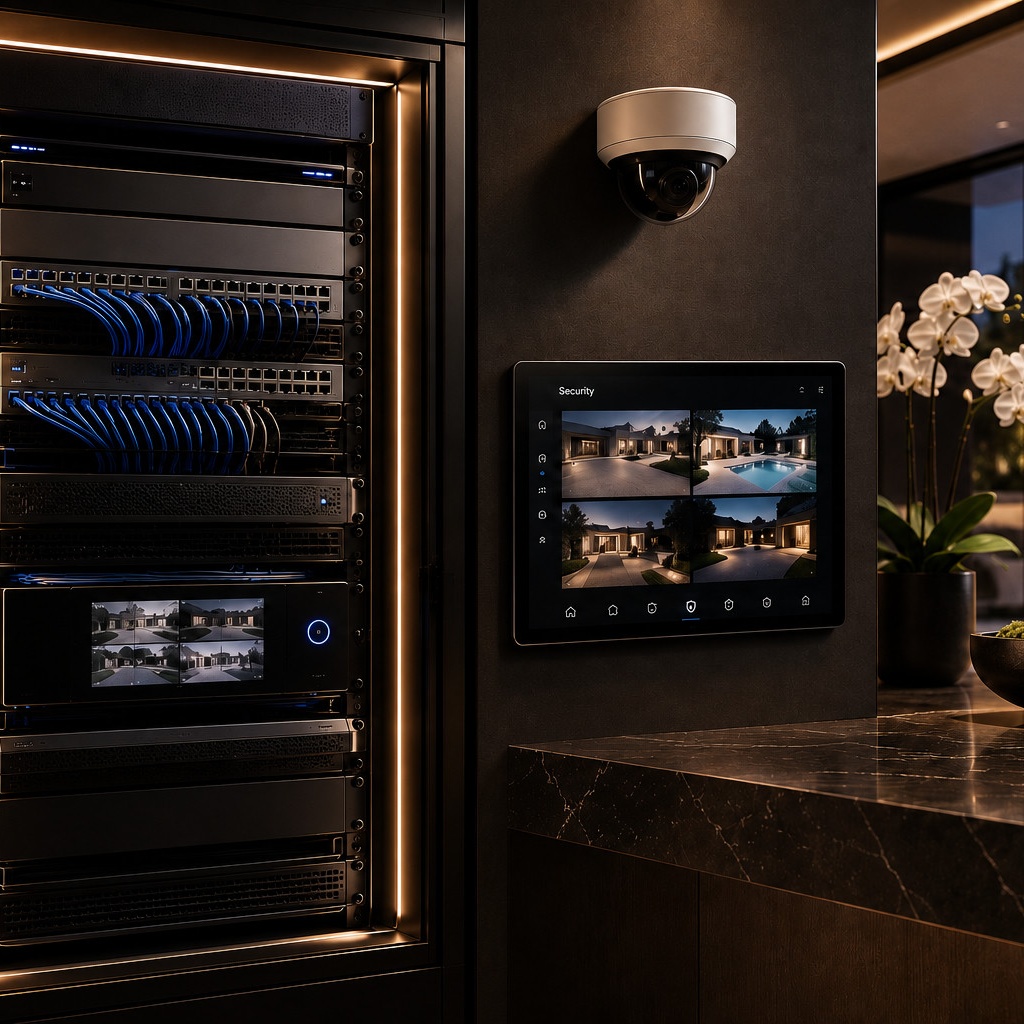
Every ACT project is built around a central equipment location sized to a 19" EIA rack, with a minimum of 6" clearance front and rear for cable management and airflow. This is the foundation of what we call The Signature Rack™ — a consistent, serviceable build standard rather than a one-off shelf of equipment.
Rack elevation and equipment layout should be finalized before rough-in so conduit and power drops land where the build actually needs them, not where the framing happened to leave a gap.
All structured wiring runs use solid-copper CAT6 or CAT6A, plenum-rated where the run passes through an air handling space per local code. We do not accept copper-clad aluminum (CCA) cable on any ACT-specified project — it fails certification testing and is not a substitute for solid copper.
CAT6A is specified for any run feeding a PoE+ device, an outdoor access point, or a location likely to carry higher-bandwidth video or control traffic in the future.
Fiber gets specified where copper's length or interference limitations make it the more reliable long-term choice — not as a default for every run. Singlemode (OS2) fiber is used for backbone runs between structures, detached garages, guest houses, or any run exceeding standard copper distance limits. Multimode (OM4) fiber is used for high-bandwidth video distribution and video wall backbones within a single structure.
Run fiber inside its own innerduct within the conduit, never bundled loose against copper or power conductors, and leave a service loop of at least 10' coiled at both termination points for future re-termination.
Any fiber backbone should be paired with a dedicated pull string and spare conduit capacity — retrofitting fiber after finish work is disproportionately expensive compared to specifying it correctly at rough-in.
Our conduit sizing philosophy is simple: oversize at rough-in, because it is the cheapest insurance on the project. Empty conduit costs a fraction of what it costs to open a finished wall later.
Every rack location should have at least one dedicated spare conduit run to the exterior and to the attic or crawlspace, sized for future fiber or additional copper without opening finished surfaces.
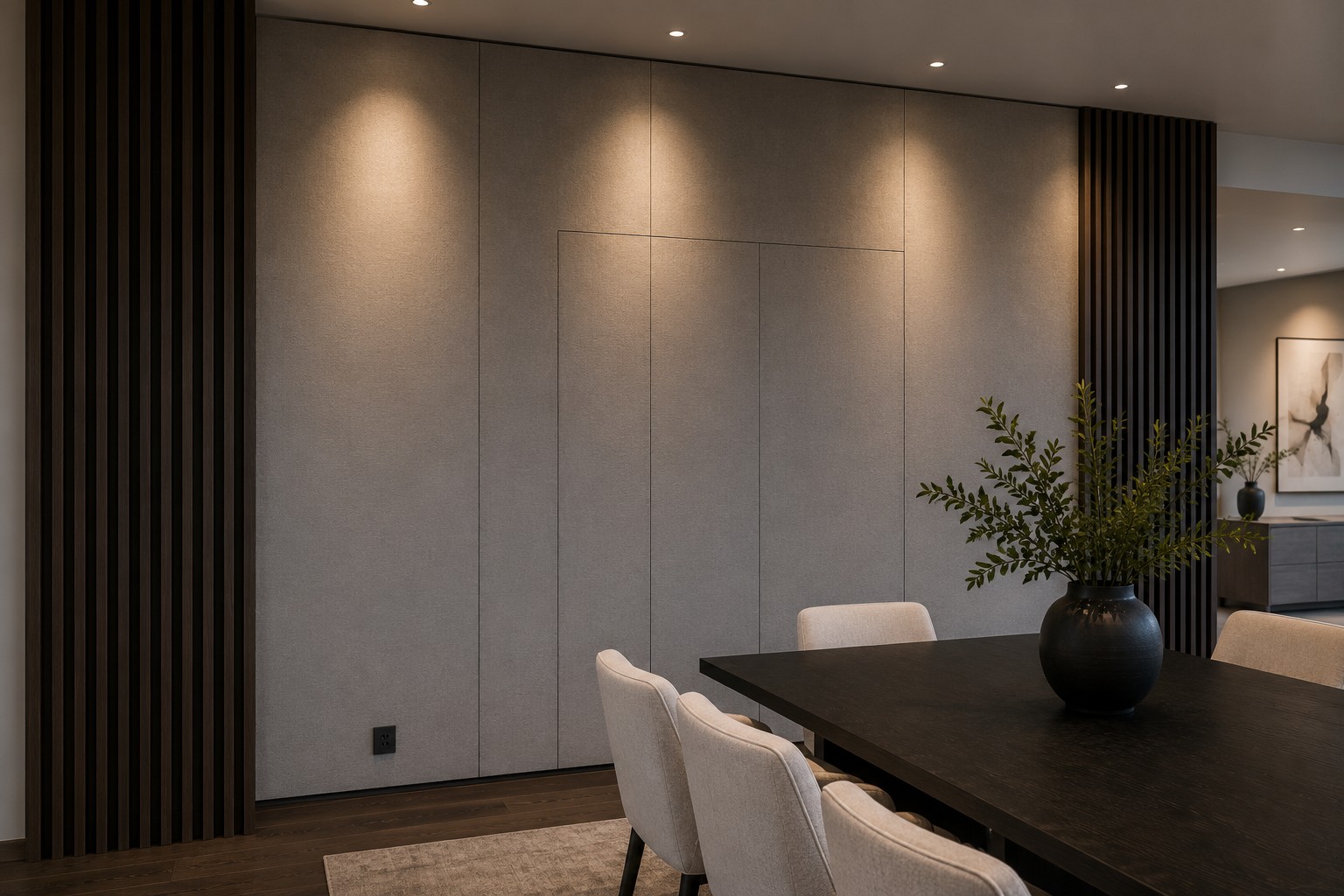
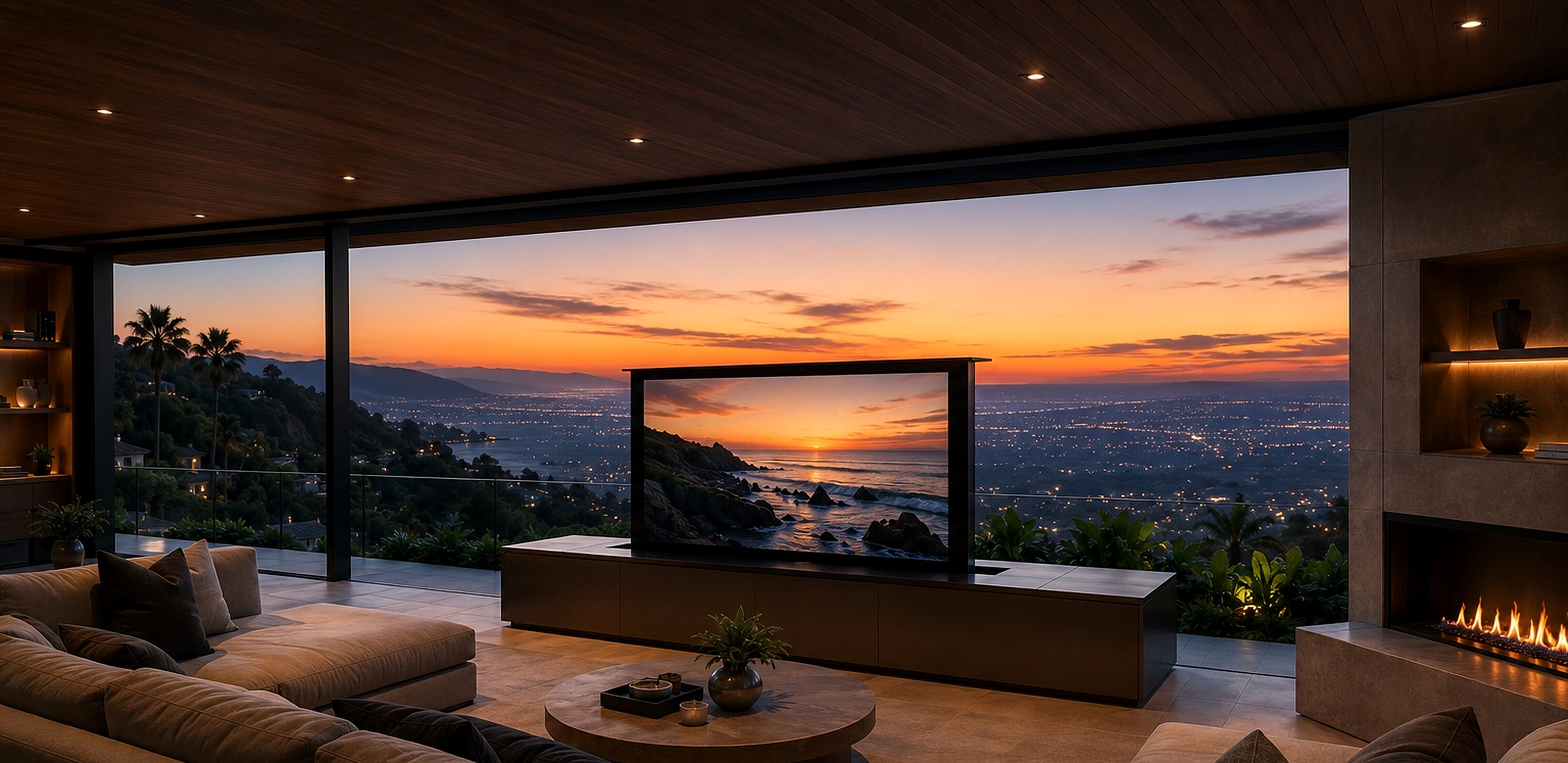
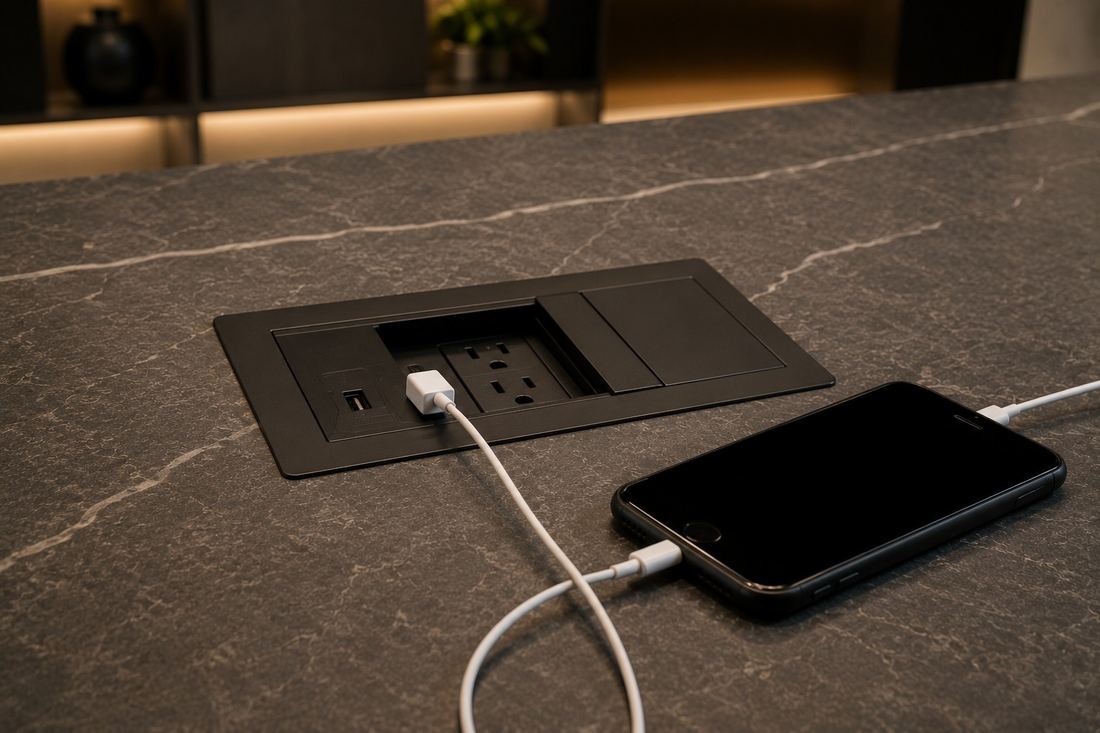
Every fixed TV location gets a recessed low-voltage box paired with a recessed power outlet, connected to the structural cavity by conduit rather than an open stud bay. This keeps the installation serviceable and keeps cable out of sight — the Invisible Technology™ standard we hold every visible location to.
In-wall and in-ceiling speaker runs use 14-gauge, two-conductor, in-wall rated speaker cable as the baseline, stepping up to 12-gauge for long runs and any exterior or landscape zone. Every speaker location is home-run to the rack or a local amplifier location — not daisy-chained between speakers on the same zone.
This is the wiring discipline that makes Quiet Technology™ possible on the finished side — clean, hum-free audio starts with correctly separated and correctly gauged runs at rough-in.
Every camera location is home-run in CAT6 directly to the PoE switch location at the rack — no field splices, no junction boxes at the camera itself. This is core to a reliable ACT Secure™ deployment and keeps troubleshooting confined to two points: the camera and the switch port.
Access control devices — door strikes, mag locks, credential readers, request-to-exit sensors — each carry their own conductor count and gauge requirements, and each device type gets its own dedicated conduit path from the door frame back to the rack or a local power supply location. Mixing access control conductors with other low voltage cable in a shared conduit is not an ACT-specified practice.
The network is the backbone every other system in the home rides on, and we wire it accordingly. This is the physical layer beneath what we deliver as The Estate Network™ — a segmented, serviceable network built for a property, not a single router and a stack of extenders.
Every wireless access point location gets its own home-run CAT6A drop rather than a shared or looped connection, so coverage can be tuned and expanded without rewiring. Switch locations are planned for PoE budget headroom, not just current device count, and wired with capacity for wired security, access control, and AV endpoints on segmented VLANs.
Rack locations need active climate management, not just a closet with a door. Equipment operating outside its rated temperature and humidity range fails prematurely and loudly — the opposite of the Quiet Technology™ standard we hold finished systems to.
A clean install that isn't labeled correctly is not a finished install. Every cable gets a permanent, machine-printed label at both ends — never handwritten, never masking tape — using a consistent room/device/type convention across the entire project.
This full standard — rack build, cable specification, conduit sizing, and labeling conventions — is available as the ACT Low Voltage Standards PDF, formatted for print and reference on the job site. It reflects the same discipline behind ACT Blueprint™, our end-to-end delivery process, and is the specification we hold our own crews and trade partners to on every project.
Get the ACT Low Voltage Standards — a print-ready PDF reference, branded and ready to share with your team.
Schedule a consultation with a Luxury Technology Advisor.
Schedule Your Consultation